
Is It Illegal to Eat While Walking in Japan?
The Real Reason Is More Thoughtful Than You Think
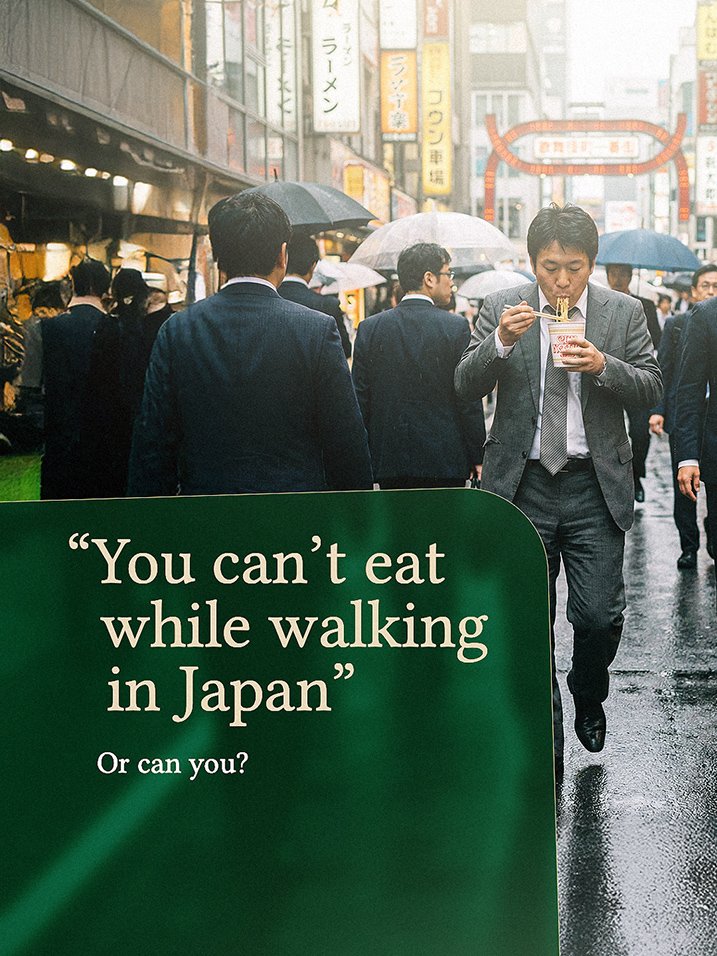
If you’ve spent any time reading about Japan or scrolling through travel content, you’ve likely come across this statement:
“You’re not allowed to eat while walking in Japan.”
It sounds strict. Almost severe. But like many cultural observations, the truth is far more nuanced. And consequently, far more interesting.
First, Is It Actually Illegal?
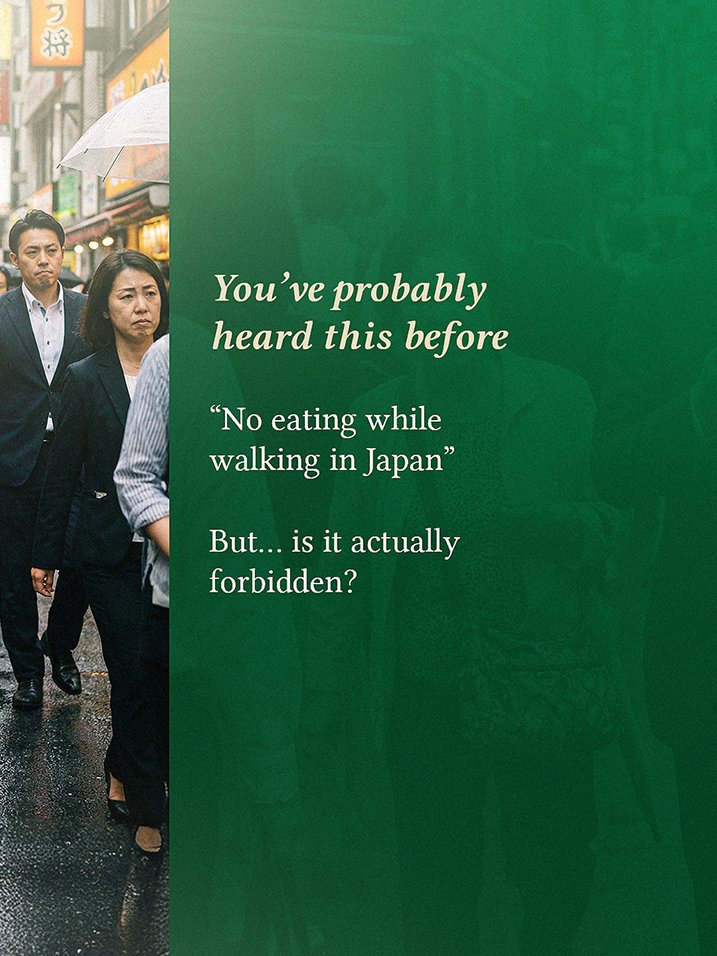
No! Japan has no national law that makes eating while walking illegal.
You won’t be fined. Authorities won’t stop you.
However, in many places, locals culturally discourage it. And the reason isn’t control. Instead, it’s consideration.
A Culture Built on Shared Space
Japan places deep value on harmony within public environments. Typically, streets are busy, trains are crowded, and citizens share spaces closely with others.
Therefore, eating while walking can sometimes create small inconveniences — dropping crumbs, spilling drinks, or bringing strong smells into tight spaces. Of course, none of these are dramatic issues on their own, but collectively, they affect the experience of others.
Rather than enforcing strict rules, Japanese society often relies on unspoken understanding.
Ultimately, the question is less “Am I allowed to?” and more “Does this disrupt the space around me?
Japanese Culture Gives Food a Moment
Furthermore, there’s also another layer — one that feels quieter.
In Japan, people often treat food with presence. For example, you will commonly see someone eating a simple snack from a convenience store near the shop or in a designated area. You’ll notice people standing neatly to the side, finishing their food before they continue on their way.
It’s not hurried. It’s not distracted. In fact, it’s a small pause.
Eating while walking can feel rushed — as though the meal is secondary to movement. And in a culture that values attentiveness, that energy matters.
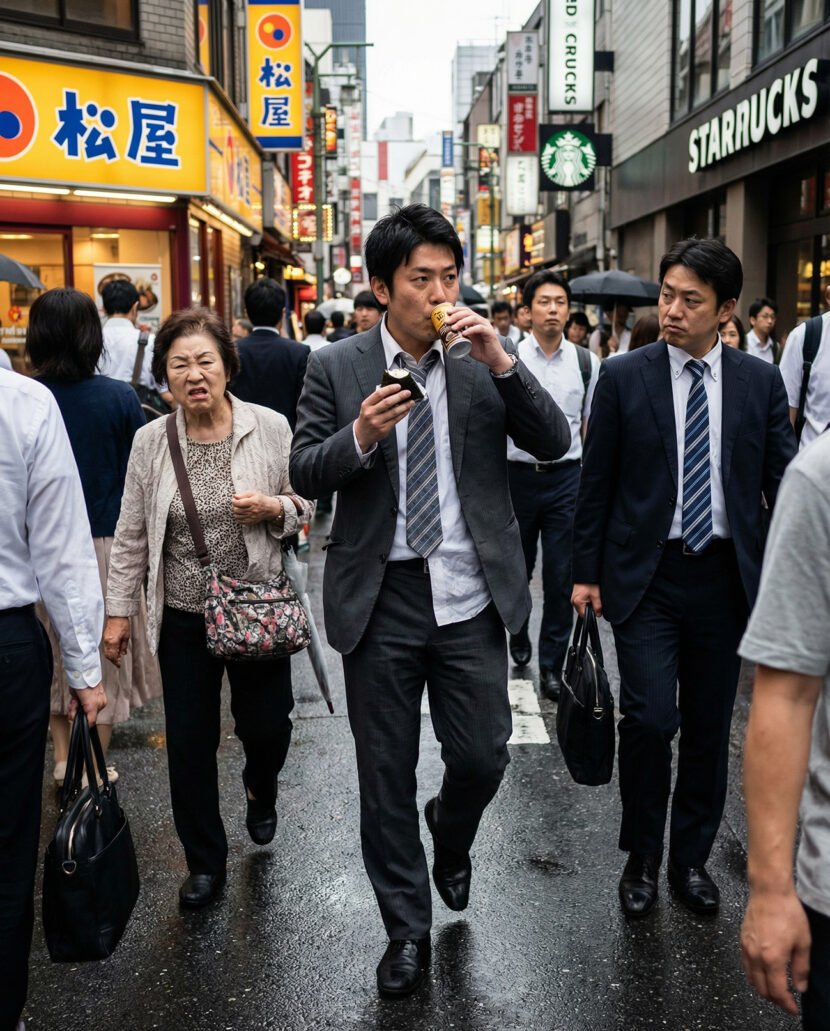
Eating while walking isn’t illegal in Japan — it’s simply often discouraged out of consideration for shared space.
But What About Street Food?
On the other hand, if you’ve visited places like Dotonbori in Osaka, you’ve probably seen people enjoying takoyaki, skewers, or sweets outdoors.
So, what’s different?
Simply put, people typically stop. They gather near the stall. They stand to the side. And finally, they finish their food before moving on.
Clearly, the culture isn’t about never eating outside. Instead, it’s about remaining mindful of the flow and your surroundings.
During festivals, markets, and tourist areas, the atmosphere feels more relaxed, but the underlying awareness remains.
A Subtle Social Language
Many Japanese customs operate in this space — communities don’t strictly enforce them, yet everyone widely understands them.
Foreigners can easily interpret these behaviours as rigid. But often, they reflect a collective effort to maintain comfort in densely populated spaces.
Honestly, there’s something quite gentle about that. It isn’t fear of punishment. Rather, it’s mutual respect.
What We Can Learn From It
Whether you agree with the custom or not, it offers an invitation.
To pause. To taste. To notice.
In fast-moving cities around the world, eating has become something we do between tasks — walking, driving, scrolling.
But when we sit down, even briefly, something shifts. We register flavour more clearly. We feel the texture. We breathe.
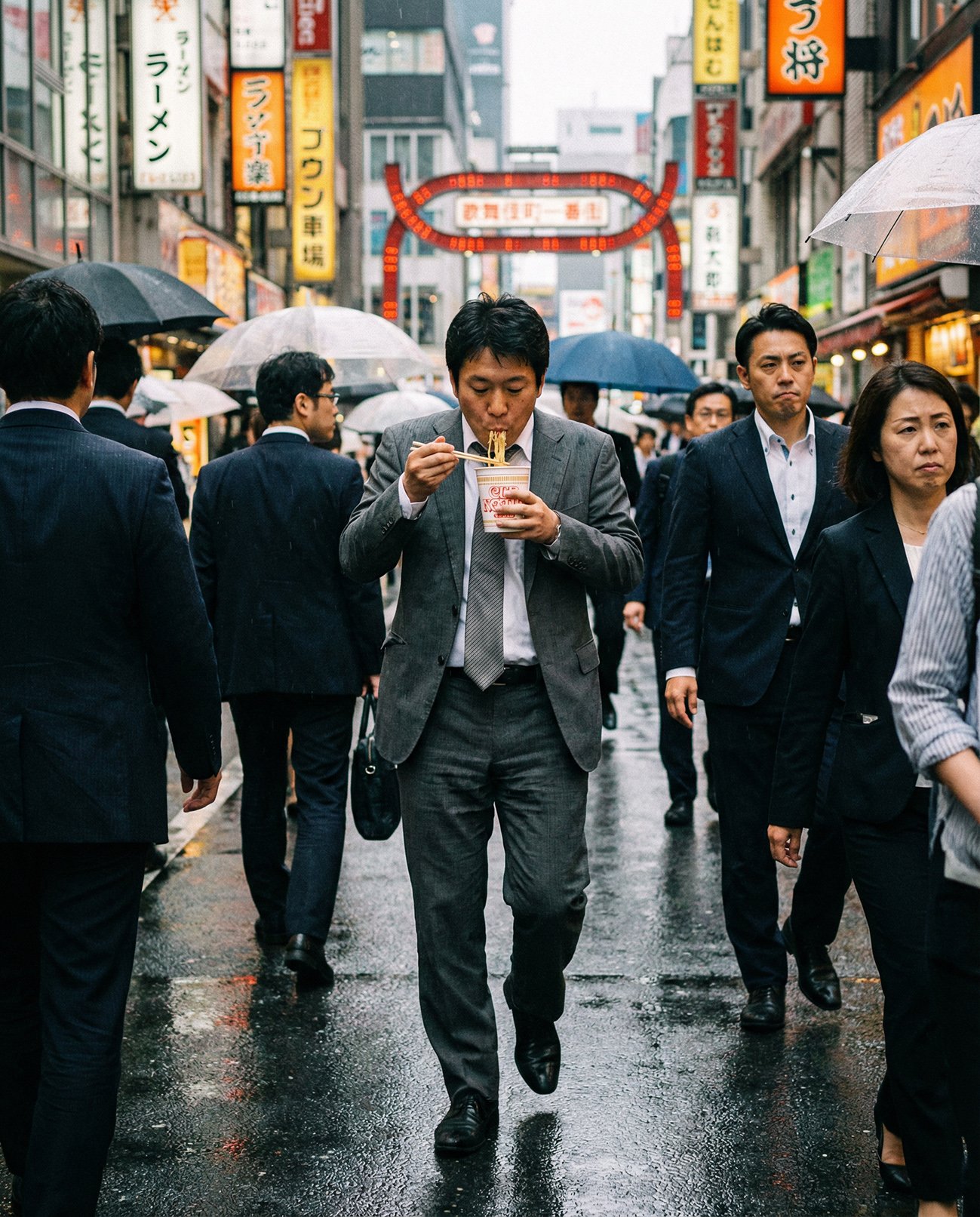
In busy streets, the question isn’t “Am I allowed to?” but “Does this affect the space around me?”
A Philosophy We Hold Close
At Izakaya Midori, we root our approach to plant-based dining in that same awareness.
Not rules. Not labels. Not restriction. Just intention.
We believe food deserves a moment of stillness. A seat. A shared table. A conversation that unfolds slowly.
Because when we give food our attention, it gives something back.
And sometimes, that’s the real lesson hidden behind what first sounded like a strict rule.
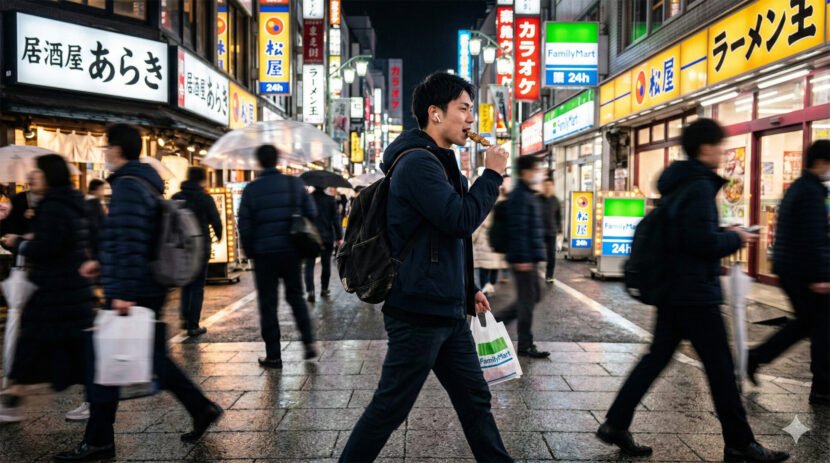
In places like Dotonbori in Osaka, people still enjoy street food — they simply pause before moving on.
📱 Mobile (Text or Call): +61 480 416 307