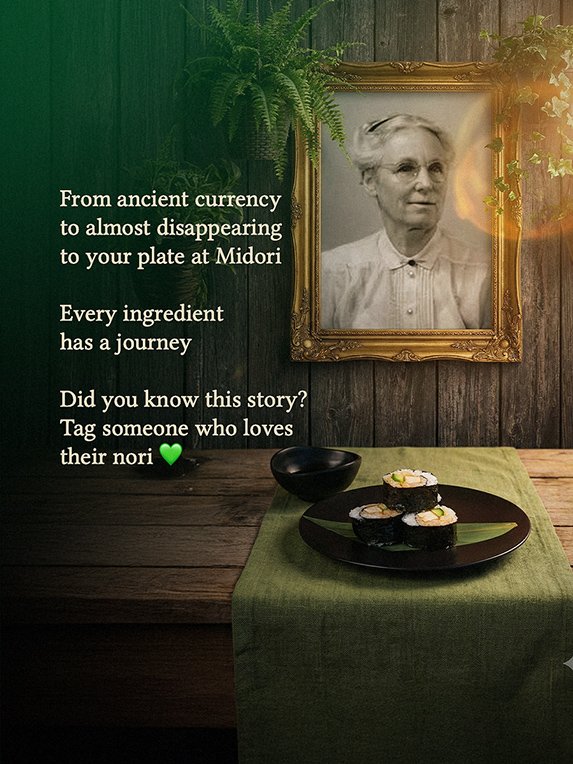
Nori: The History of Japanese Seaweed

(From Imperial Currency to Near-Extinction)

Konnichiwa, friends πŸ’š

Can we tell you something about nori?

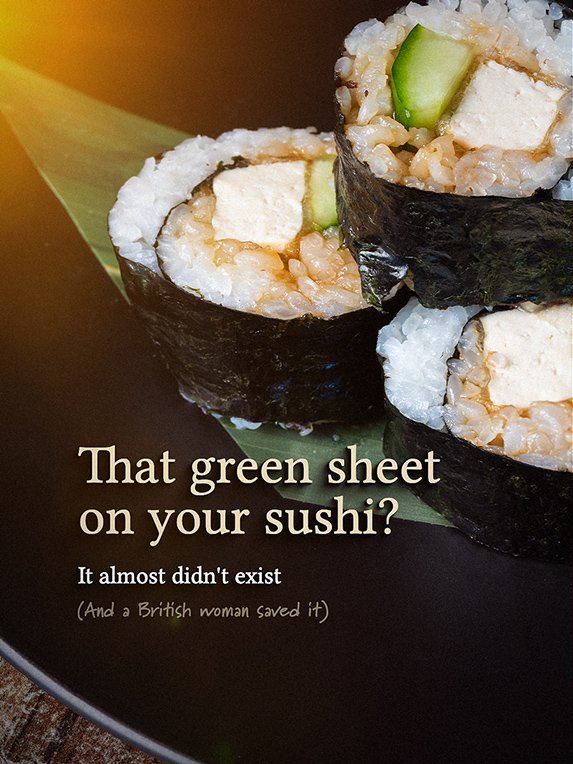
To begin with, not the “nori is healthy and full of vitamins” stuff. You’ve heard that. Instead, we want to tell you the real story. The one with Imperial currency, near-extinction, a British scientist, and a monument overlooking the sea in Japan.

Because that thin green sheet holding your sushi together? It has one of the most fascinating journeys in food history.

Grab a cuppa. This one’s worth it!

What Is Nori? (And Why It’s More Than Just Seaweed)

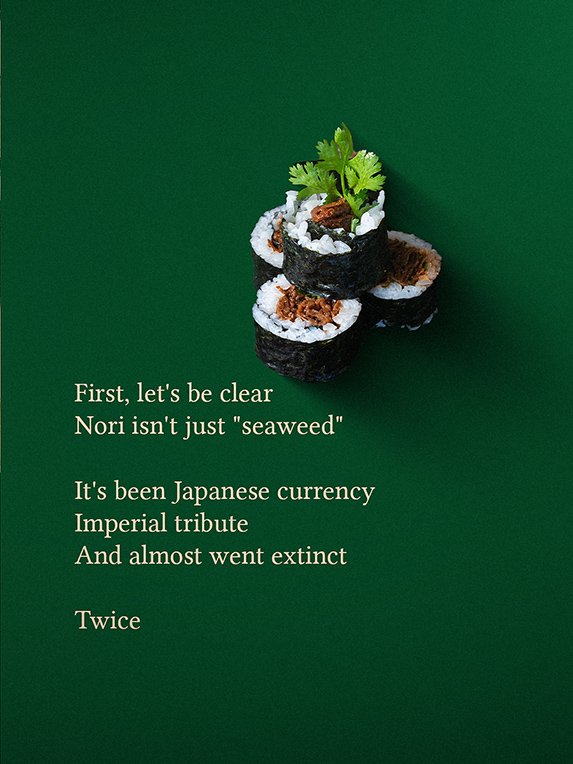
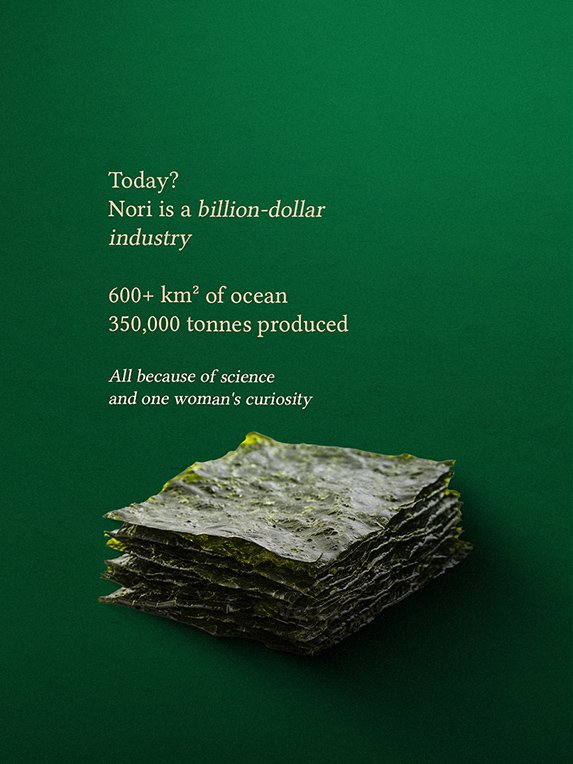
Generally, most people know nori as the dark green sheet wrapped around sushi rolls or used to season rice dishes. Specifically, it’s made from a species of red algae called Porphyra, which dries to that characteristic deep green-black colour.

However, here’s what most people don’t know: nori has been part of Japanese culture for over a thousand years β€” and importantly, its journey to your plate is anything but simple.

It Started as Currency

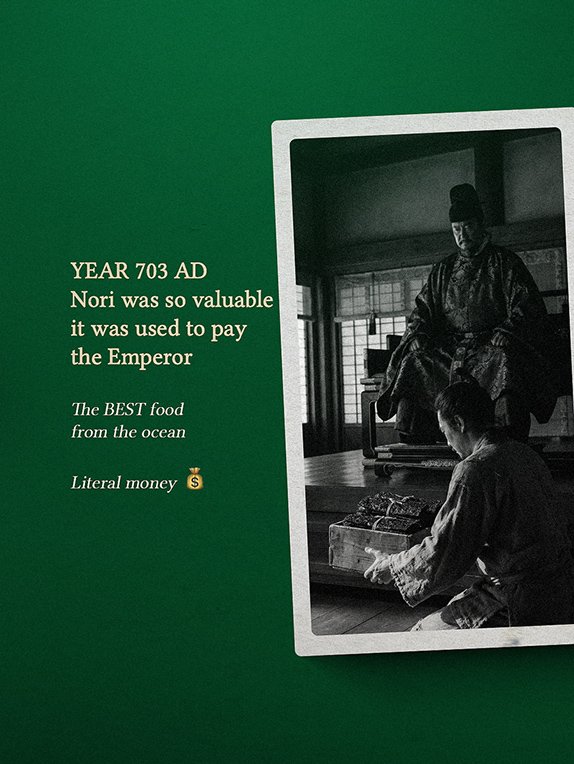
First of all, let’s go back to the year 703 AD.

Japan had just passed the Taihō Code β€” one of the country’s earliest legal systems. Interestingly, in this code, among all the rules and regulations about how society should function, there’s a specific mention of nori.

Not as food, exactly. Rather, as tribute.

In fact, nori was considered so valuable, so precious, that it was offered to the Emperor as payment. It was the best food from the ocean. A gift worthy of royalty.

Think about that for a second. The exact same ingredient you casually peel off the wrapper at a convenience store was once literally currency in Japan.

Furthermore, it was used in religious offerings at shrines. It was traded. It was prized. For centuries, nori held a cultural significance that went way beyond food.

The “Luck Weed” Problem

Here’s the thing about nori that most people don’t know: for a very long time, nobody actually understood how it grew.

Historically, farmers would set up nets in coastal waters and hope for the best. Sometimes the harvest was abundant. Conversely, sometimes it was almost nothing. As a result, the yield was unpredictable, inconsistent, and completely dependent on conditions that nobody could control or explain.

Consequently, they called it “luck weed.”

Basically, that’s what it was. You got lucky or you didn’t. There was no reliable way to cultivate it, no understanding of its life cycle, and no science behind it.

For generations, this is how it worked. Experienced farmers developed intuition about where and when to farm. Knowledge was passed down through families. But ultimately, the fundamental mystery of nori β€” how it actually reproduced, where it went, what its full life cycle looked like β€” remained unsolved.

Until eventually, a scientist in Wales figured it out.

How a British Scientist Saved the Nori Industry

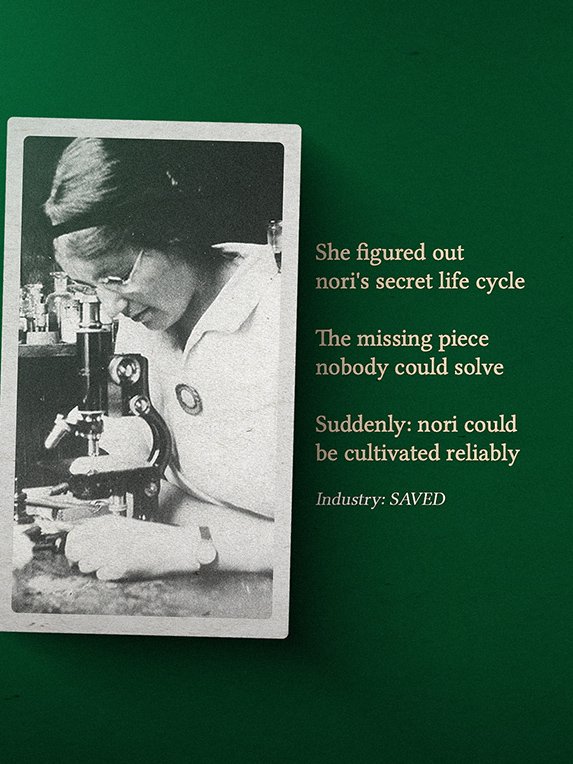
Specifically, in the late 1940s, a British phycologist (algae scientist) named Kathleen Mary Drew-Baker was studying seaweed in her lab in Wales.

Surprisingly, she wasn’t studying nori specifically. She was studying a related species of red algae called Porphyra umbilicalis β€” common along the British coastline. But ultimately, what she discovered changed everything.

In detail, Drew-Baker identified a previously unknown phase in the life cycle of Porphyra algae. A tiny, filamentous stage β€” microscopic, completely invisible to the naked eye β€” that the algae spent part of its life in before developing into the familiar flat sheets we know as nori.

Undoubtedly, this was the missing piece.

This is exactly why nobody could reliably cultivate nori. They didn’t know about this phase. They couldn’t see it. And therefore, without understanding it, they couldn’t replicate the conditions needed for consistent growth.

Subsequently, Drew-Baker published her findings in the scientific journal Nature in 1949.

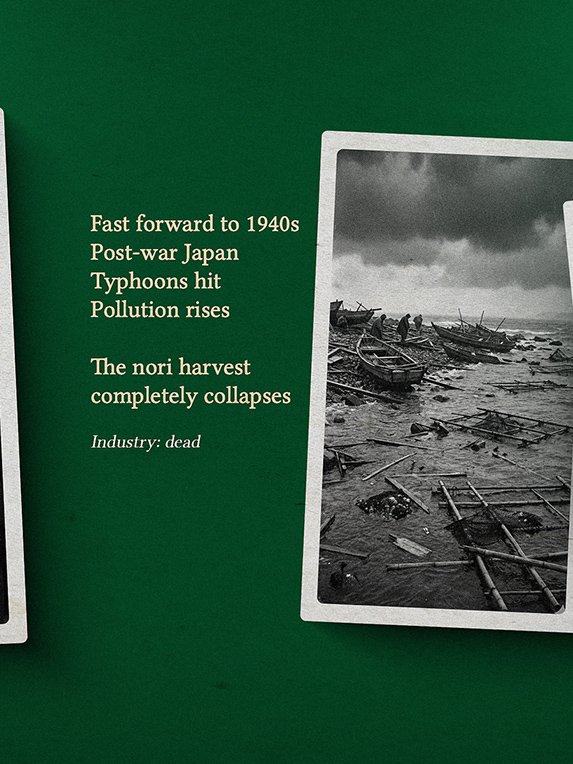
Meanwhile, in Japan, the nori industry was struggling after devastating typhoons and post-war pollution had nearly wiped out harvests entirely. Fortunately, scientists read her work and had a collective “aha” moment.

Immediately, they applied her research to nori cultivation. Suddenly, farmers could grow nori reliably, consistently, and at scale. In short, the industry didn’t just survive. It transformed.

The Twist Nobody Expected

Tragically, here’s the part of this story that gets us every time.

Kathleen Mary Drew-Baker never visited Japan. In fact, she never met the farmers whose livelihoods her research saved. She never saw the impact of her work on the industry she had unknowingly rescued.

Sadly, she died in 1957, just a few years after her groundbreaking publication.

Yet despite this, Japan remembered.

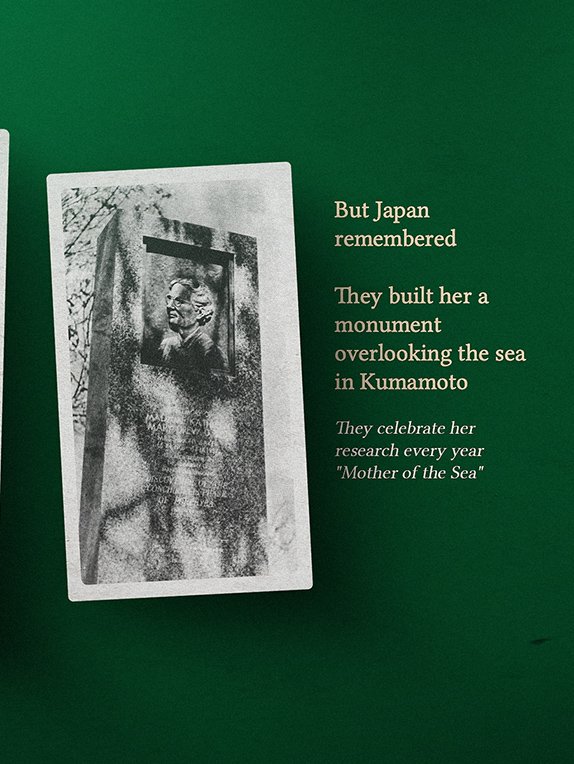
As a tribute, the nori farming communities of Kumamoto built a monument in her honour β€” a statue overlooking the sea, the same waters where nori is cultivated. They named her “Mother of the Sea.” And today, every year, the people whose industry she saved gather to celebrate her research and honour her memory.

A British scientist. A Welsh lab. A paper about seaweed. And a monument in Japan. Truly, it’s the kind of story that reminds you how quietly remarkable science can be.

Nori Today: A Billion-Dollar Industry

Fast forward to today, nori is one of the most commercially significant ingredients in Japanese cuisine.

Currently, over 600 square kilometres of Japanese coastal waters are dedicated to nori cultivation. Around 350,000 tonnes are produced annually. In total, the industry is worth over a billion dollars.

In contrast, what was once “luck weed” β€” unpredictable, mysterious, dependent on chance β€” is now one of the most reliably cultivated and widely consumed ingredients in the world.

Obviously, it’s in sushi, onigiri, ramen, snacks, and seasoning. It’s an everyday ingredient that most people give little thought to.

But now, you know better.

What Nori Means to Us at Midori

At Midori, we think a lot about the ingredients we use. Where they come from. What they mean. The history they carry.

Essentially, Japanese food culture has this beautiful reverence for ingredients β€” the idea that everything on your plate has a journey, a story, a significance that goes beyond just flavour and nutrition.

Therefore, nori is a perfect example.

To summarise: It was sacred enough to offer to an Emperor. It was mysterious enough to baffle generations of farmers. It was fragile enough to almost disappear entirely. And finally, it was saved by someone who never even knew the full impact of what they’d done.

Whenever nori appears in our dishes β€” holding nigiri together, adding depth to flavours, doing its quiet, essential work β€” we’re aware of that history. Ultimately, we think that’s part of what makes food meaningful.

So, the next time you eat sushi and that nori is there, maybe think about the journey it took to get there.

After all, nothing’s as simple as it looks.

Arigatou gozaimasu πŸ’š

The Midori Team

P.S. Did you know any of this before reading? Drop us a comment β€” we love knowing what surprised you most. And besides, if this kind of deep dive into Japanese food culture is your thing, explore our other blog posts for more stories like this one!

πŸ“± Mobile (Text or Call): +61 480 416 307