
What Do Foxes and Fried Tofu Have in Common?
First of all, if someone told you that foxes have something to do with fried tofu in Japan, you might naturally wonder what one has to do with the other.
But, there’s a curious connection between Japanese folklore, a simple tofu ingredient, and some familiar dishes. And once you know the story, names like inari sushi and kitsune udon start to make a little more sense.
Let’s get into it!
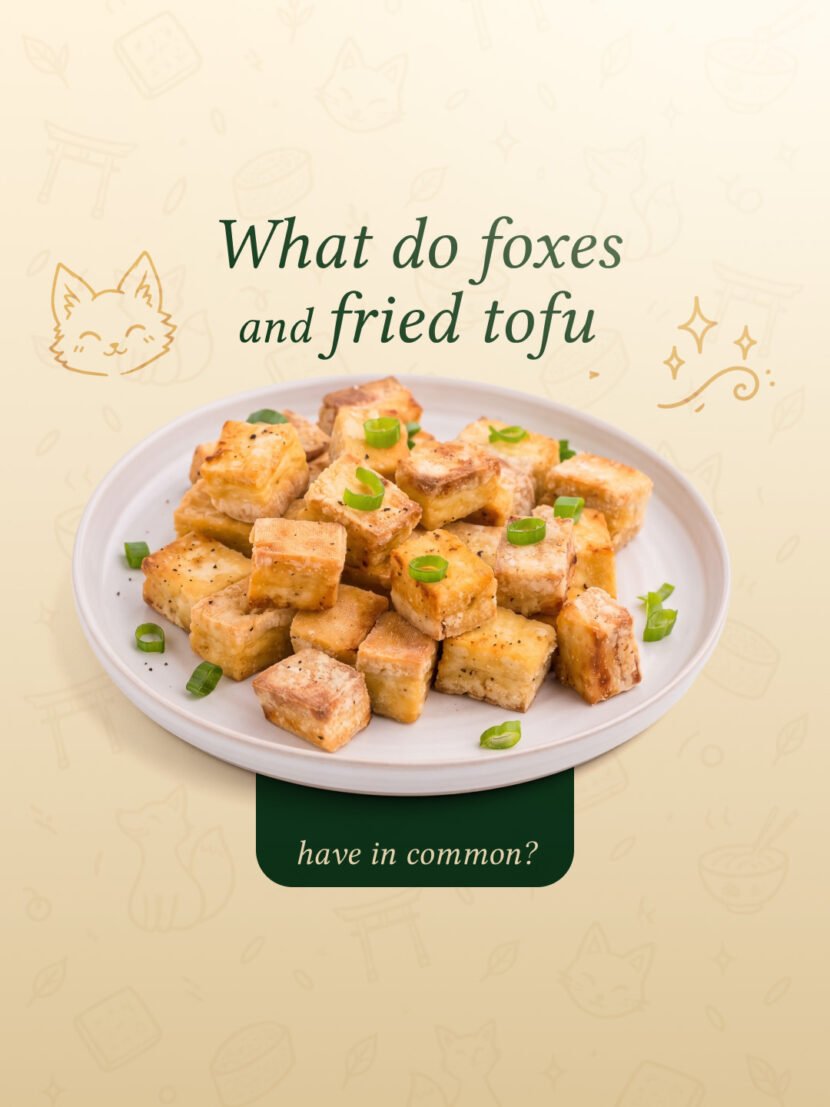
First, What Is Aburaage?
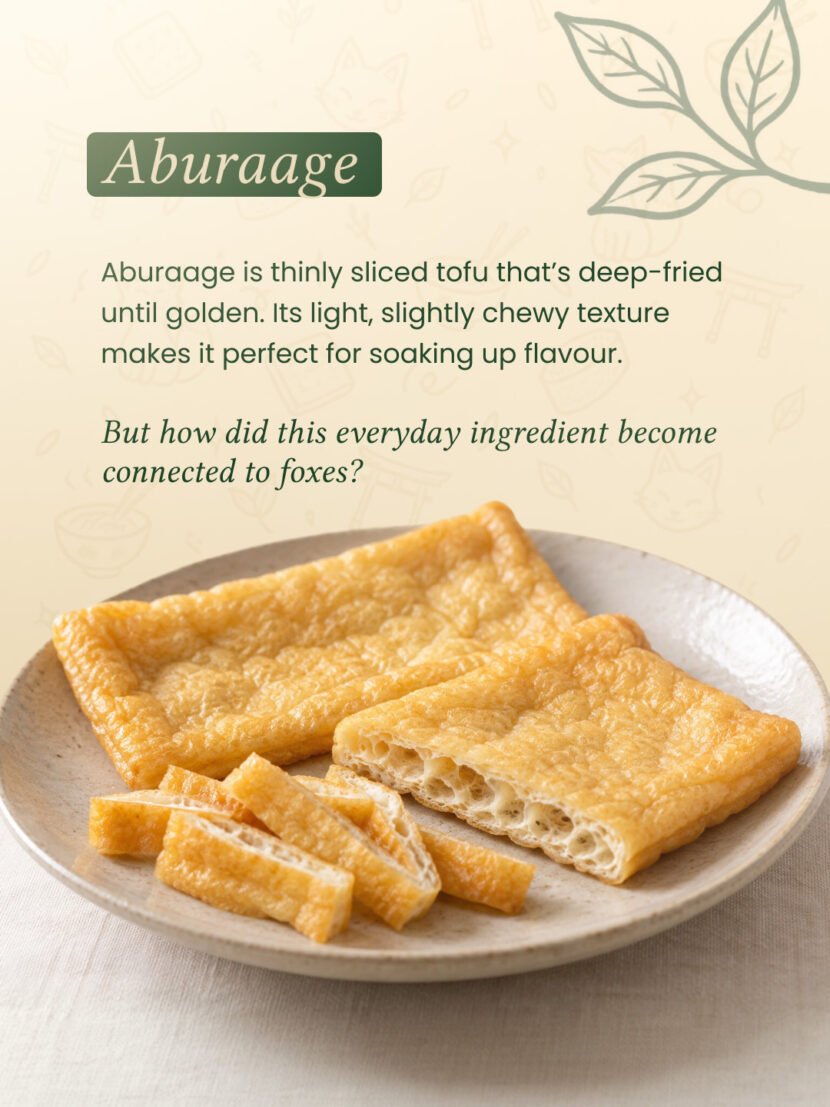
The ingredient sitting right at the centre of this story is aburaage (油揚げ), a traditional type of Japanese fried tofu.
Specifically, producers make it by slicing tofu thinly and deep-frying it until it develops a light, golden exterior and a slightly chewy texture. Because it can absorb plenty of flavour, Japanese cooks use aburaage in all sorts of dishes, from soups and noodles to rice dishes and simmered foods.
On its own, it might not seem like the kind of ingredient with a fascinating story behind it. But in Japan, aburaage has a long-standing cultural association with foxes.
And that’s exactly where Inari comes in.
Why Are Foxes Connected to Inari?
In Japanese tradition, foxes, known as kitsune (狐), are closely associated with Inari, a Shinto deity connected with rice, agriculture, and prosperity.
Historically, people traditionally regarded foxes as messengers of Inari. They were also highly valued for helping protect rice crops by hunting mice and other small animals that could damage them.
Over time, a deep connection developed between foxes and aburaage. People traditionally associate fried tofu with offerings at Inari shrines, and therefore, it became known in popular tradition as a food favoured by foxes.
Of course, that doesn’t mean the story is simply about what real foxes eat. Rather, it is a cultural association that has become a beautiful part of Japanese folklore and food traditions. And wonderfully, you can still see it in the names of Japanese dishes today.
Inari Sushi: Rice Wrapped in Fried Tofu
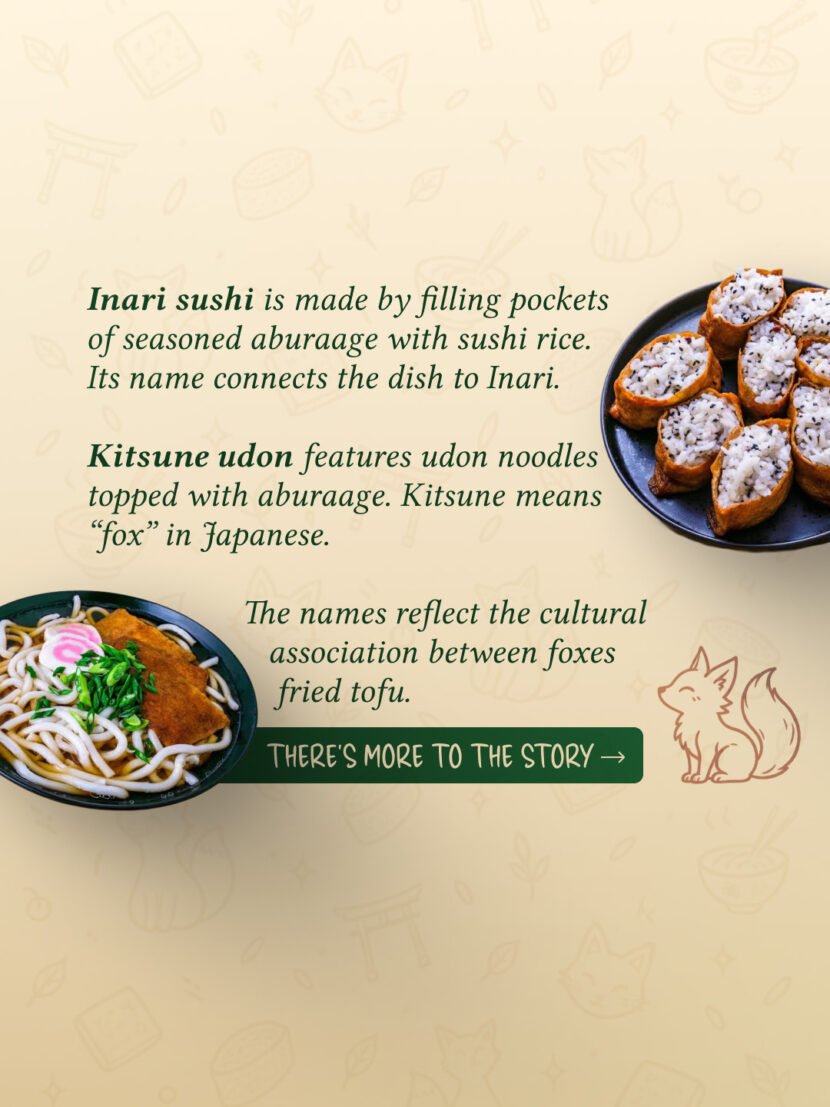
Without a doubt, one of the best-known examples is inari sushi (いなり寿司).
Instead of wrapping the rice in seaweed, inari sushi uses pockets of aburaage that the chef has simmered in a sweet and savoury seasoning, often made with soy sauce and sugar. Then, they fill these pockets with seasoned sushi rice.
Consequently, the result is a soft, flavourful tofu pouch boasting a perfect balance of sweetness and savouriness.
The name inari sushi directly connects the dish to Inari and the traditions surrounding the deity. For instance, one popular account of its origins says that someone placed rice inside fried tofu that they had previously offered at an Inari shrine. Although historians debate the exact origins of the dish, the association remains a vital part of its story.
Furthermore, there are regional differences too. In eastern Japan, inari sushi is often rectangular, while triangular shapes are much more common in western Japan. Fillings and seasonings can also vary. Ultimately, it’s a brilliant example of how a simple ingredient can carry a much bigger cultural story.
Kitsune Udon: Why Is It Called “Fox Udon”?
Now for another familiar dish: kitsune udon (きつねうどん).
This dish features thick udon noodles served in a savoury broth and topped with seasoned aburaage. Usually, chefs simmer the tofu until it fully absorbs the sweet and savoury flavours of the seasoning.
Interestingly, the word kitsune means “fox” in Japanese, so kitsune udon translates literally to “fox udon”.
The name connects directly to the traditional association between foxes and fried tofu. Rather than having fox meat or anything of the sort, the dish gets its name purely from the tofu topping.
Kitsune udon is particularly associated with Osaka, where it became a well-loved local dish. According to one account, it developed in the late nineteenth century when a customer simply added a piece of fried tofu to a bowl of udon.
Additionally, there’s also kitsune soba, which follows the exact same idea but uses buckwheat noodles instead of udon.
So, the next time you see kitsune on a Japanese noodle menu, you’ll have a much better idea of what to expect!
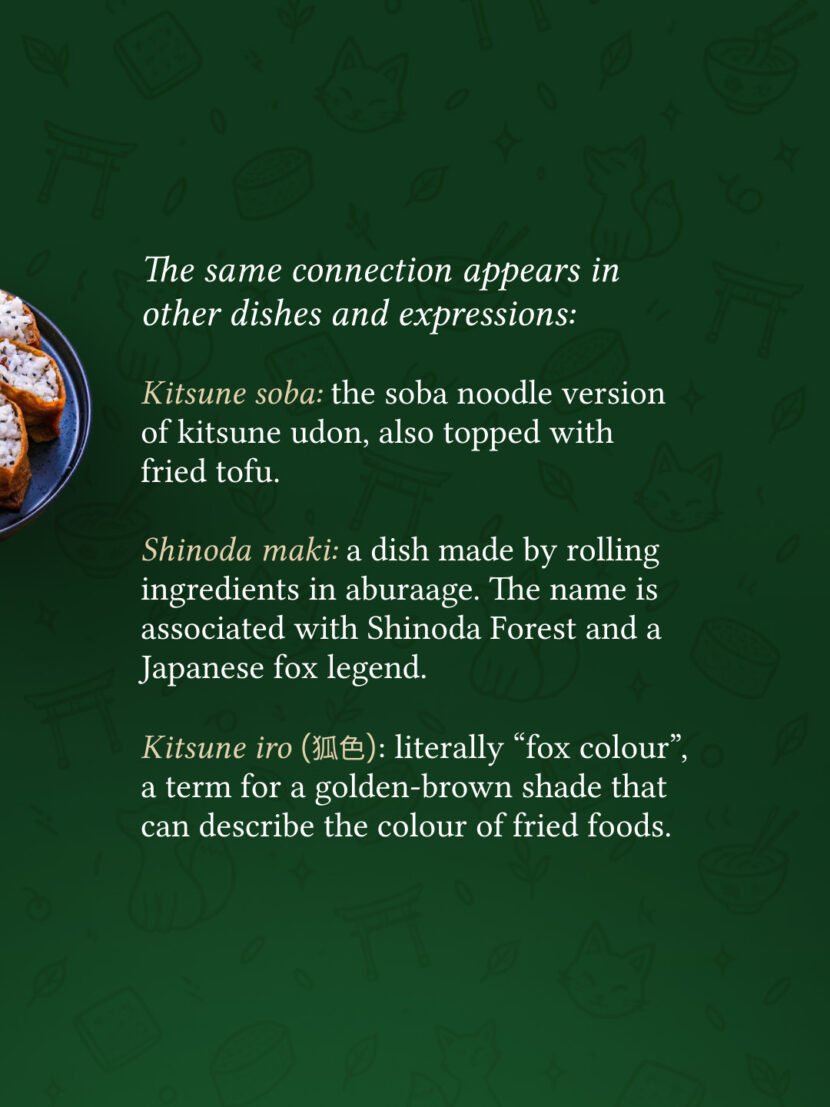
Shinoda Maki: Another Dish With a Fox Connection
Next, here’s another name worth knowing: shinoda maki (信太巻).
Chefs make shinoda maki by wrapping ingredients, often vegetables or other fillings, in aburaage and then simmering the rolls in a seasoned broth. Recipes vary, and the fillings can differ depending on the region and preparation.
However, the most interesting part is the name.
Shinoda associates closely with Shinoda Forest, a place connected to a well-known Japanese fox legend. In the culinary tradition of the Kansai region, locals sometimes give dishes made with aburaage names linked to this story because of the ingredient’s association with foxes.
Therefore, the name shinoda maki carries a connection to the exact same folklore that appears in kitsune udon and inari sushi.
Essentially, it’s a lovely reminder that Japanese food names don’t always describe only the ingredients or the way someone prepared a dish. Sometimes, they carry a reference to a story passed down through generations.
Kitsune Iro: When a Fox Becomes a Colour
And importantly, the fox connection doesn’t stop at food names. Have you ever heard the Japanese expression kitsune iro (狐色)?
It literally means “fox colour” and it describes a light golden-brown shade, very similar to the colour of a fox’s coat.
In Japanese cooking, cooks often use the expression to describe food that has turned a lovely golden brown during cooking. For example, you might see a recipe instructing you to cook something until it becomes kitsune iro.
Think of the golden colour of fried tofu, toasted bread, or other foods that develop a warm brown surface. In short, it’s a small language detail, but it’s a fun one. The fox connection appears not only in folklore and dish names but also in a Japanese expression used in everyday cooking.
One Ingredient, So Many Connections
So, what do foxes and fried tofu actually have in common?
The answer lies in the traditional association between foxes and Inari, the role of aburaage in offerings, and the way these stories have seamlessly become part of Japanese food culture.
- You can see that beautiful connection in several places:
- Inari sushi: Seasoned fried tofu filled with sushi rice;
- Kitsune udon and kitsune soba: Noodle dishes topped with aburaage;
- Shinoda maki: A dish whose name connects to a fox legend;
- Kitsune iro: A Japanese expression for a golden-brown colour.
Of course, not every dish has exactly the same origin story, and some details rest on traditional accounts rather than a single proven historical explanation. But together, they show just how closely food, language, and folklore can connect in Japan.
And honestly, that’s part of what makes exploring Japanese cuisine so interesting. Sometimes, a dish is so much more than what’s on the plate.
Finally, the next time you come across inari sushi or a warm bowl of kitsune udon, you’ll know there’s a little more to the name than you might have expected.
At Izakaya Midori, we love discovering and sharing these beautiful stories about Japanese food and culture with our community. 💚
Have you heard this fox-and-tofu connection before? We’d love to know what other Japanese food stories you’re curious about!
📱 Mobile (Text or Call): +61 480 416 307