 Spring: Cherry Blossoms and Fresh Beginnings
Spring in Japan is famous for cherry blossoms, and consequently, the season brings plenty of food inspired by them.
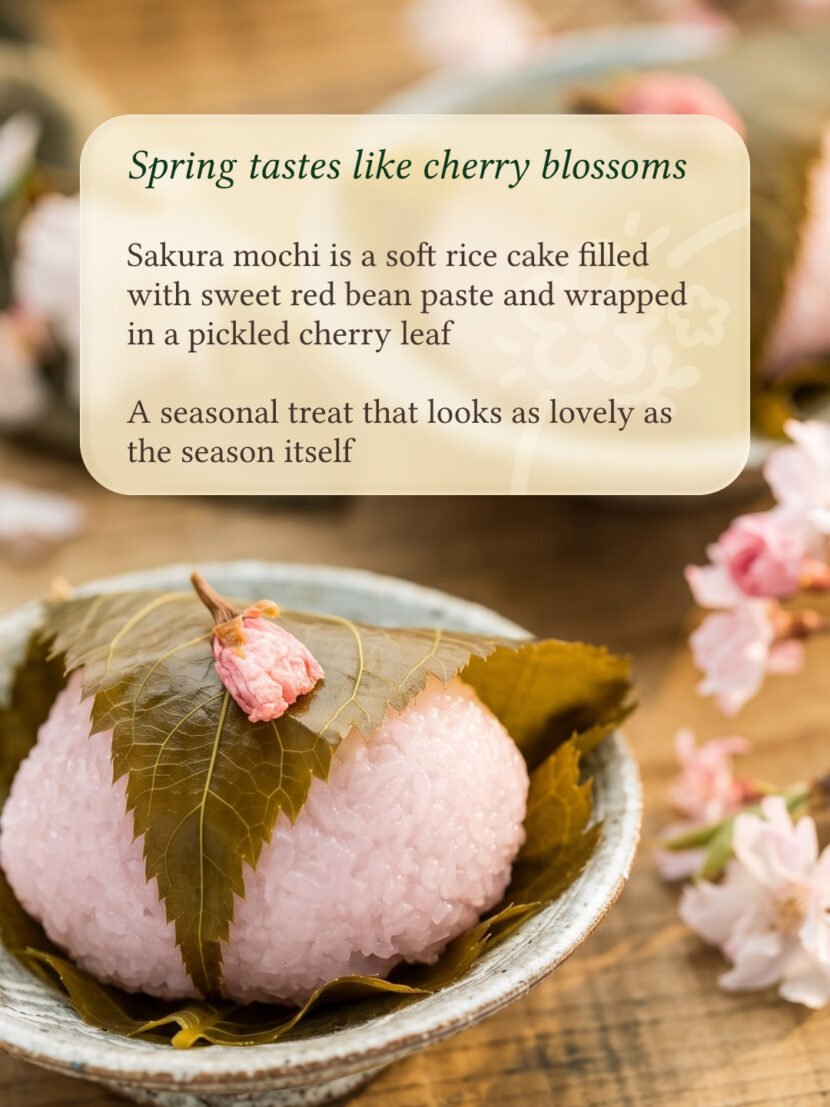
One of the best-known examples is sakura mochi, a soft rice cake filled with sweet red bean paste and wrapped in a pickled cherry leaf. Its pink colour and distinctive aroma make it a highly popular seasonal favourite.
Additionally, another spring treat is hanami dango, colourful rice dumplings that people traditionally enjoy during cherry blossom viewing.
Furthermore, spring is also a great time for ingredients such as bamboo shoots and nanohana, a flowering vegetable with a slightly bitter flavour.
 What to try: Sakura mochi, hanami dango, and bamboo shoot rice.
 Summer: Cool Noodles and Refreshing Treats
Since Japanese summers can be hot and humid, it’s no surprise that chefs design many seasonal favourites to be refreshing.
Somen are thin wheat noodles that restaurants often serve chilled with a dipping sauce. Overall, they’re simple, light, and particularly popular during warmer weather.
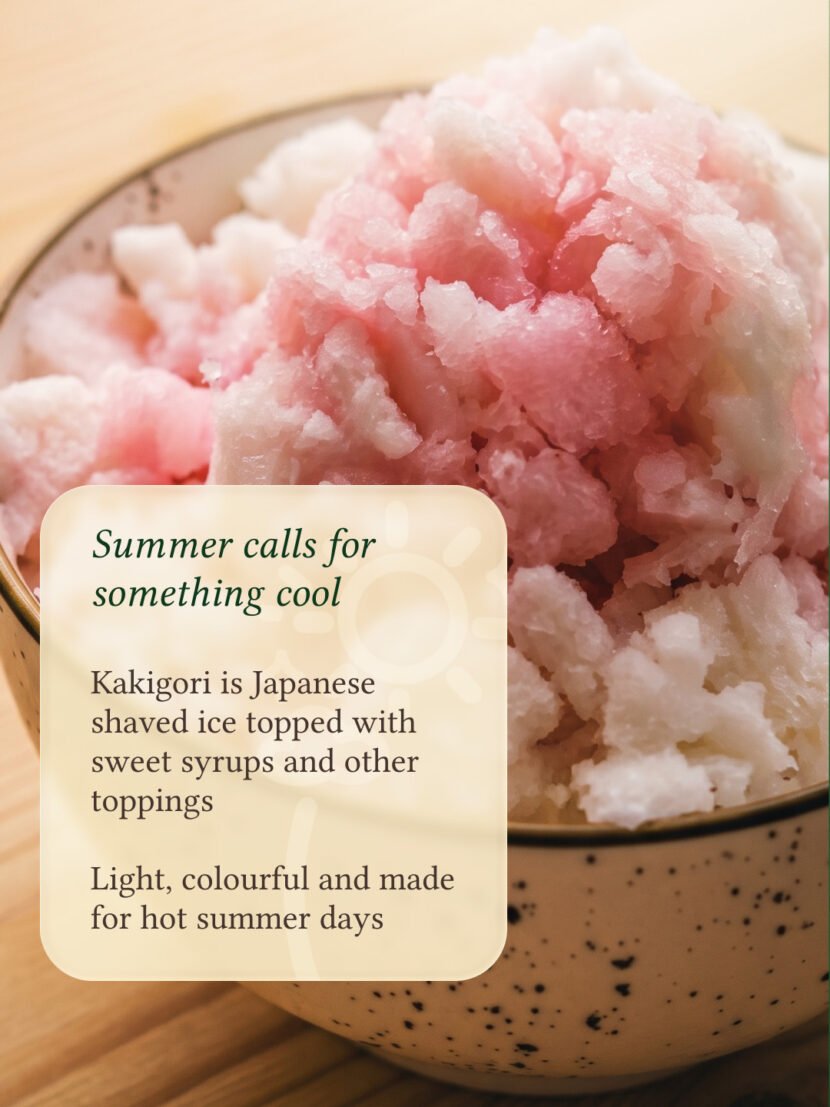
Meanwhile, for something sweet, there’s kakigori, a dessert made from finely shaved ice topped with flavoured syrups. Depending on the shop, you might find matcha, fresh fruit, or sweet red bean toppings.
Summer is also the peak season for edamame, the young soybeans often served in their pods with a sprinkle of salt. They’re a familiar snack at Japanese restaurants and at home.
What to try: Chilled somen, kakigori, and salted edamame.
 Autumn: Sweet Potatoes, Mushrooms, and Chestnuts
Interestingly, locals often associate autumn with shokuyoku no aki (食欲の秋), an expression that translates roughly to “autumn, the season of appetite”.
As the weather begins to cool, the season brings amazing ingredients with earthy flavours and naturally sweet notes.
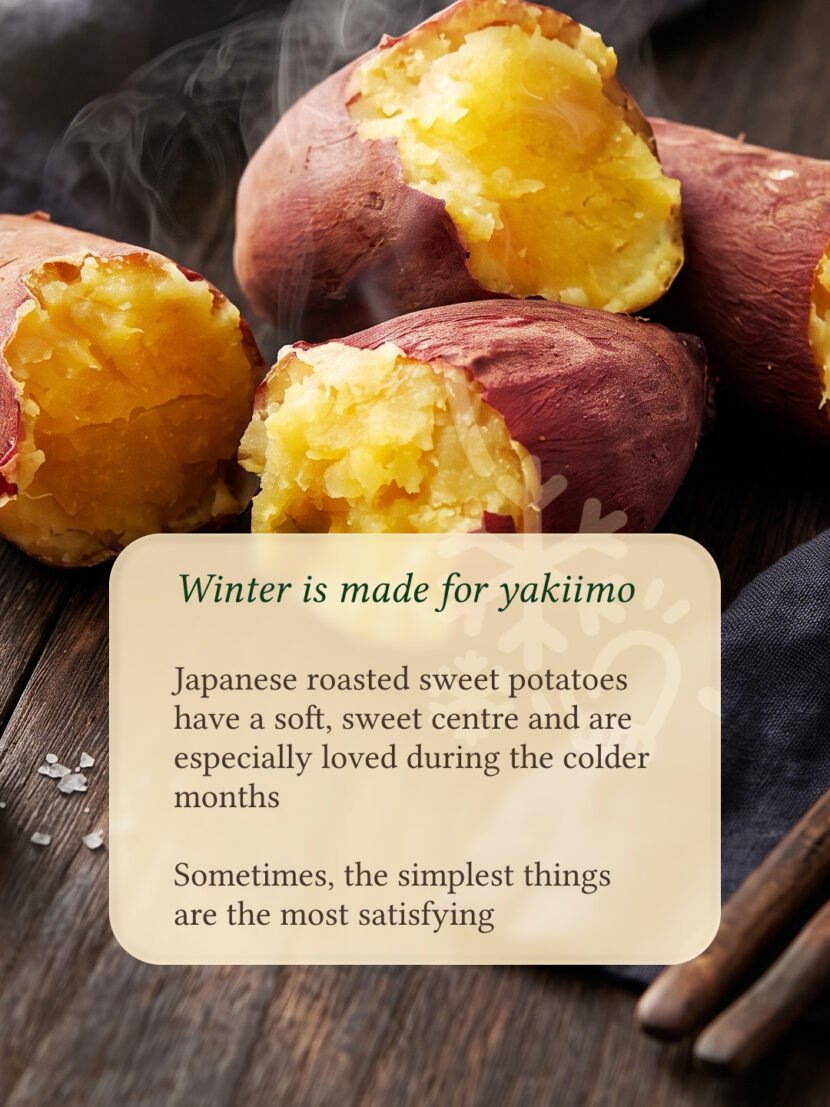
One absolute favourite is yakiimo, a Japanese roasted sweet potato. You can find vendors selling them hot, and their soft, sweet centres make them a popular autumn and winter snack.
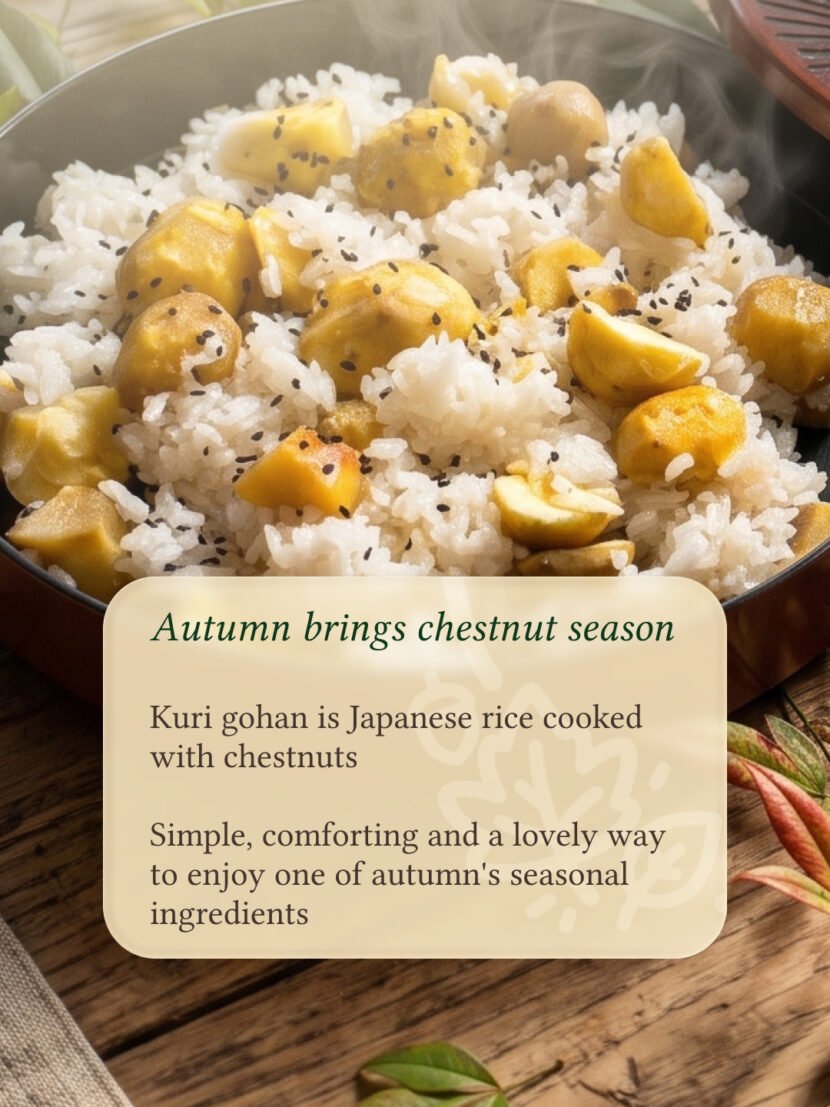
Moreover, chestnuts are another seasonal highlight. Cooks use them in rice dishes, sweets, and desserts, while mushrooms bring deep, savoury flavours to many autumn recipes.
Finally, persimmons also come into season, appearing fresh or dried. Producers make dried persimmons, known as hoshigaki, by drying the fruit until it becomes soft and intensely sweet.
What to try: Roasted sweet potatoes, chestnut rice, mushroom dishes, and persimmons.
 Winter: Warm Bowls and Comforting Flavours
When temperatures drop, Japanese food takes a cosy turn.
For instance, one popular winter dish is oden, a simmered dish traditionally made with ingredients such as daikon radish, konjac, and various other additions cooked in a light, savoury broth. The exact ingredients vary, and you can easily make plant-based versions using a suitable vegetable broth.
Another winter favourite is yaki mochi, grilled Japanese rice cakes. As the outside becomes toasted and the inside softens, you can enjoy mochi with savoury or sweet accompaniments.
Winter is also a fantastic time for dishes made with daikon, Chinese cabbage, and other seasonal vegetables. Ultimately, these ingredients work beautifully in soups, stews, and hot pots.
What to try: Vegetable hot pot, grilled mochi, and warm dishes featuring daikon.