
In Japan, Even an Irregular Cut Has a Pattern: The Art of Rangiri
Rangiri: the Japanese technique that turns uneven cuts into a deliberate art.
In fact, in Japanese cooking, even the way a chef cuts an ingredient has a specific purpose. From the precise slices of sashimi to the carefully arranged vegetables on a plate, attention to detail is exactly what makes Japanese cuisine so recognisable.
However, there is one technique that seems to break that strict idea of perfection. It is called rangiri (乱切り), and at first glance, it looks like a rather unusual way to cut vegetables.
Specifically, the pieces are deliberately uneven. They are not all the same size, and they do not have perfectly straight edges. And yet, every single cut follows a precise technique.
So, what makes this seemingly irregular cut so special?
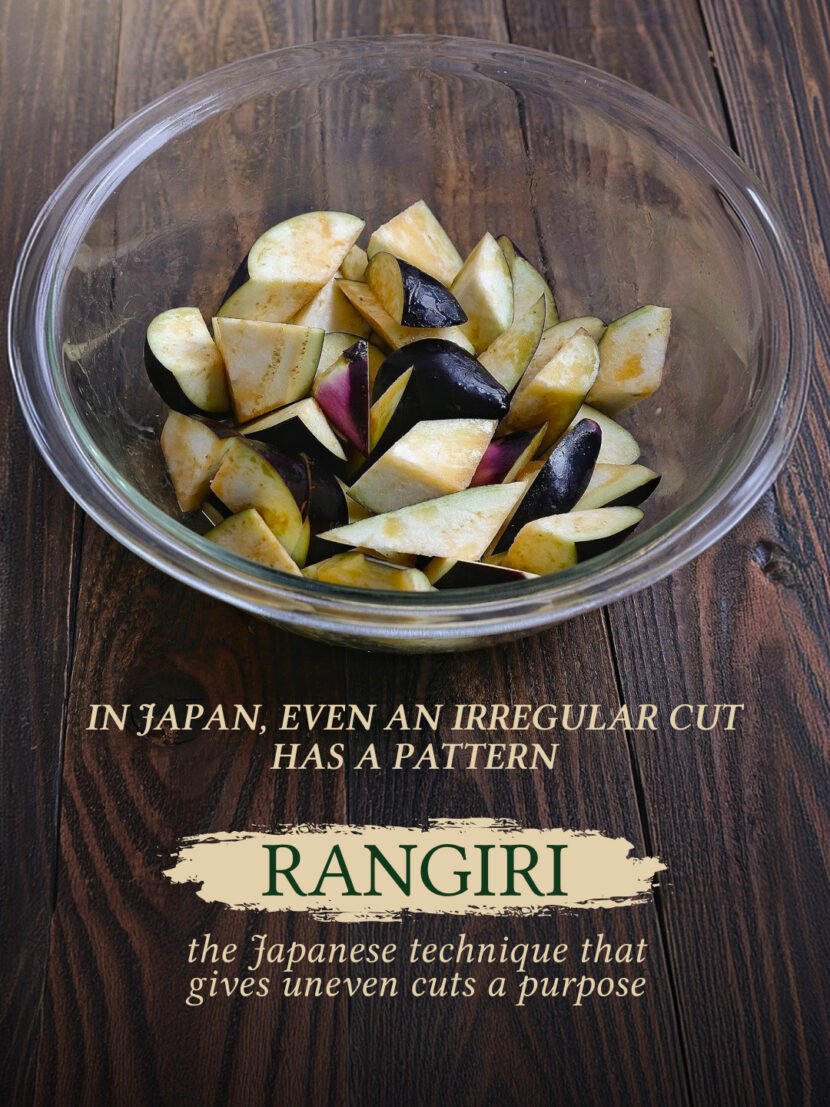
What is Rangiri?
Basically, rangiri is a traditional Japanese cutting technique that cooks commonly use for vegetables such as carrots, daikon, cucumber, and eggplant.
The word comprises two parts:
Ran (乱): meaning irregular or disorderly;
Kiri (切り): meaning cut.
Together, the name simply refers to an irregular cut. But, there is a little more to it than simply cutting vegetables into random pieces.
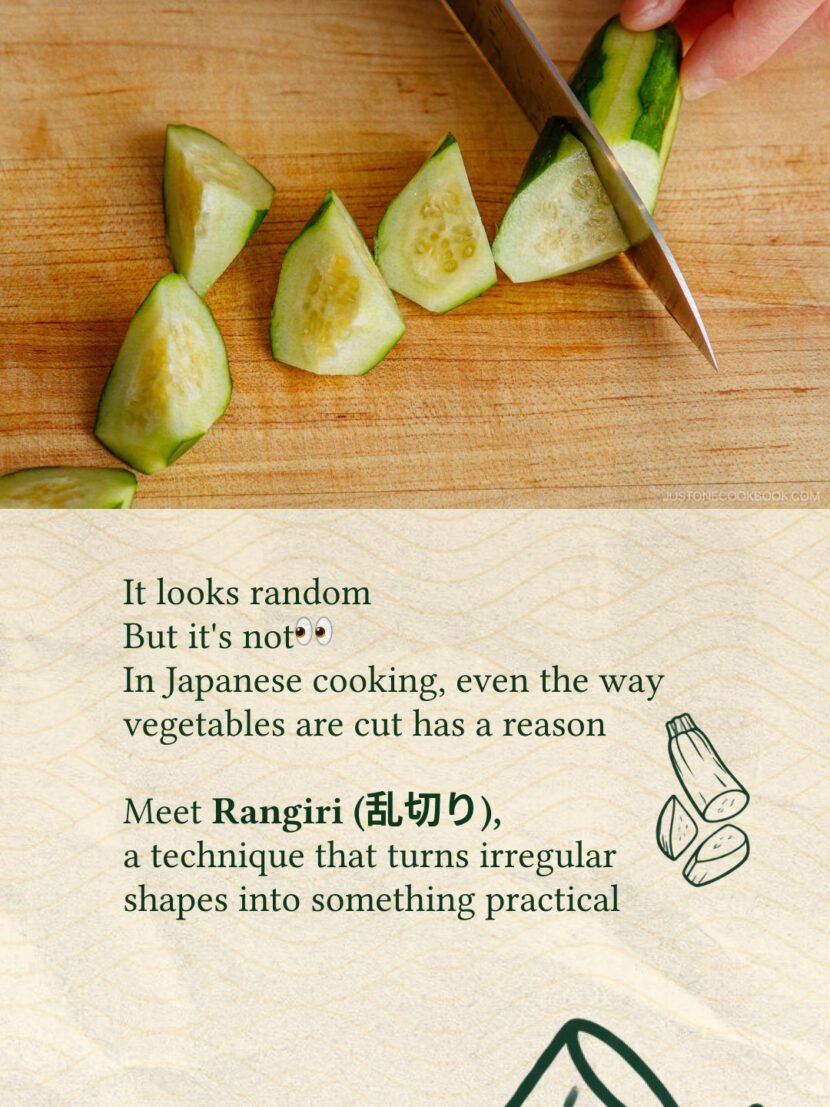
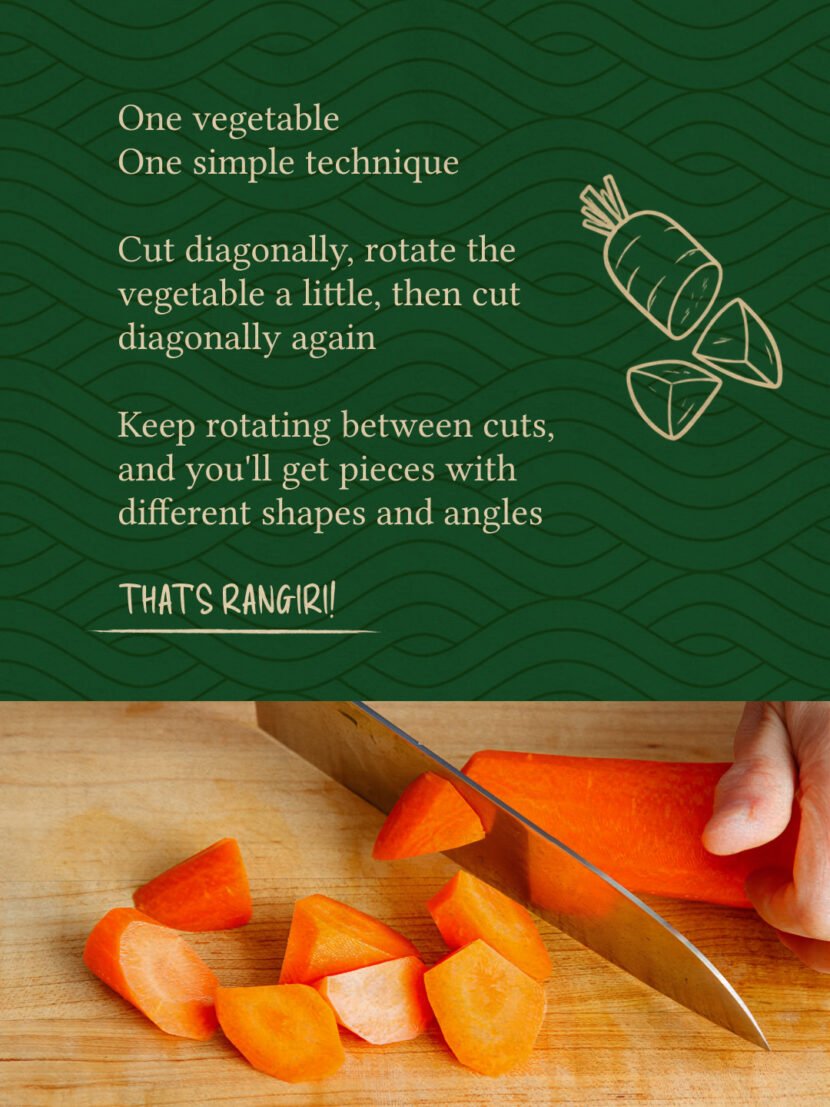
To make rangiri, the cook holds the vegetable at an angle, makes a diagonal cut, and then rotates the vegetable slightly before making the next cut. Next, you repeat this process along the entire length of the ingredient.
Consequently, the result is a series of pieces with angled surfaces, each slightly different in shape. The cuts may look irregular, but the method is entirely deliberate.
Why cut vegetables this way?
Undoubtedly, rangiri is not just about appearance. It also serves a highly practical purpose.
By cutting vegetables diagonally and rotating them between cuts, you create pieces with plenty of exposed surface area. As a result, this extra surface area helps ingredients absorb flavours from broths, sauces, and seasonings much more effectively. Therefore, this technique proves particularly useful in Japanese simmered dishes, known as nimono.
For example, think of carrots simmered in a savoury broth or daikon cooked slowly until it becomes tender and full of flavour. The shape of the cut helps the vegetable cook evenly, while the angled surfaces allow much more contact with the surrounding liquid.
Ultimately, it is a simple technique that makes a massive difference to both the cooking process and the finished dish.
Not every cut needs to look the same
Interestingly, one of the fascinating things about Japanese cooking is how much thought goes into the shape and size of ingredients.
Chefs choose different cuts depending on what they are preparing, how they will cook it, and how it should look on the plate. In this context, rangiri is a lovely example of this unique way of thinking.
Instead of making every piece identical, the technique creates a natural variation while maintaining strict consistency in the way you prepare the ingredient.
Essentially, it is not about making things imperfect just for the sake of it. It is about understanding what actually works. And sometimes, a cut that looks a little different is exactly the right one.
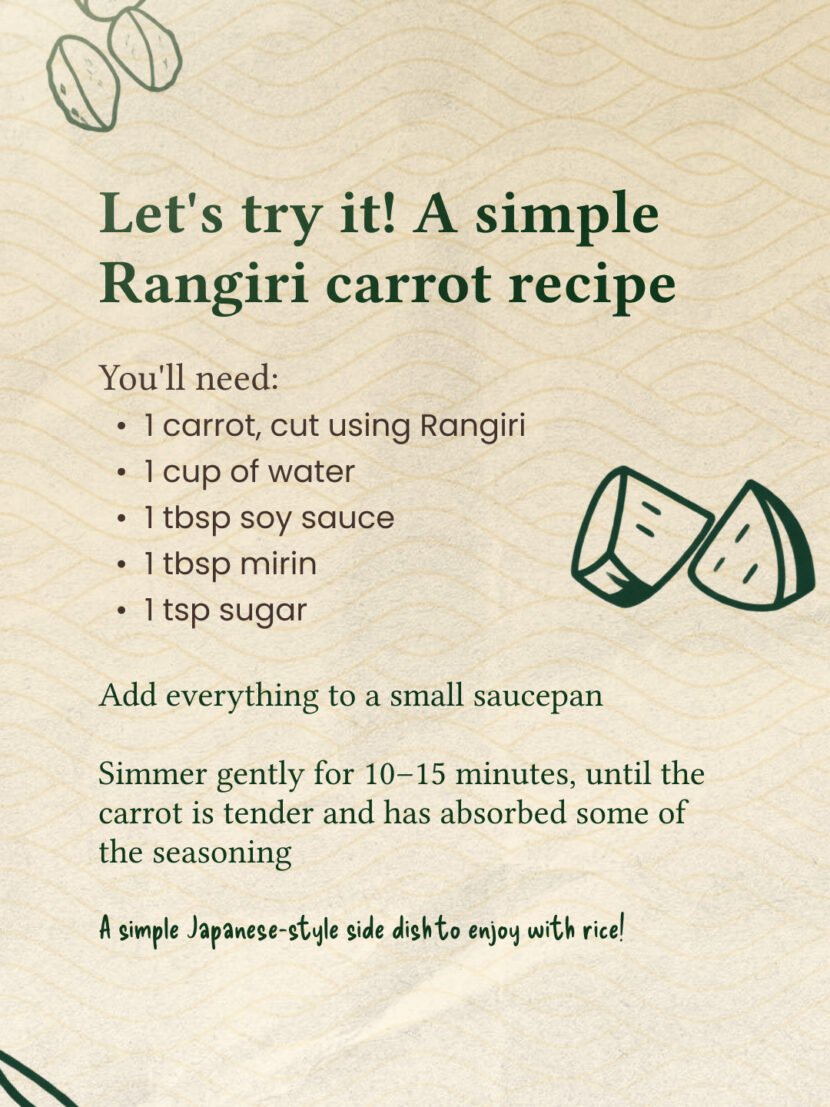
Try Rangiri at home
Want to give it a go? Carrots are a great place to start!
- First, peel a carrot and place it on a cutting board.
- Next, hold your knife at an angle and make a clean diagonal cut.
- Then, rotate the carrot slightly.
- Make another diagonal cut, creating a new angled surface.
- Finally, continue rotating and cutting until you reach the end.
- Try to keep the pieces roughly similar in size, even though their individual shapes will be different. Once you get the hang of it, you can try the exact same technique with daikon or eggplant.
And remember, there is no need to get every piece perfect on your first attempt. Like many Japanese cooking techniques, it just takes a little practice.

A different kind of perfection
In conclusion, rangiri is a beautiful reminder that precision does not always mean making everything look exactly the same.
Sometimes, it means knowing why you are doing something and understanding how even a small detail can completely change the result. In Japanese cooking, the shape of a vegetable is not just a finishing touch. It can influence how the ingredient cooks, how it absorbs flavour, and how it looks on the plate.
And that is exactly what makes this seemingly irregular cut so interesting. A little different by design. A little more thoughtful than it first appears. That is the true art of rangiri. 🌿
At Izakaya Midori, we love the thought and care that go into Japanese cooking, even in the tiny details you might not notice at first.
Until next time, from all of us at Izakaya Midori 💚
📱 Mobile (Text or Call): +61 480 416 307