
Yakimochi: The Japanese Word That Means Grilled Mochi… and Jealousy
What Does Yakimochi Mean? From Grilled Mochi to Jealousy
First of all, imagine you’re in Japan and someone asks:
“Yakimochi yaiteru?”
You know mochi. You might even know that yaki means grilled, cooked, or toasted.
So naturally, you might start wondering… are we talking about food?
Well, not necessarily.
Actually, yakimochi is one of those wonderfully confusing Japanese words that can take you from a delicious Japanese snack straight into relationship drama. 😅
It can mean grilled mochi. But, it can also mean jealousy.
Here is exactly how that happened.
First, the Delicious Kind of Yakimochi
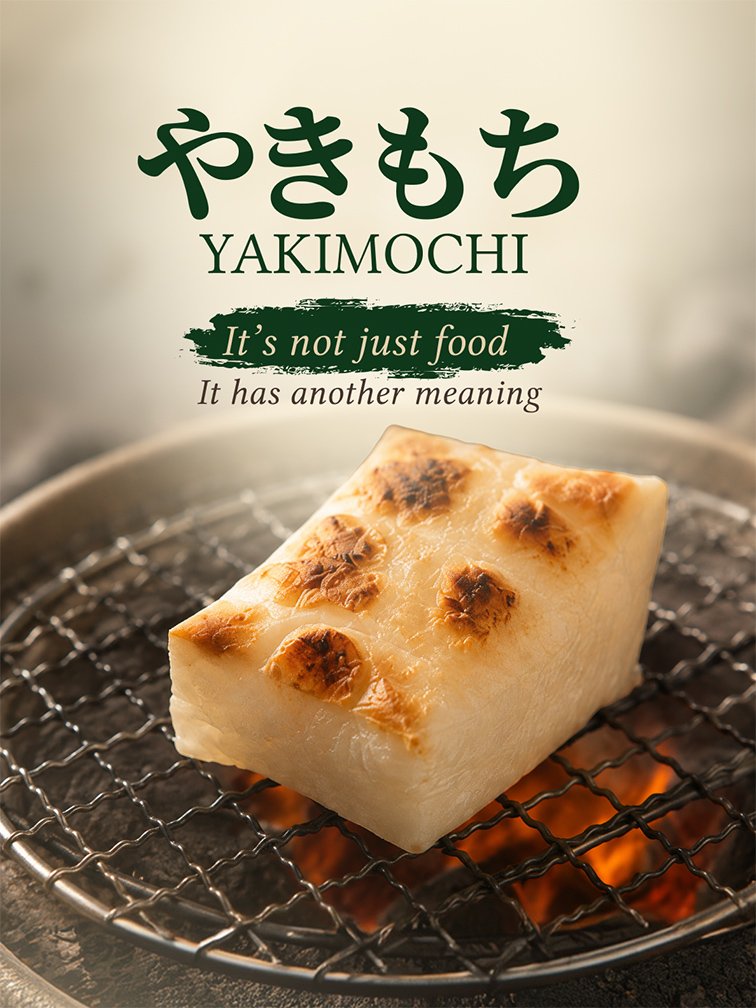
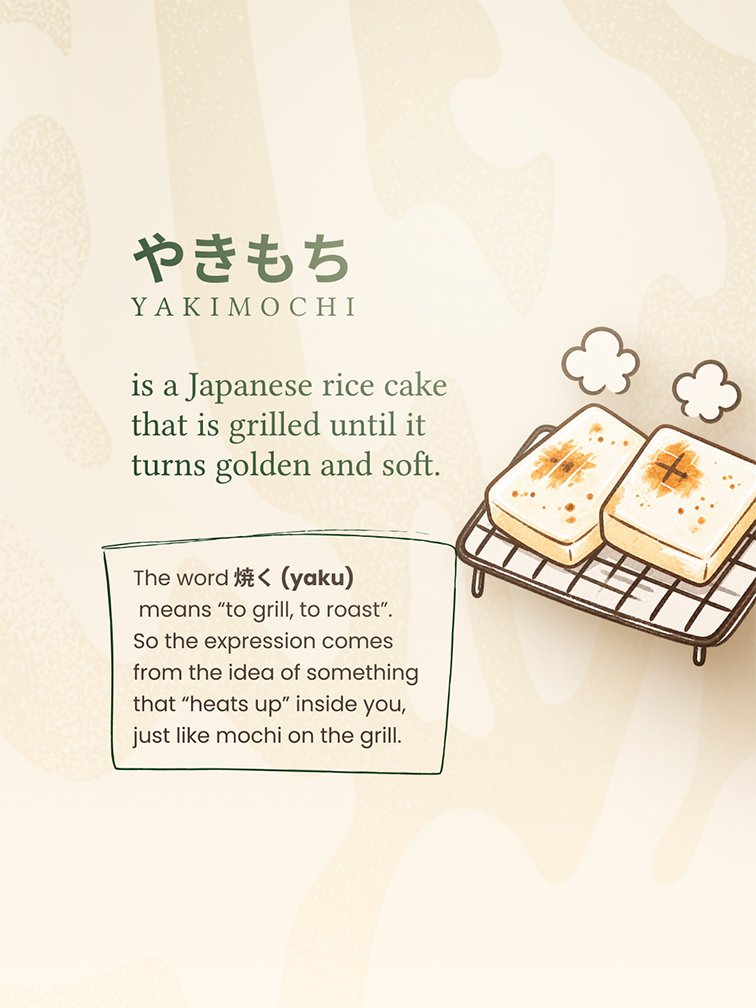
Specifically, written as 焼き餅, yakimochi refers to mochi that you have grilled or toasted.
焼き (yaki) = grilled, cooked, or toasted
餅 (mochi) = Japanese rice cake
When you heat mochi, something wonderful happens. It begins to puff up. The outside gets hot and toasted, sometimes slightly crisp, while the inside becomes incredibly soft, stretchy, and chewy.
If you keep heating it, the mochi can swell even further, eventually splitting open and releasing hot steam from inside. Ultimately, it is a simple Japanese comfort food, particularly enjoyable during the colder months.
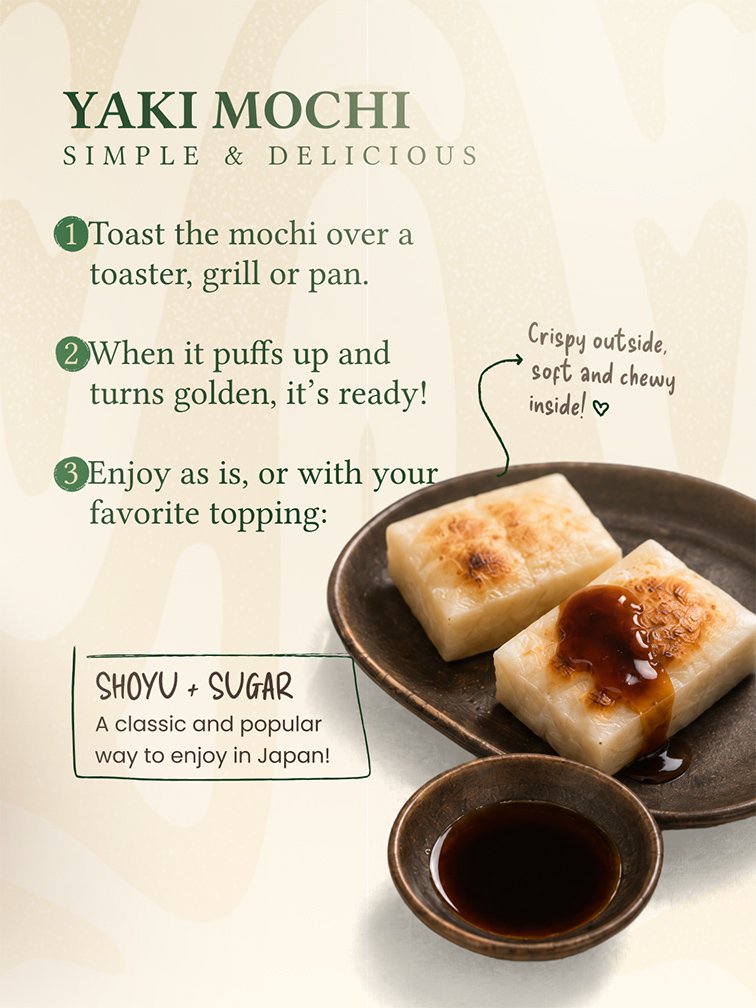
Furthermore, you can eat yakimochi in several ways. Some people enjoy it with soy sauce, others wrap it in nori, and you can also add it to soups and other traditional dishes.
So far, everything makes perfect sense. Then, the Japanese language makes things much more interesting.
Yakimochi Can Also Mean Jealousy
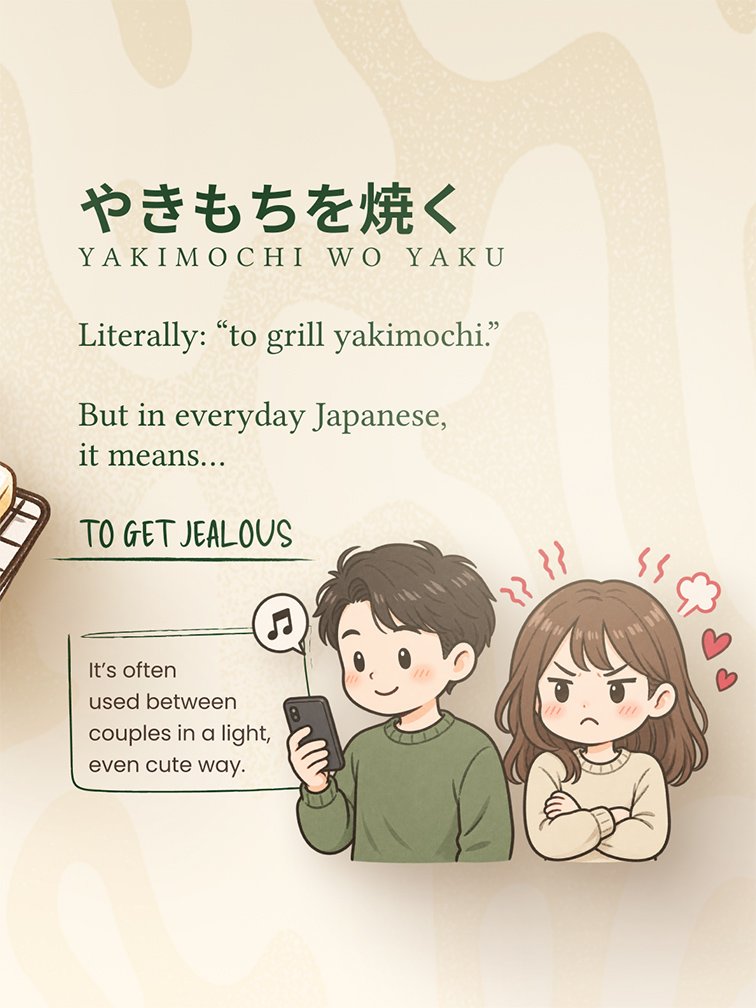
In everyday Japanese, people also commonly use やきもち (yakimochi) to mean jealousy, particularly the kind that comes up between people.
You might hear the expression:
やきもちを焼く (Yakimochi wo yaku)
Which means: “To get jealous” or “to be jealous.”
But here’s where it gets funny:
焼く (yaku) also means to grill, bake, or cook.
Therefore, if you are learning Japanese and translating everything literally, yakimochi wo yaku can sound suspiciously like: “To grill grilled mochi.”
Except, nobody is necessarily cooking anything. Someone might simply be jealous.
So… What Does Mochi Have to Do With Jealousy?
Interestingly, this is where the expression becomes much easier to remember.
First, think about what happens when you grill mochi. As it gets hotter, the mochi begins to puff up. It swells. The surface gets hot and toasted. And eventually, steam escapes from inside.
Now, think about jealousy. That feeling of getting worked up inside… getting hotter and hotter… until you’re practically ready to burst. 😅
Undoubtedly, it is a wonderfully fitting image for yakimochi.
However, there’s also some clever Japanese wordplay behind the expression. The verb 妬く (yaku) means to feel jealous or envious. And it sounds exactly like 焼く (yaku), which means to grill, bake, or cook.
Because of this, that linguistic similarity became strongly associated with 焼き餅 (yakimochi) — grilled mochi.
So, while the image of hot mochi puffing up like someone getting increasingly jealous is a brilliant way to remember the expression, the real linguistic connection comes from the play between the two meanings of yaku.
And suddenly, a piece of grilled mochi and a jealous person don’t seem quite so unrelated after all. 👀
Context Changes Everything
Essentially, this is why context matters so much when learning Japanese.
For example, if someone is talking about food and says:
“Yakimochi tabetai.”
They’re probably saying: “I want to eat grilled mochi.” Nothing dramatic happening there.
But if someone looks at you and asks:
“Yakimochi yaiteru?”
Well… they probably aren’t offering you a snack. 👀 They’re asking if you’re jealous.
Same word. Very different conversation.
Since We’re Talking About Mochi… 🍡
Now that you know the hidden meaning of yakimochi, why not try the edible one?
Grilled mochi is surprisingly simple to prepare at home, and watching it slowly puff up as it cooks is part of the fun.
Therefore, we’ve put together an easy guide below so you can make your own yakimochi at home.
👇 Save the recipe and give it a try!
But There’s More! Yakimochi Isn’t the Only One…
In addition, the Japanese language has plenty of food expressions with meanings you might never guess from the ingredients:
手前味噌 — Temae Miso
Literally, “one’s own miso”.
Back when families commonly made their own miso, people naturally took immense pride in how good theirs was.
Today, Japanese speakers use temae miso a little like: “Not to brag, but…”
From homemade miso to a humble brag.
胡麻をする — Goma wo Suru
Literally, “to grind sesame”.
But it can actually mean to flatter or suck up to someone.
One popular explanation comes from the way crushed sesame sticks to everything while you grind it — much like someone who stays very close while constantly handing out compliments.
花より団子 — Hana Yori Dango
Literally, “dango over flowers.”
The expression comes from the idea that while some people admire the beauty of the flowers during hanami, others might be much more interested in the food.
Today, people use it when someone chooses something practical or enjoyable over something valued mainly for its beauty.
In other words, the flowers are beautiful, but sometimes, you’d rather have the dango.
And honestly, we get it.
Food Tells You More About a Language Than You Might Expect
In conclusion, that’s what makes expressions like these so fascinating.
Mochi can become jealousy. Miso can become a humble brag. Sesame can become flattery. And dango can win over flowers!
Ultimately, learning them isn’t just about learning Japanese vocabulary. It’s a beautiful little glimpse into how food, humour, and everyday life have shaped the language over generations.
So, the next time you hear yakimochi in Japan, listen carefully. Someone might be talking about warm, freshly grilled mochi. Or… someone might be feeling a little jealous.
Given the choice, we’d probably take the grilled mochi!
The Midori Journal — Stories inspired by Japanese culture, food, and everyday life. Discovering the little details that make Japan endlessly fascinating.
📱 Mobile (Text or Call): +61 480 416 307
