
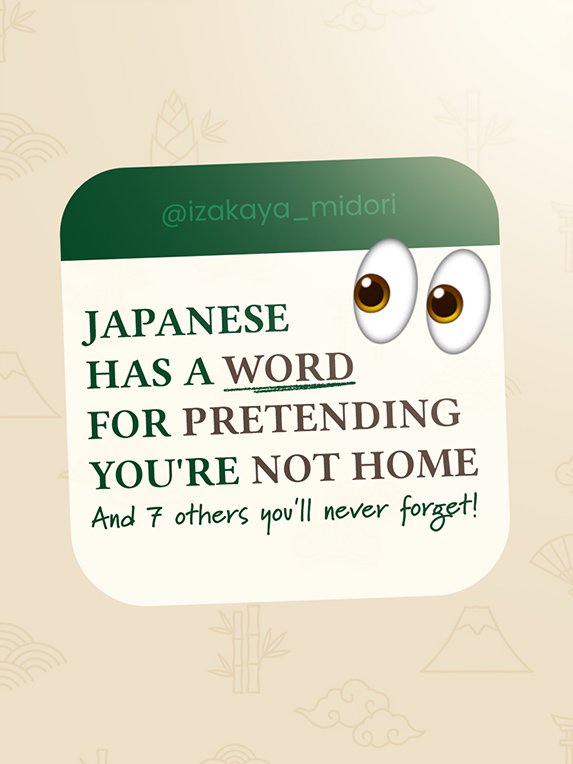
Japanese Has a Word for Pretending You're Not Home.
And 7 Others You'll Never Forget.
You know that feeling when someone knocks at the door and you just… don’t move? You hold your breath, mute the TV, and wait for them to leave?
Well, Japan has a word for that.
As it turns out, Japanese has a word for a lot of things we do every day — things we never thought deserved a name. Ultimately, that’s what makes these words so special. Not because they’re exotic or hard to pronounce, but because the moment you read them, you think: finally. There it is.
Therefore, here are 8 of our favourites.
居留守 — Irusu
You’re there. You’re just not available. The lights are off, the TV is muted, and you are absolutely not answering that door.
Basically, Irusu is the act of being home while pretending otherwise. And clearly, the fact that Japan needed a specific word for this says a lot about all of us.
口寂しい — Kuchisabishii
It’s not hunger. You’re not craving anything specific. Instead, it is just the feeling that your mouth wants something to do.
You open the fridge. Nothing calls to you. You close it. Open it again. Still nothing. Yet, you grab something anyway.
Exactly, that’s kuchisabishii.
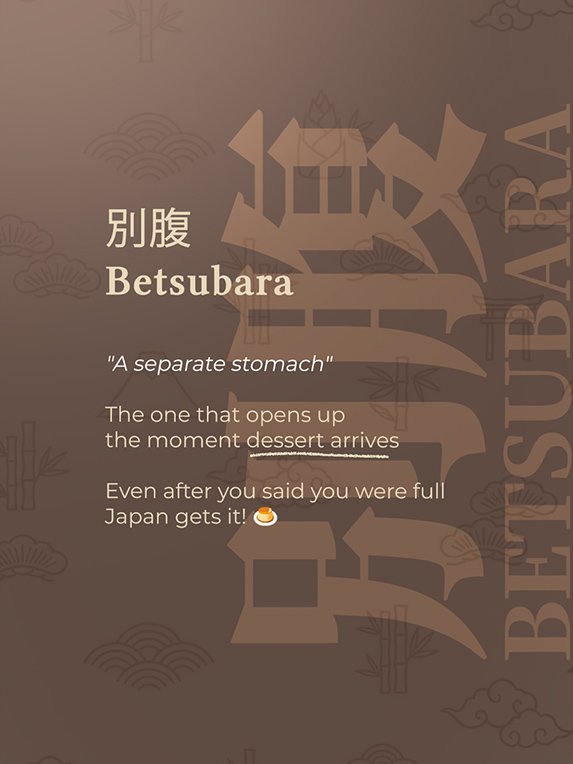
別腹 — Betsubara
You said you were full. You meant it. But then, someone mentioned dessert, and suddenly, there is absolutely room.
In short, Betsubara is the Japanese acknowledgement that the dessert stomach is real, it is separate, and it operates independently from all previous fullness.
Science has yet to confirm this. However, Japan doesn’t need science to confirm this.
バタンキュー — Batankyu
Batan is the sound of a body hitting the mattress. Kyu is the sound of silence that follows.
Together, they describe the specific experience of being so exhausted that sleep arrives before your head fully lands on the pillow.
No scrolling. No tossing. Just gone.
猫舌 — Nekojita
Named after cats, who famously refuse to eat anything warm, nekojita describes the person who blows on every single spoonful of soup, lets their coffee go cold before touching it, and orders their tea lukewarm.
Undoubtedly, you know one. You might be one. Either way, Japan sees you.
KY — 空気読めない — Kūki yomenai
KY acts as the shorthand for someone who walks into a room and completely misses the social atmosphere — the tension, the mood, the unspoken vibe.
They say the wrong thing at the wrong moment. They don’t notice when a conversation has ended. Simply put, they cannot read the air.
Of course, every group has one. No further questions.
懐かしい — Natsukashii
A song, a smell, a flavour — and suddenly you’re somewhere else entirely. Not sad, exactly. Not just happy either. Rather, it is something in between that English doesn’t quite have a word for.
Indeed, Natsukashii is that feeling. The warmth of a memory that you didn’t know you carried until something brought it back.
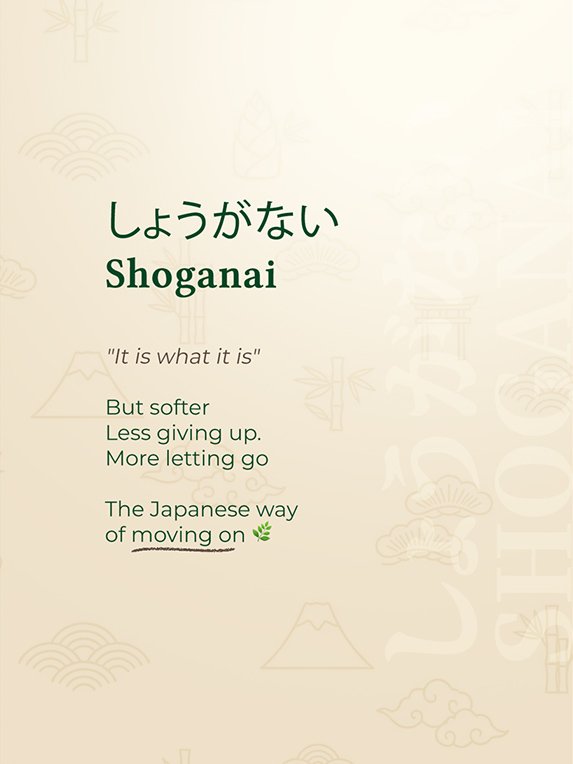
しょうがない — Shoganai
Shoganai isn’t resignation. Instead, it’s acceptance — the quiet, graceful acknowledgement that some things remain beyond your control and fighting them won’t help.
You let it go. Not because you gave up, but because you chose peace instead.
Essentially, it represents the Japanese way of moving on. And honestly, it is one of the most useful philosophies we know.
The Midori Philosophy
Language shapes the way we see the world. And Japanese, more than most, possesses a remarkable ability to notice the small, specific, deeply human moments that other languages simply let pass.
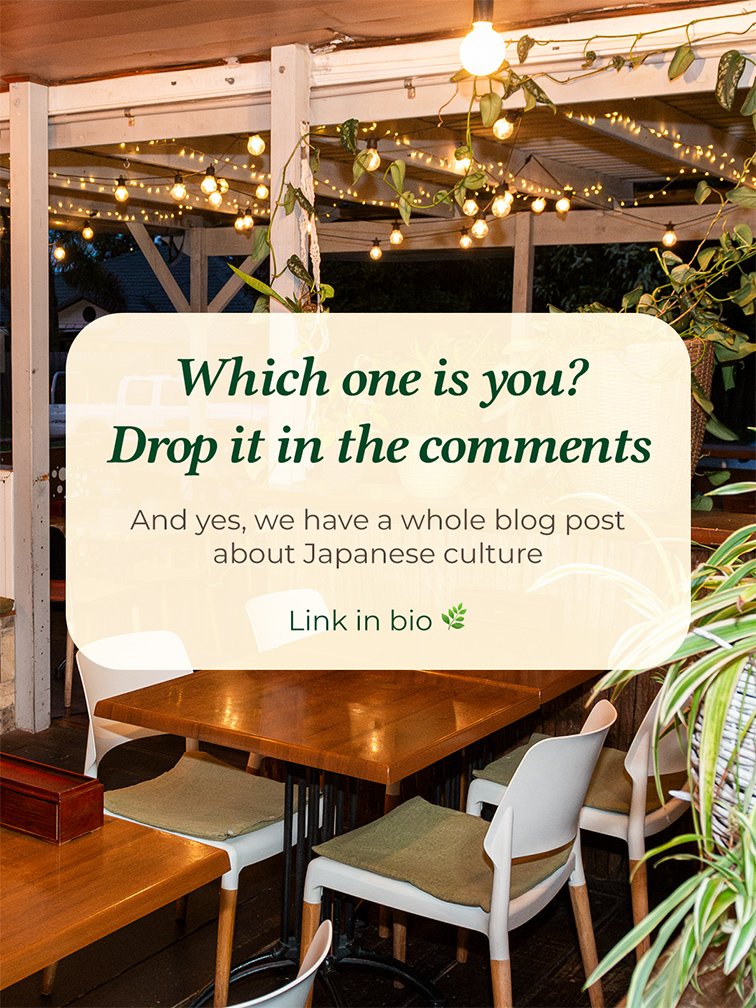
Ultimately, that’s part of what we love about Japanese culture at Izakaya Midori — the attention, the care, the detail. It shows up in the language. It shows up in the food.
Come visit us in Reedy Creek, Gold Coast! 🍃
📱 Mobile (Text or Call): +61 480 416 307