
The Hidden Story Behind the Word Sushi: What 寿司 Really Means
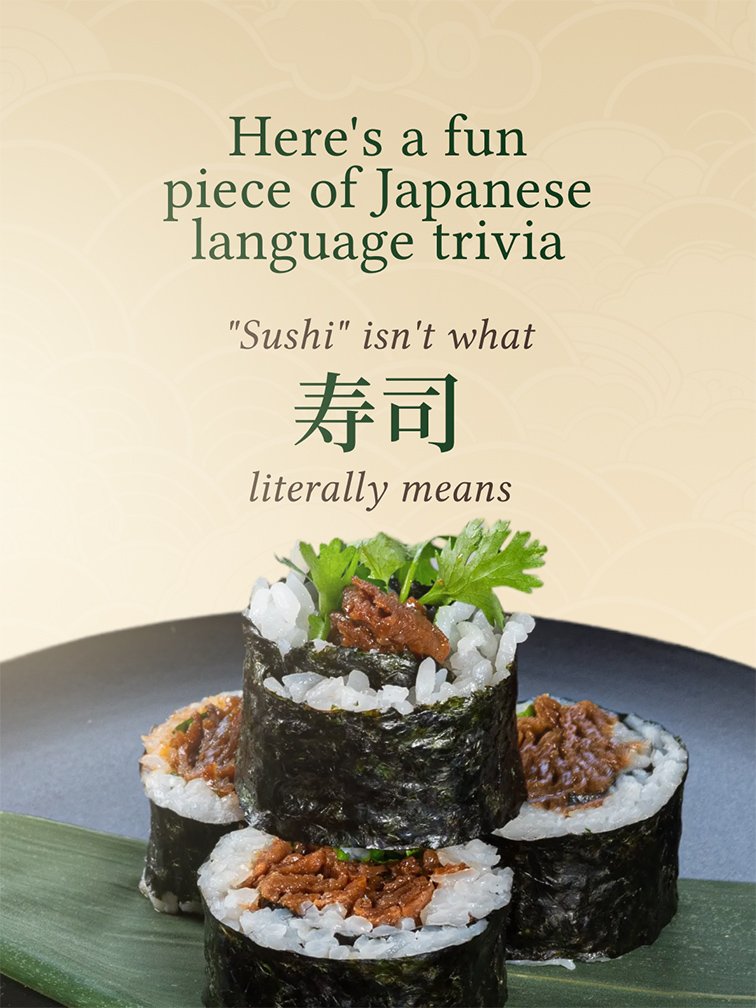
When you see the word 寿司 (sushi), it’s easy to assume the kanji describe the dish itself.
Surprisingly, they don’t.
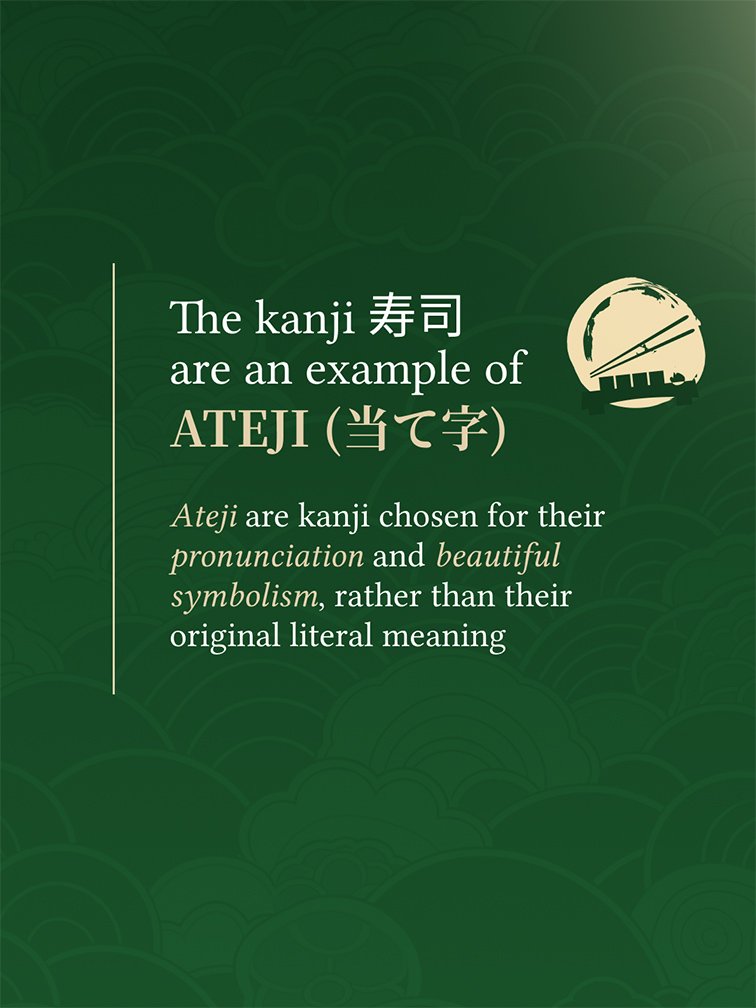
The characters 寿司 are a perfect example of ateji (当て字) — kanji chosen for their pronunciation and symbolic meaning, rather than their original literal definition.
Ultimately, it’s a small detail, but one that reveals how language, culture, and tradition deeply connect in Japan.
What is ateji (当て字)?
In Japanese, ateji (当て字) are kanji that writers choose for the way they sound or for the positive ideas they represent, instead of their literal meaning.
Unlike most kanji, where each character helps explain the word, writers often selected ateji simply because they looked elegant, sounded right, or carried auspicious meanings.
Specifically, this practice became especially popular during the Edo and Meiji periods. During that time, writers, merchants, and artisans used beautiful characters to give familiar words a much more refined image.
Why is sushi written as 寿司?
Today, Japanese people almost always write sushi as: 寿司.
But if you look at each character individually, you’ll quickly notice they don’t literally describe the dish.
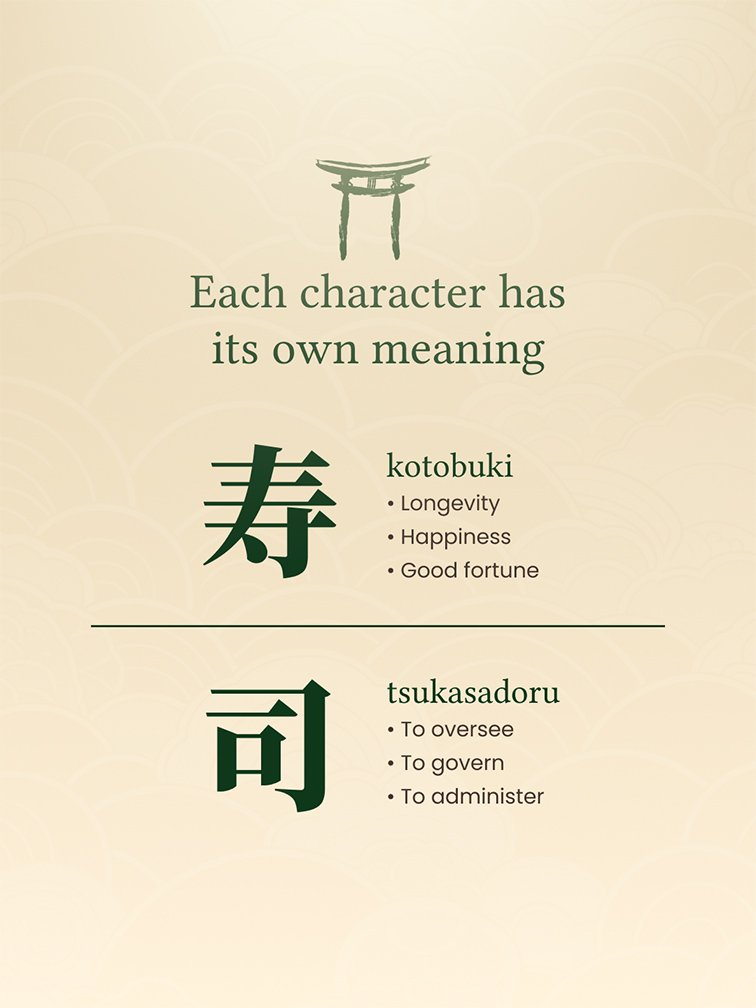
寿 (kotobuki)
First, this character represents:
- Longevity
- Happiness
- Good fortune
- Celebration
It’s a kanji people commonly associate with joyful occasions and beautiful wishes for a long, prosperous life.
司 (tsukasadoru)
Second, this character means:
- To oversee
- To govern
- To administer
On its own, it has absolutely nothing to do with food.
Together, these characters don’t define what sushi is. Instead, they give the word a positive, auspicious feeling. Rather than describing the dish, they celebrate it.
So what did “sushi” originally mean?
Long before modern sushi existed, the word referred to a method of preserving food using fermented rice.
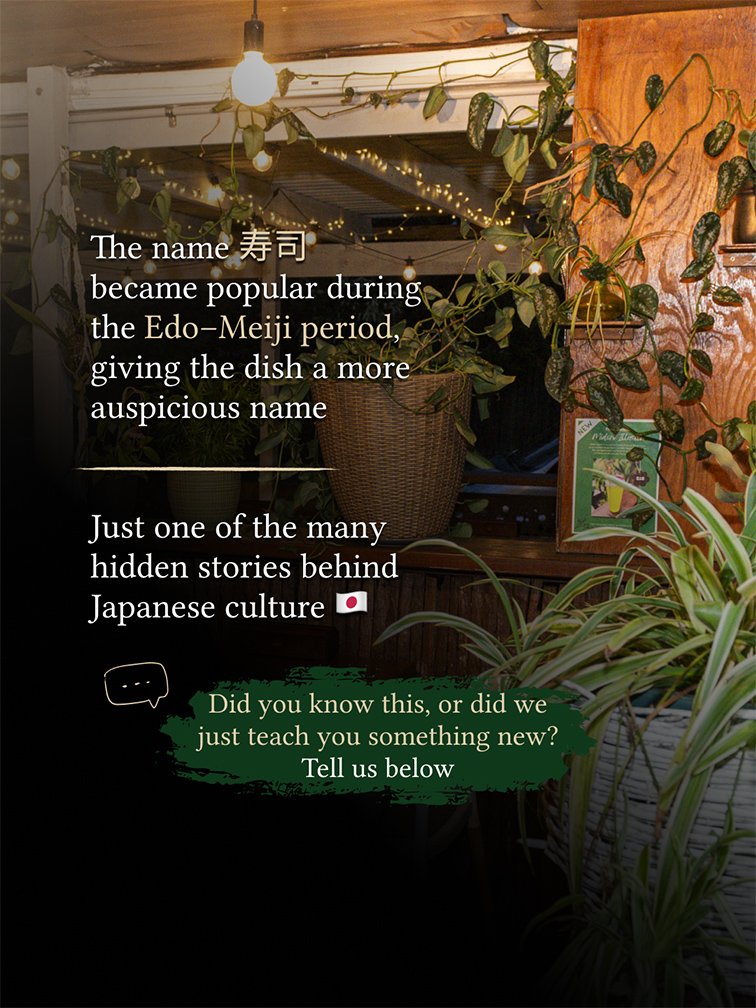
As Japanese cuisine evolved over the centuries, the dish naturally evolved as well. The writing 寿司 became popular during the Edo–Meiji period, giving sushi a more elegant and auspicious name while keeping the exact same pronunciation.
In short, it’s a perfect example of how language evolves alongside culture.
More beautiful kanji you’ll find in Japanese food culture
Of course, sushi isn’t the only Japanese word that carries a deeper story. Many kanji that people commonly associate with Japanese cuisine express ideas that go far beyond food.
和 (Wa) — Harmony
One of the most meaningful characters in Japanese. 和 represents harmony, peace, and balance.
You’ll see it in words such as:
- 和食 (washoku) — traditional Japanese cuisine
- 和菓子 (wagashi) — traditional Japanese sweets
- 和室 (washitsu) — Japanese-style room
More than just a word, 和 reflects a philosophy of living in harmony with nature, the seasons, and one another. It’s a profound value that you can also see in Japanese cooking, where balance is just as important as flavour.
茶 (Cha) — Tea
At first glance, 茶 simply means tea. But in Japan, tea represents much more than a drink. It symbolises hospitality, mindfulness, and taking a moment to slow down.
Whether it’s a cup of お茶 (ocha) shared with friends or the centuries-old Japanese tea ceremony, 茶 reminds us that even the simplest rituals can hold deep meaning.
福 (Fuku) — Good Fortune
The character 福 means blessing, happiness, and good fortune.
People commonly see it during New Year celebrations, on traditional decorations, and in the names of businesses and restaurants. Like 寿 in 寿司, it’s a beautiful reminder that we can choose words not only for their sound but also for the positive feelings they evoke.
米 (Kome) — Rice
Rice sits right at the heart of Japanese cuisine. The kanji 米 means rice, but it also represents nourishment, gratitude, and a deep respect for the harvest.
From a simple bowl of steamed rice to beautifully crafted sushi, this single ingredient has shaped Japanese food culture for centuries.
More than just a name
Undoubtedly, one of the most fascinating things about the Japanese language is that words often tell stories well beyond their dictionary definitions.
Sometimes, people chose a character because it sounded right. Sometimes because it looked elegant. Sometimes because it represented good fortune. And sometimes, all three.
That’s exactly what makes 寿司 so special.
The name isn’t simply describing a dish. Instead, it carries centuries of culture, symbolism, and tradition. Therefore, the next time you see the characters 寿司, you’ll know there’s much more behind them than meets the eye.
They’re a quiet reminder that Japanese cuisine isn’t only about incredible flavours; it’s also about history, craftsmanship, and the stories hidden inside everyday details.
And perhaps that’s one of the most beautiful things about Japanese culture: even a single word can hold centuries of meaning.
What do you think?
Did this fact surprise you? We’d love to know what you thought or if there’s another Japanese word, ingredient, or tradition you’d like us to explore next.
👇 Leave a comment below and join the conversation!
✨ For more stories about Japanese culture, language, and plant-based Japanese cuisine, follow @izakaya_midori on Instagram. We’re always sharing the traditions, meanings, and little details that make Japan so fascinating! 🇯🇵
📱 Mobile (Text or Call): +61 480 416 307