
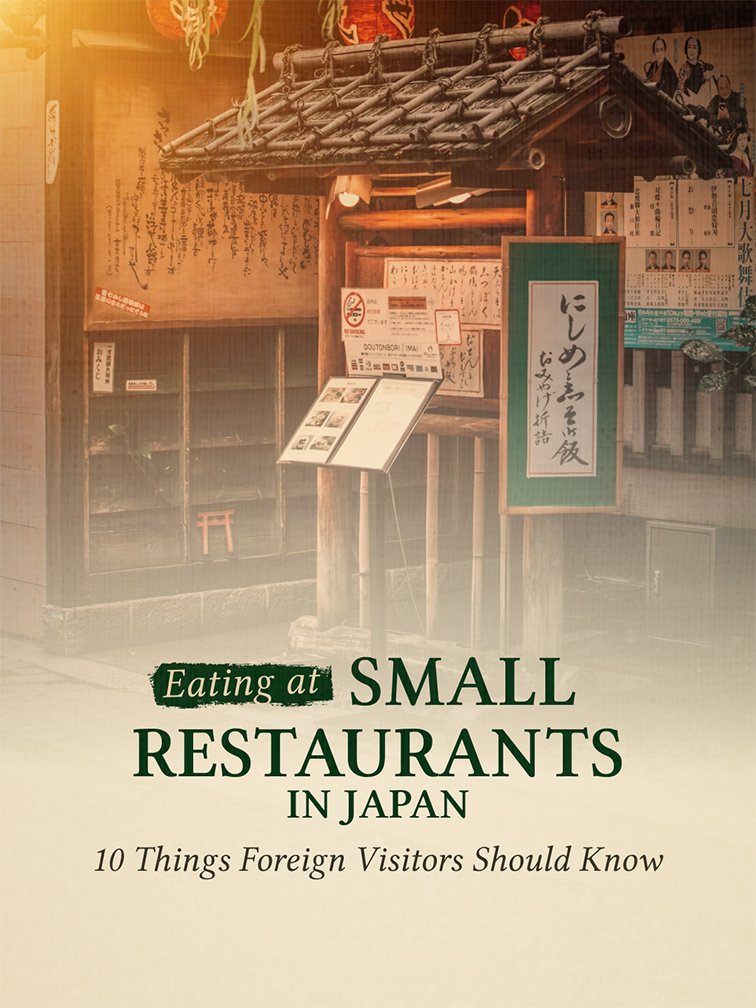
Eating at Small Restaurants in Japan: 10 Things Foreign Visitors Should Know
Planning a trip to Japan? Here’s something worth knowing before you sit down for your first meal at a small local restaurant.
Konnichiwa!
First of all, one of the nicest things about exploring Japan is discovering those small restaurants tucked away in quiet streets, hidden down narrow alleys, or just around the corner from a busy station.
Some have only a handful of seats, a small counter, a menu written entirely in Japanese, and perhaps just one or two people looking after the whole place. These restaurants can offer some wonderful dining experiences. However, they may also work a little differently from what you’re used to back home.
Therefore, if you’re planning to visit Japan, here are 10 things worth knowing before stepping into one of these local spots.
1. Always Carry Some Cash
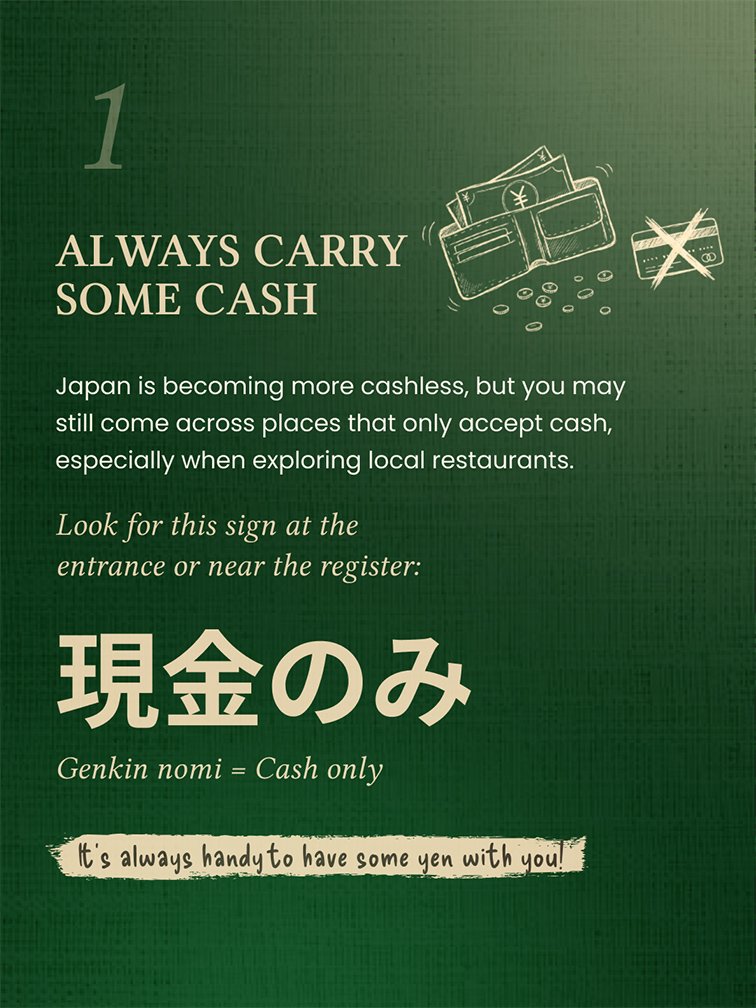
Although Japan is famous for its technology, cash is still very much part of everyday life, especially at smaller, independently owned restaurants.
While larger restaurants and chains often accept credit cards and digital payments, many traditional local establishments remain cash-only. Consequently, it’s a good idea to keep some Japanese yen in your wallet rather than assuming you can pay by card everywhere.
You might also notice a sign saying 現金のみ (genkin nomi), which means “cash only”. Ultimately, a little preparation can save you an awkward moment when it’s time to pay!
2. You Might Need to Order From a Ticket Vending Machine
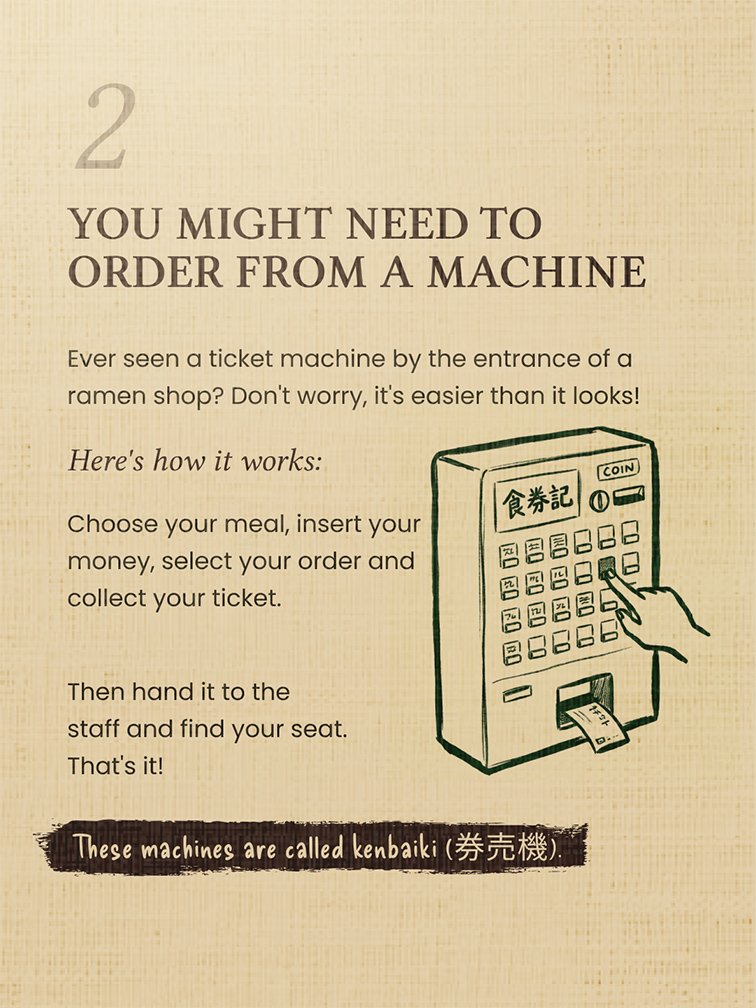
This one can be a surprise if it’s your first time visiting a small ramen restaurant in Japan. Instead of ordering from a waiter, you will often find a vending machine near the entrance called a kenbaiki (券売機).
Here’s how it usually works:
1. First, choose your dish from the machine.
2. Next, insert your cash and select your order.
3. Collect your printed ticket.
4. Then, hand the ticket to the staff at the counter.
5. Finally, find a seat and wait for your food.
Some machines have pictures, while others display everything strictly in Japanese. If you’re unsure what to choose, don’t hesitate to ask someone for help.
A helpful tip: Check whether the machine accepts cash only or also offers electronic payment, as many traditional machines still rely solely on coins and banknotes.
3. Don’t Expect Every Dish to Be Customisable
At home, you might be used to asking for an ingredient to be removed or swapped when ordering a meal. In some small Japanese restaurants, however, things work a little differently.
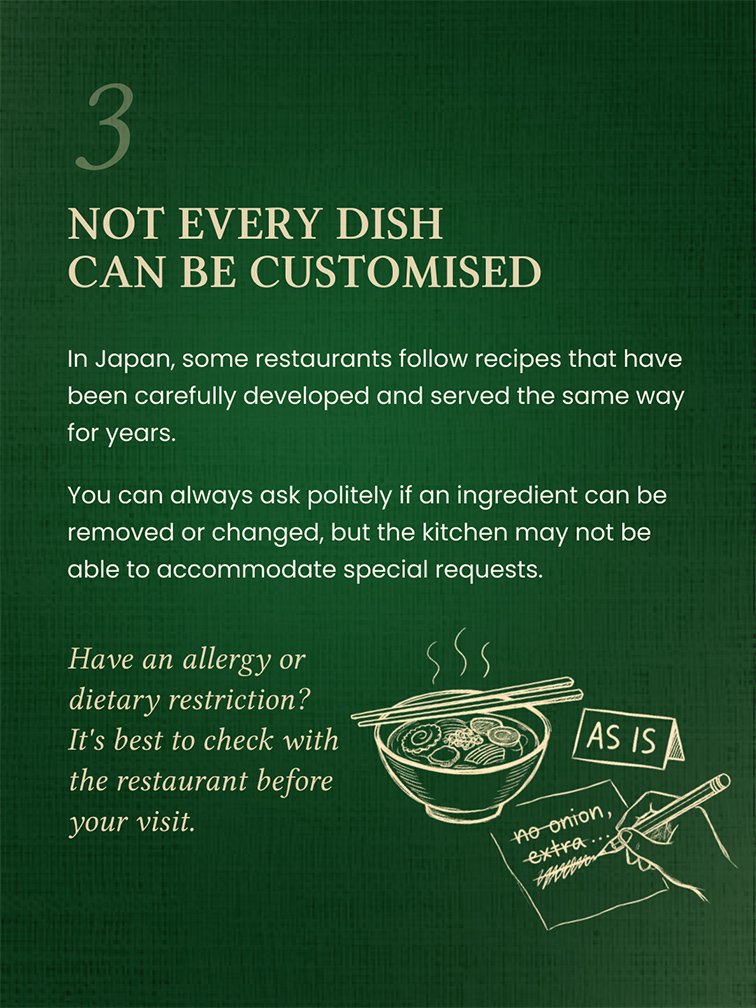
The chef typically prepares each dish according to a specific recipe, with ingredients and quantities carefully decided in advance. As a result, some establishments — especially traditional sushi restaurants and places offering an omakase menu — may not accommodate personal preferences or substitutions.
Of course, that doesn’t mean you should never ask! A polite question is perfectly fine. Just be prepared for the possibility that the restaurant cannot make changes. Furthermore, if you have food allergies, dietary restrictions, or specific ingredients you need to avoid, it’s always best to contact the restaurant before visiting.
4. Be Mindful of How Long You Stay
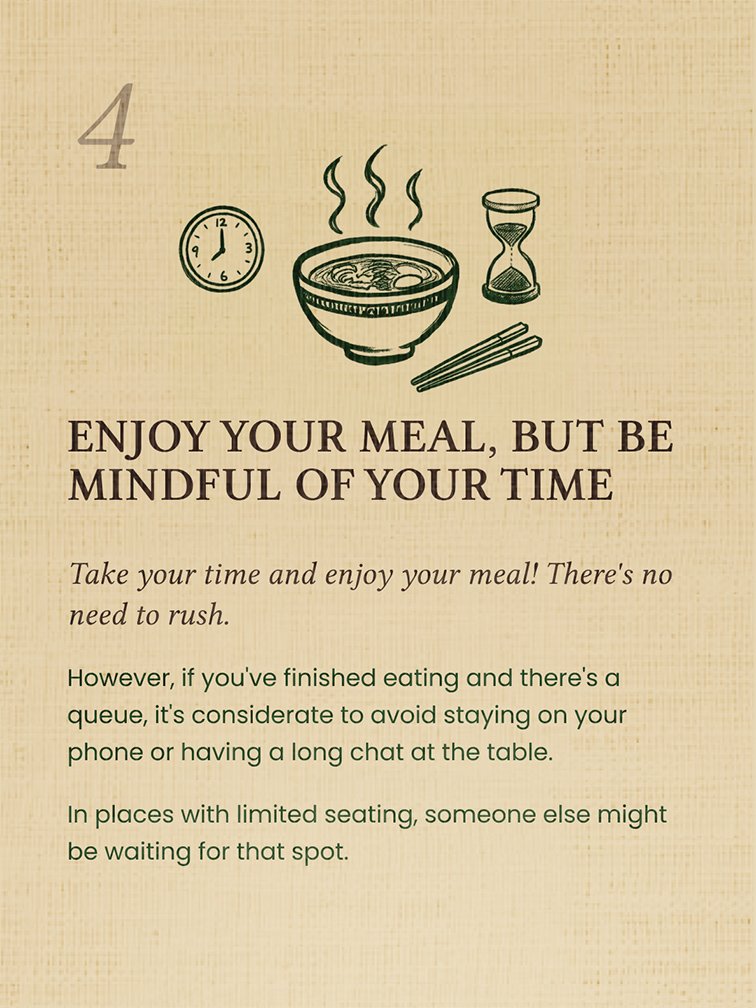
Have you ever noticed how small some Japanese restaurants are? A ramen shop might have just six or eight counter seats, with customers waiting outside for their turn.
In these places, the expectation is often to enjoy your meal and leave once you’ve finished, especially when there’s a queue outside. While there’s no general rule saying you can’t use your phone or have a conversation while eating, spending a long time scrolling through your phone or chatting after finishing your meal may not be appreciated when other customers are waiting.
So, enjoy your meal, take your time eating, and simply be mindful of the people waiting for a seat.
5. Check the Restaurant’s Opening Hours Before Visiting
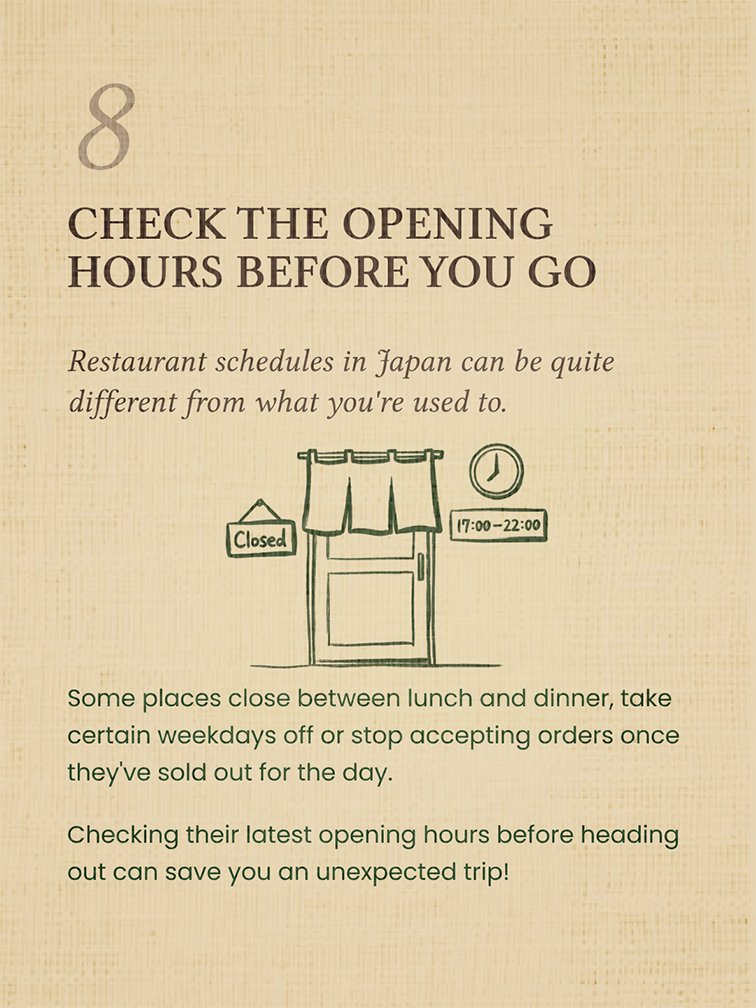
Small independent restaurants sometimes have very different schedules from larger establishments. For instance, they may close on certain weekdays, take longer breaks between lunch and dinner, or stop accepting orders once they’ve sold out for the day.
Because just one person or a small family team runs some of these spots, their opening hours may be less predictable than those of a restaurant chain. Therefore, before making the trip, always check their latest opening hours and closing days. If you’re travelling a long way to visit a particular place, it’s definitely worth checking directly with the restaurant.
6. Some Restaurants Have a Seating Charge
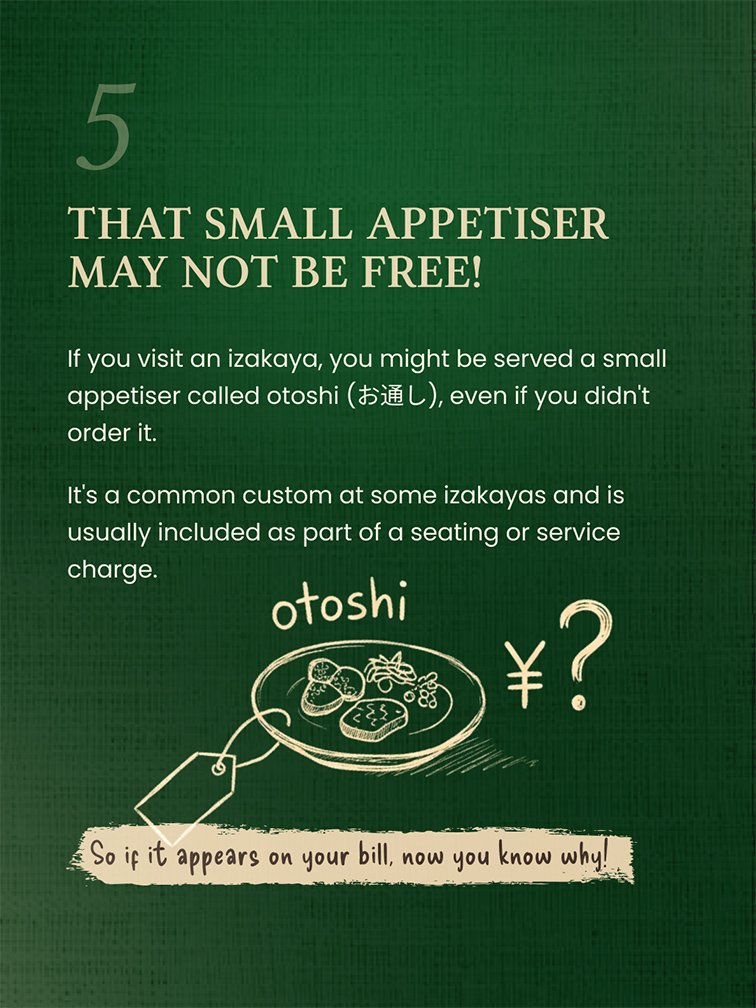
If you visit a Japanese izakaya, you might receive a small dish shortly after sitting down, even though you haven’t ordered it. Locals call this otoshi (お通し) or tsukidashi (突き出し).
Basically, it’s a small appetiser served as part of the restaurant’s seating or service charge, rather than a complimentary dish. This practice is particularly common at izakayas, although it doesn’t apply to every restaurant.
So, if a small appetiser appears on your table without you ordering it, don’t be surprised if you see a corresponding charge on your final bill.
7. You May Need to Take Your Shoes Off
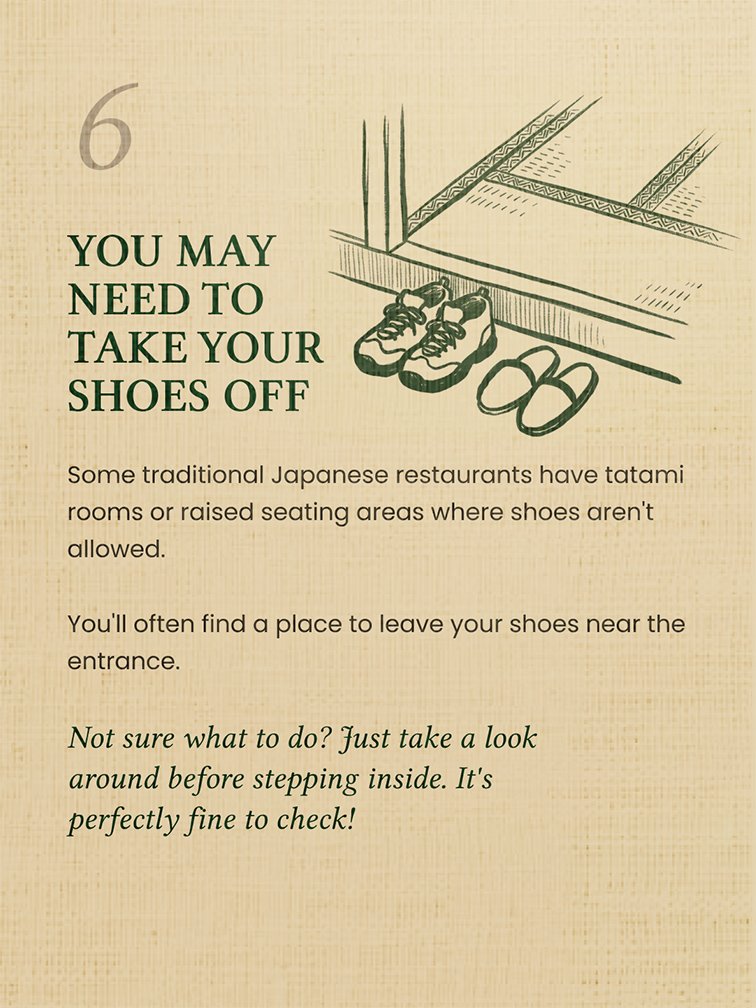
Some traditional Japanese restaurants feature tatami rooms or raised seating areas where guests must remove their shoes. You’ll usually notice a step up from the entrance or a dedicated area where customers leave their shoes before entering the dining space.
If you see other customers removing their shoes, simply follow their example. And here’s a small tip: wearing clean, comfortable socks is always a great idea when travelling around Japan!
8. Don’t Assume Everyone Speaks English
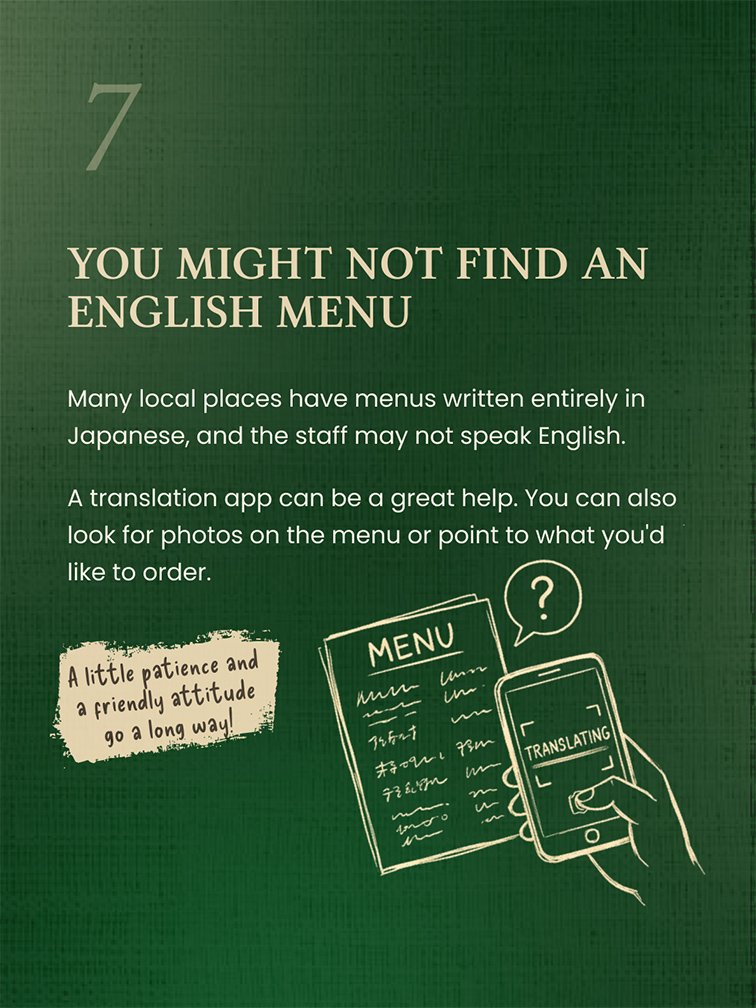
Japan welcomes visitors from all over the world, yet not every small local restaurant has English-speaking staff or translated menus. In family-run establishments, the owner might be the very person taking orders, preparing the food, and looking after the customers all at once.
Consequently, a translation app can be incredibly useful, especially when the menu is written entirely in Japanese. You can also save a few photos of dishes you’d like to try or learn some simple Japanese phrases before your trip. Above all, a friendly smile and a little patience can go a long way.
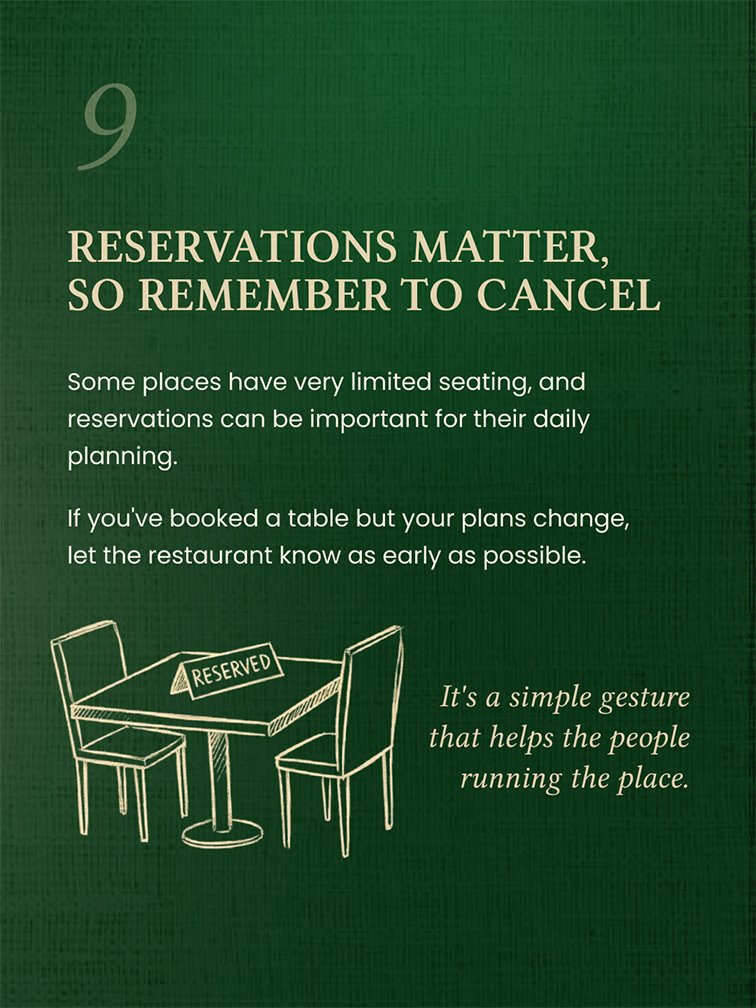
9. Reservations Are Important, So Don’t Forget to Cancel
Some small restaurants have very limited seating, meaning a single reservation can represent a significant part of their business for that service.
If you’ve booked a table, make sure you arrive on time. Conversely, if your plans change, let the restaurant know as soon as possible. Many places prepare fresh ingredients or organise their service based strictly on the number of reservations they receive, so simply not showing up causes unnecessary inconvenience and food waste. Similarly, if you’re running late, it’s always considerate to contact them.
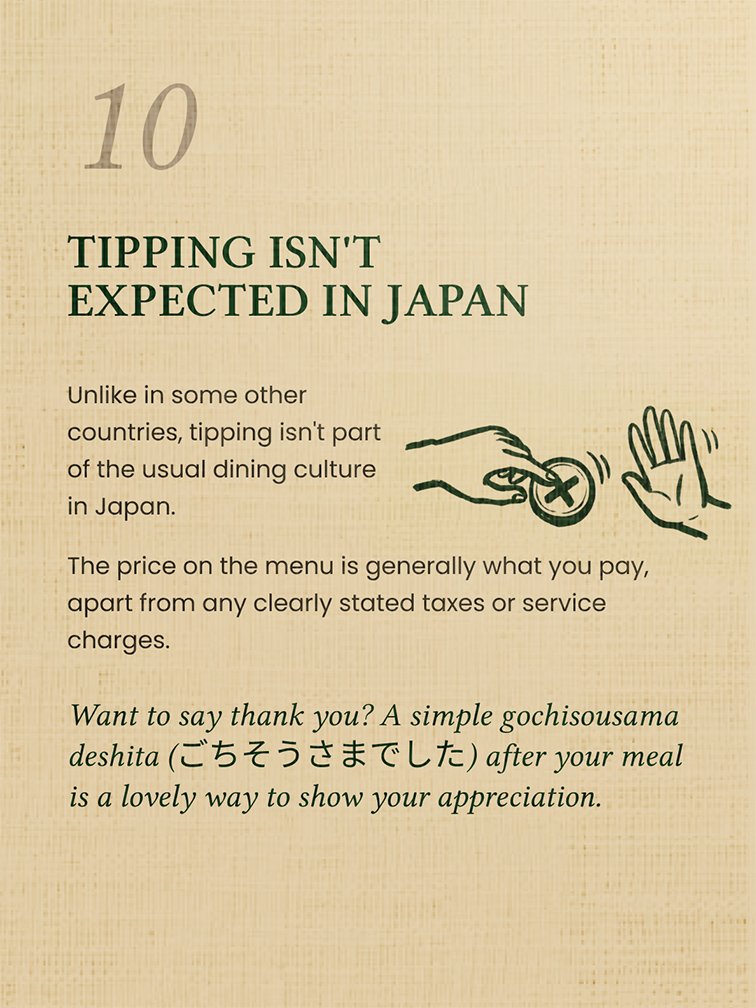
10. Tipping Isn’t Necessary
If you’re visiting Japan from a country where tipping is customary, this rule is essential to remember. In Japan, restaurants do not expect tips. The price listed on the menu is normally what you pay, with any applicable taxes or service charges shown separately.
Therefore, you don’t need to leave extra money on the table after your meal. Instead, saying a simple gochisousama deshita (ごちそうさまでした) — meaning “Thank you for the meal” — is a lovely way to show your appreciation before leaving.
A Few Japanese Words That Might Come in Handy
While exploring small local restaurants, you may come across some of these helpful signs:
– 現金のみ (Genkin nomi) | Cash only
– 予約制 (Yoyaku-sei) | Reservations required
– 本日休業 (Honjitsu kyūgyō) | Closed today
– 満席 (Manseki) | Fully occupied
– 営業中 (Eigyō-chū) | Open for business
It’s definitely worth taking a screenshot of this little list before your trip!
A Few Japanese Words That Might Come in Handy
While exploring small local restaurants, you may come across some of these helpful signs:
– 現金のみ (Genkin nomi) | Cash only
– 予約制 (Yoyaku-sei) | Reservations required
– 本日休業 (Honjitsu kyūgyō) | Closed today
– 満席 (Manseki) | Fully occupied
– 営業中 (Eigyō-chū) | Open for business
It’s definitely worth taking a screenshot of this little list before your trip!
Enjoy the Little Discoveries Along the Way
In conclusion, eating at small local restaurants is one of the best ways to experience everyday life in Japan. You might find a favourite ramen shop with just a few seats, discover a family-run restaurant you’ve never heard of, or enjoy a meal prepared by someone who has been making the same dish for decades.
Not every place works the same way, and you won’t need to remember a long list of strict rules to enjoy your visit. Just be observant, considerate, and open to trying something different. And who knows? One of those small restaurants might just become one of your favourite memories from Japan.
Itadakimasu!
📱 Mobile (Text or Call): +61 480 416 307