Cultural Differences People Notice in Japan π―π΅
Sometimes, what people remember most about Japan isn’t the famous landmarks, temples, or tourist attractions.
Instead, it’s the small everyday details. Specifically, the things nobody really tells you about before you visit. These are the little moments that make you pause and think: “Oh, that’s different.”
And often, those memories stay with people long after they return home.
π΄ Tipping? Not usually
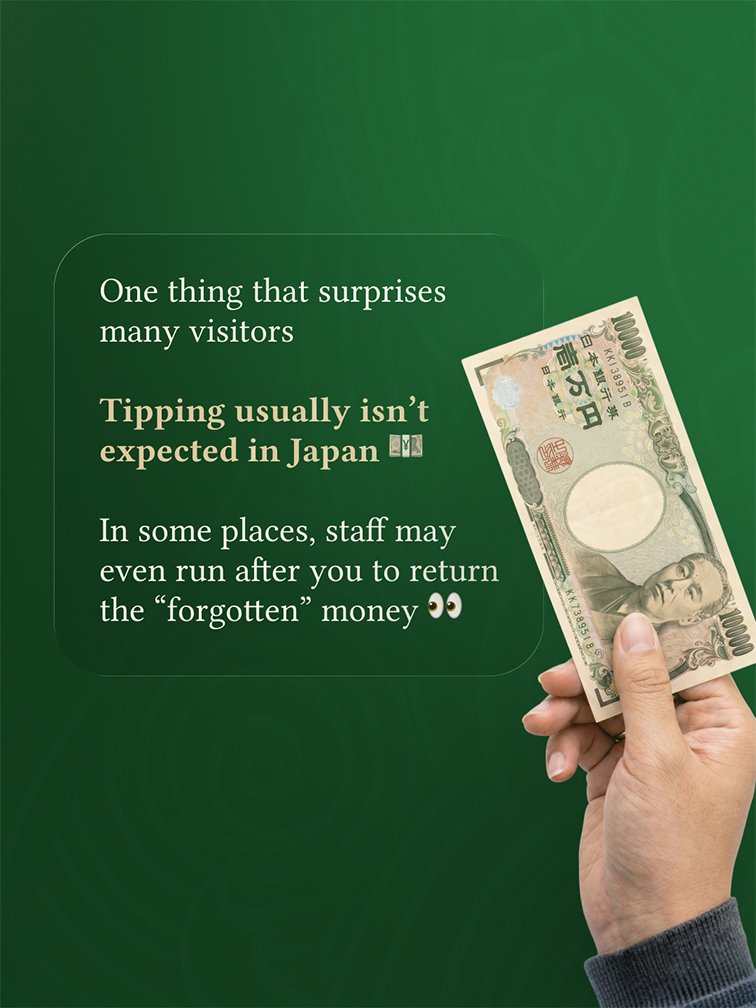
First of all, one of the first cultural differences many visitors notice is tipping.
In countries like Australia, the United States, and Canada, people often see leaving a tip as a way of thanking staff for good service. In Japan, however, people generally do not expect tipping.
In fact, if you leave money behind, the staff may politely run after you because they believe you’ve forgotten your change. For many visitors, this can feel surprising, especially because the service remains exceptionally attentive.
Consequently, this leads to an interesting question: how can service be so good if nobody works for tips?
Ultimately, part of the answer lies in the Japanese concept of taking pride in one’s work. Society views good service not as something extra, but simply as a fundamental part of doing a job well.
The small acts of consideration
Furthermore, as you spend more time in Japan, you begin to notice something else. Many everyday systems seem perfectly designed to make life a little easier for everyone.
For example:
On rainy days, shops often provide plastic umbrella covers before customers enter;
Department stores may offer umbrella stands with secure locking systems;
Convenience stores frequently separate hot and cold items when packing groceries;
Staff often walk customers to the door when saying goodbye.
Admittedly, none of these things are particularly dramatic. Yet together, they create a seamless experience that feels incredibly thoughtful.
π§Ύ Why money is placed on a tray
Additionally, another detail visitors often notice happens during payment.
Rather than handing cash directly to a cashier, customers usually place their money into a small tray. Then, the cashier returns the change using the exact same tray.
At first, it may seem unusual, but the system helps avoid confusion, keeps transactions organised, and people consider it much more polite in many situations.
Today, even with cashless payments becoming increasingly common, you will still see these trays throughout Japan.
π Taxi doors that open themselves
For first-time visitors, this often feels like a little piece of magic.
In many Japanese taxis, the driver controls the passenger doors electronically. Therefore, the door opens automatically when you arrive and closes by itself when you are ready to leave.
It is a small detail, but it is one that many travellers remember long after their trip ends
πΆ Escalators: it depends where you are
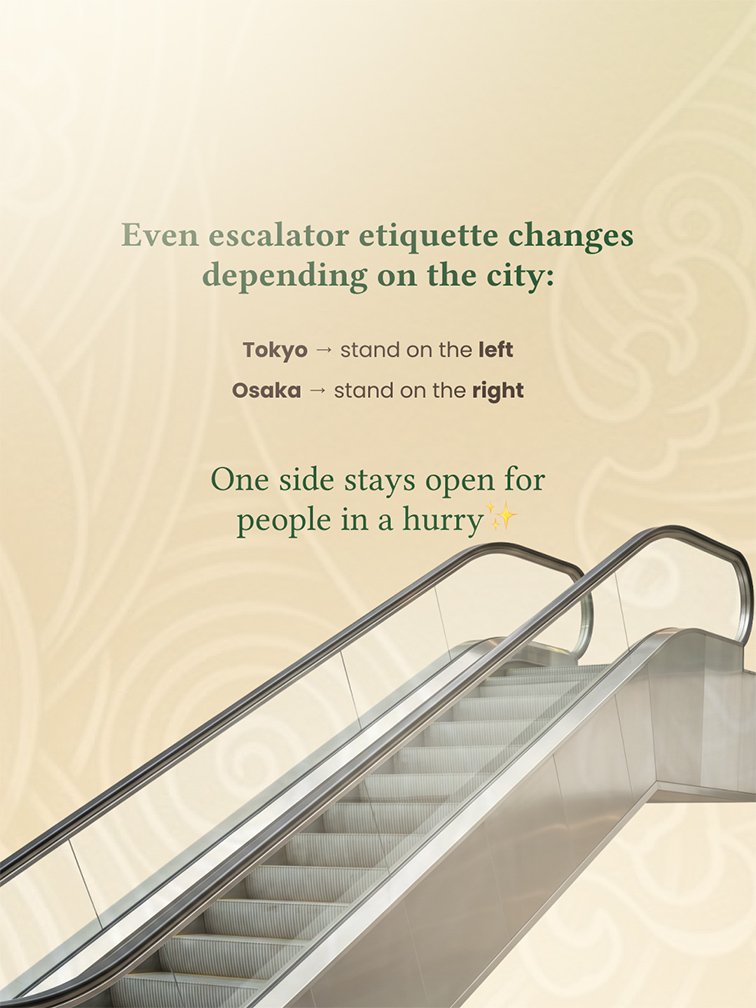
Interestingly, even standing on an escalator can reveal regional differences.
In Tokyo, people generally stand on the left side and leave the right side clear. Conversely, in Osaka, the exact opposite is true.
Of course, there are exceptions, and some cities now actively encourage people not to walk on escalators at all for safety reasons. Still, many visitors find it fascinating that such a simple habit can vary so much depending on where they are in the country.
π The quietness of shared spaces
Undoubtedly, one of the most commonly mentioned experiences among travellers is the atmosphere on public transport.
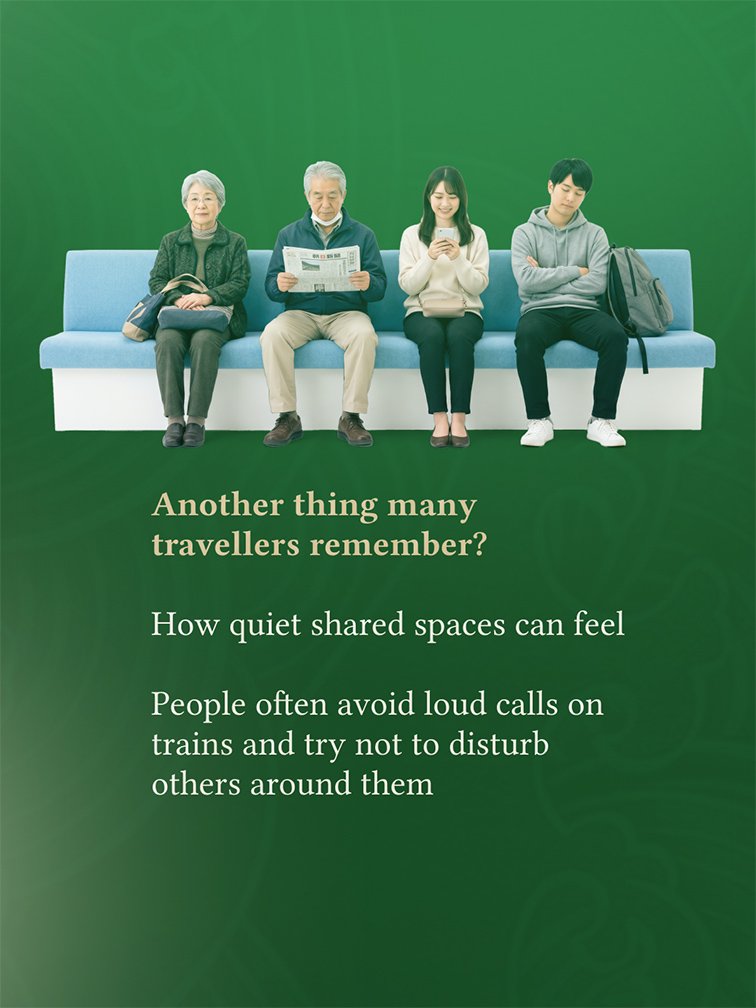
Trains can get incredibly busy, especially during peak hours. Yet, they remain remarkably quiet. People usually keep phone calls brief or avoid them altogether while on board.
Moreover, conversations tend to be soft, and many passengers spend their commute reading, listening to music, or simply resting.
Ultimately, it’s not necessarily about strict rules. Rather, it reflects a broader cultural value of being deeply mindful of the people around you.
π± Convenience stores that surprise people
Japan’s convenience stores often become a favourite part of the trip. Visitors normally expect just snacks and drinks.
However, what they don’t expect is the high level of service. Staff may warm your meals, provide chopsticks, separate groceries thoughtfully, and help ensure you pack your food neatly for the journey home.
For many travellers, it is one of the first signs that attention to detail exists almost everywhere in Japan.
πΏ It’s the little things
In conclusion, when people talk about Japan after returning home, they rarely start with train schedules or famous attractions.
Instead, they often mention moments like:
The taxi door that opened by itself;
The shop assistant who carefully wrapped a purchase;
The convenience store worker who organised their shopping bag;
The quiet train ride;
The umbrella cover waiting at the entrance.
Small things. Ordinary things.
Yet together, they create an experience that feels uniquely Japanese. And perhaps, that is exactly what makes these cultural differences so memorable.
Not because they are dramatic, but because they quietly shape everyday life.
β¨ If you enjoy learning about Japanese culture, food, and everyday traditions, follow us on Instagram @izakaya_midori for more insights and stories from Japan!
π± Mobile (Text or Call): +61 480 416 307