Cooking Sake vs Drinking Sake: A Splash That Changes Everything 👀
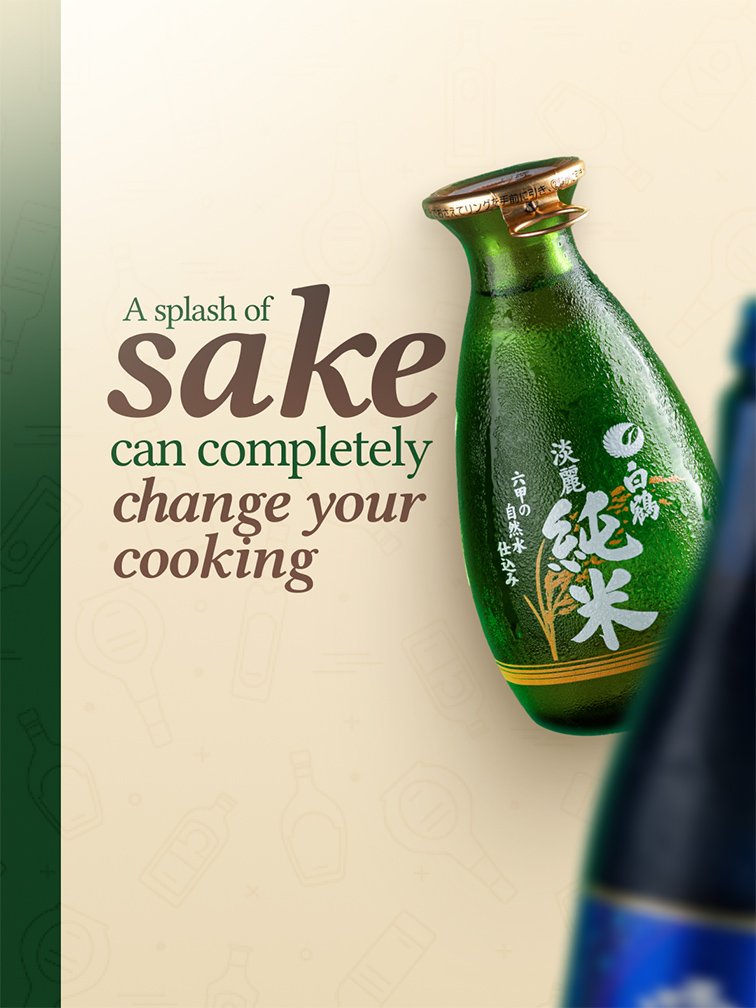
When people hear the word sake, they usually think of the drink served in small cups at Japanese restaurants.
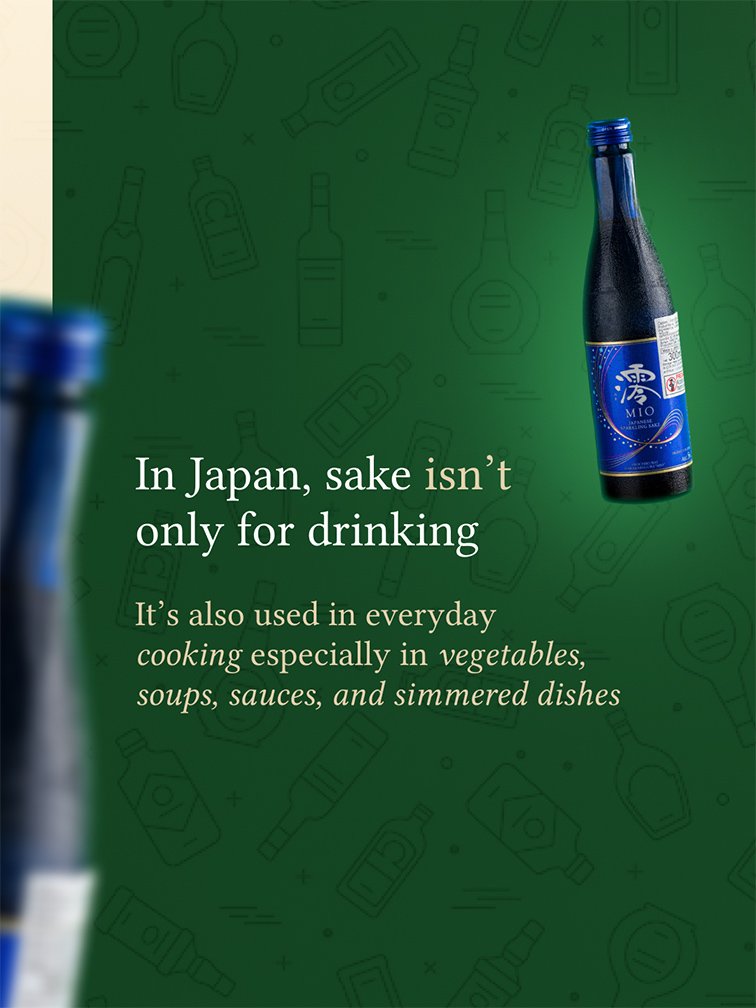
However, in Japan, sake also acts as a very common cooking ingredient. Surprisingly, many home cooks outside Japan don’t realise there’s a difference between the two.
At Izakaya Midori, we love sharing this little Japanese kitchen detail. Because once you understand how to use sake in cooking, your everyday meals will start tasting noticeably more balanced and comforting ✨
🍶 First: What is sake made from?
Basically, brewers make traditional sake from just a few simple ingredients:
Rice Water Yeast Koji (a fermentation culture)
That’s it. Depending on how they make it, its flavour can range from light and delicate to richer and more complex.
And while drinking sake and cooking sake come from the exact same base, Japanese kitchens use them quite differently.
🍳 What is cooking sake?
Cooking sake — called ryōrishu (料理酒) in Japanese — is sake specifically made for cooking.
Generally, cooks use it to:
Remove strong smells from ingredients;
Add subtle sweetness and umami;
Soften salty flavours;
Tenderise ingredients;
Create a smoother, more rounded flavour overall.
In fact, many Japanese dishes quietly rely on it behind the scenes. Furthermore, most cooking sake sold in supermarkets also contains added salt. That is exactly why people usually do not consume it as a drink.
🍷 What about drinking sake?
On the other hand, drinking sake is generally more refined and balanced for sipping.
Depending on the type, it can taste: Fruity Crisp Floral Rich Dry Slightly sweet
In cooking, some people prefer using drinking sake because it often provides a cleaner flavour and contains fewer additives. Interestingly, in Japan, many home cooks actually use whichever sake they already have at home 🍶
👀 So… can you swap them?
Usually, yes!
If a recipe calls for cooking sake and you only have drinking sake, it will still work beautifully. But there are a few things worth knowing:
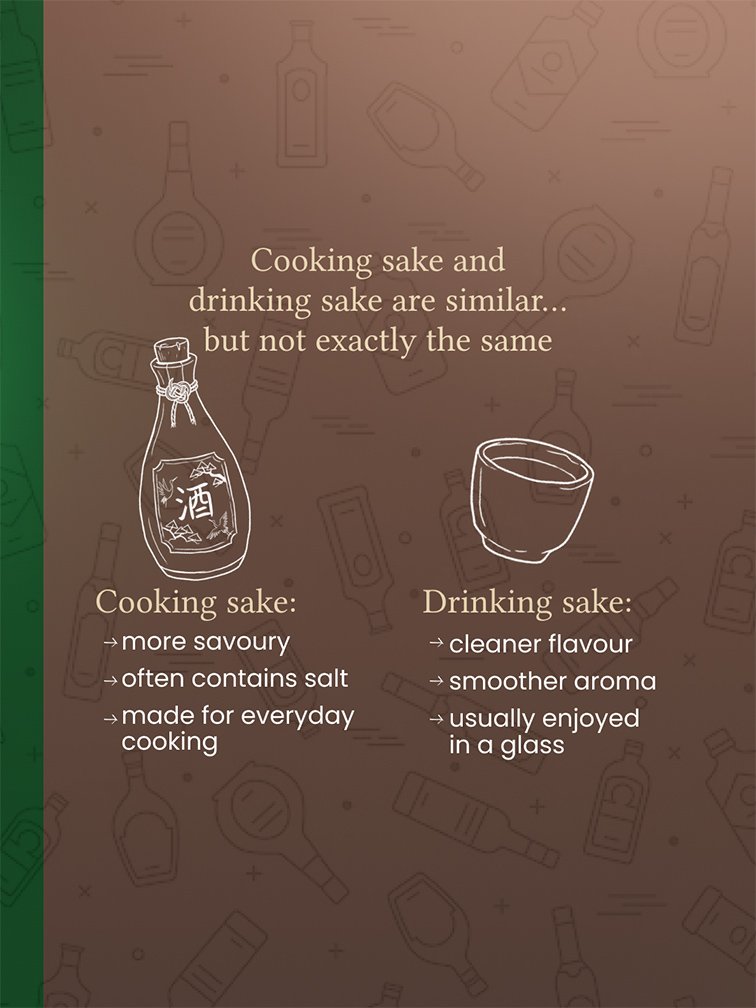
Cooking sake:
✔ Slightly more savoury
✔ Often contains added salt
✔ Designed specifically for everyday cooking
✔ Usually more affordable
Drinking sake:
✔ Cleaner flavour
✔ No added salt
✔ Smoother aroma
✔ Great for delicate dishes
Therefore, if you use drinking sake in cooking, many Japanese cooks simply adjust the seasoning slightly elsewhere in the dish to compensate.
🥢 Easy ways to start using sake at home
Undoubtedly, one of the nicest things about cooking sake is that you don’t need complicated recipes to use it. Actually, a small splash can already completely change the feeling of a dish.
🍄 1. Add it to mushrooms while cooking This is a classic Japanese home-cooking trick. As the mushrooms cook, add:
A splash of sake;
Soy sauce;
A little sesame oil.
Ultimately, the sake helps deepen the savoury flavour naturally.
🥒 2. Use it when cooking vegetables
A small amount added while stir-frying vegetables can:
✨ Soften bitterness;
✨ Enhance natural sweetness;
✨ Create a gentler flavour overall.
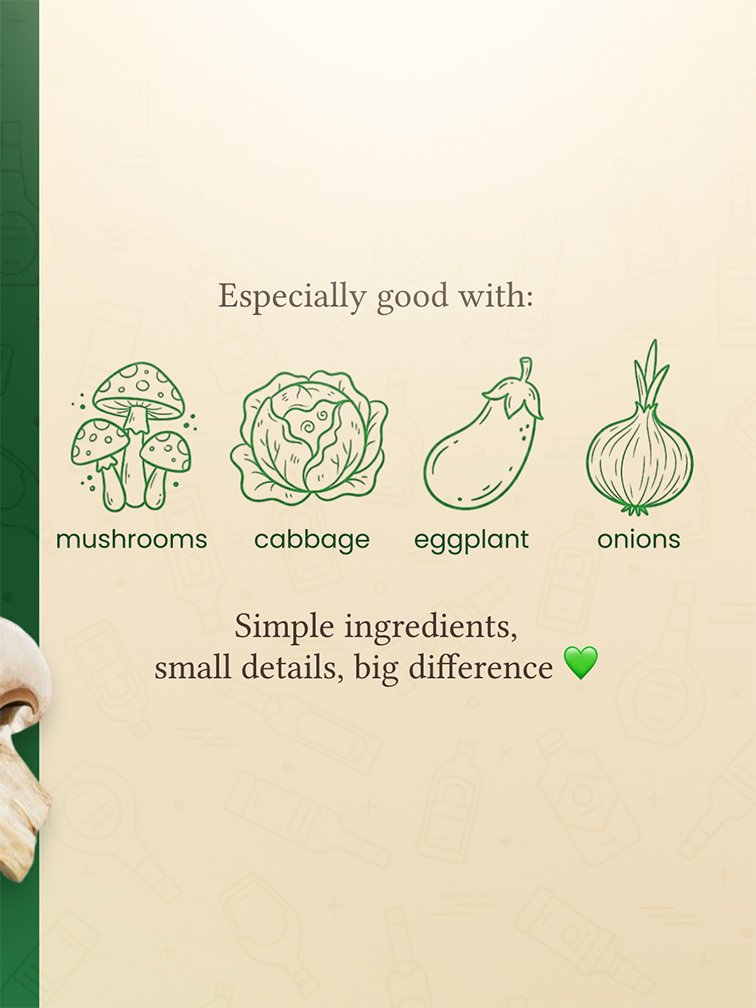
Specifically, it works exceptionally well with cabbage, mushrooms, eggplant, and onions.
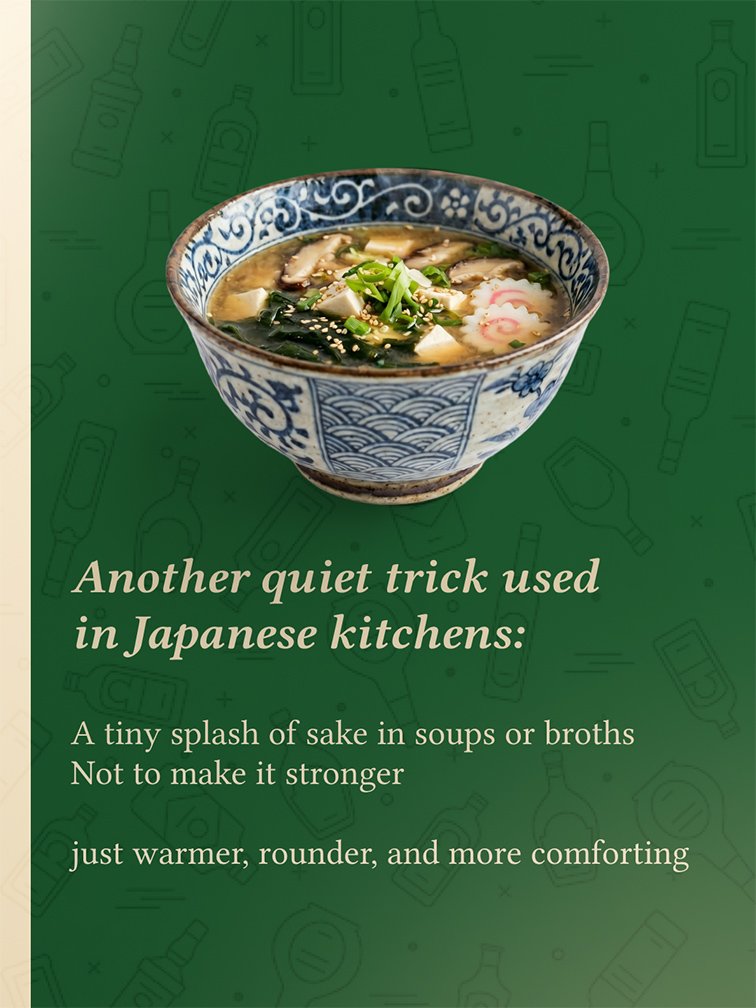
🍲 3. Add a tiny splash to soup broth
This is one of those quiet Japanese habits many people never notice. By adding a little sake to soups or broths, you can make them taste:
Warmer
Rounder
More comforting
Not stronger — just much more balanced.
💚 One of Japan’s quiet kitchen secrets
In essence, Japanese cooking is often less about dramatic techniques and much more about small details repeated consistently.
Cooking sake represents exactly one of those details. Not overpowering. Not flashy. Just a simple ingredient that gently improves flavour and balance in ways people often can’t quite explain — they can only feel.
Ultimately, that quiet attention to balance is exactly what makes Japanese home cooking feel so comforting 🍵✨
Have you ever cooked with sake before? We’d love to hear what you’d try it in first!