
The Japanese Secret to Making Vegetables Taste Better
(Without Heavy Sauces or Complicated Cooking)
First of all, one thing that surprises many people visiting Japan is this: even the simplest vegetables somehow taste… better.
A plain cucumber feels refreshing. A bowl of cabbage becomes addictive. Even spinach can taste comforting and full of flavour.
So, what’s the secret?
At Izakaya Midori, we love sharing these small everyday Japanese cooking habits. Specifically, we mean the kind of things Japanese families grow up with but rarely think to explain.
And surprisingly, most of them are incredibly simple!
1. Season lightly but intentionally
In many Western kitchens, flavour often comes from adding more. More sauce. More butter. More seasoning.
However, Japanese home cooking usually works differently. Instead of covering ingredients, the goal is to bring out their natural flavour.
That’s exactly why Japanese cooks use simple seasonings like:
Soy sauce
Sesame oil
Rice vinegar
Miso
Kombu stock
Toasted sesame seeds
Crucially, they use them in very small amounts, but very strategically. A tiny drizzle can completely change a dish.
2. Salt vegetables first (this changes everything)
Furthermore, this is one of those little Japanese tricks that makes vegetables taste surprisingly good.
Before seasoning cucumbers, cabbage, or eggplant, lightly salt them first and leave them for 5–10 minutes.
Why?
The salt draws out excess water, slightly softens the vegetables, and concentrates their flavour.
After that:
Gently squeeze the water out;
Add your seasoning;
Finally, enjoy vegetables that suddenly taste richer, sweeter, and much more balanced.
In short, it is simple but incredibly effective.
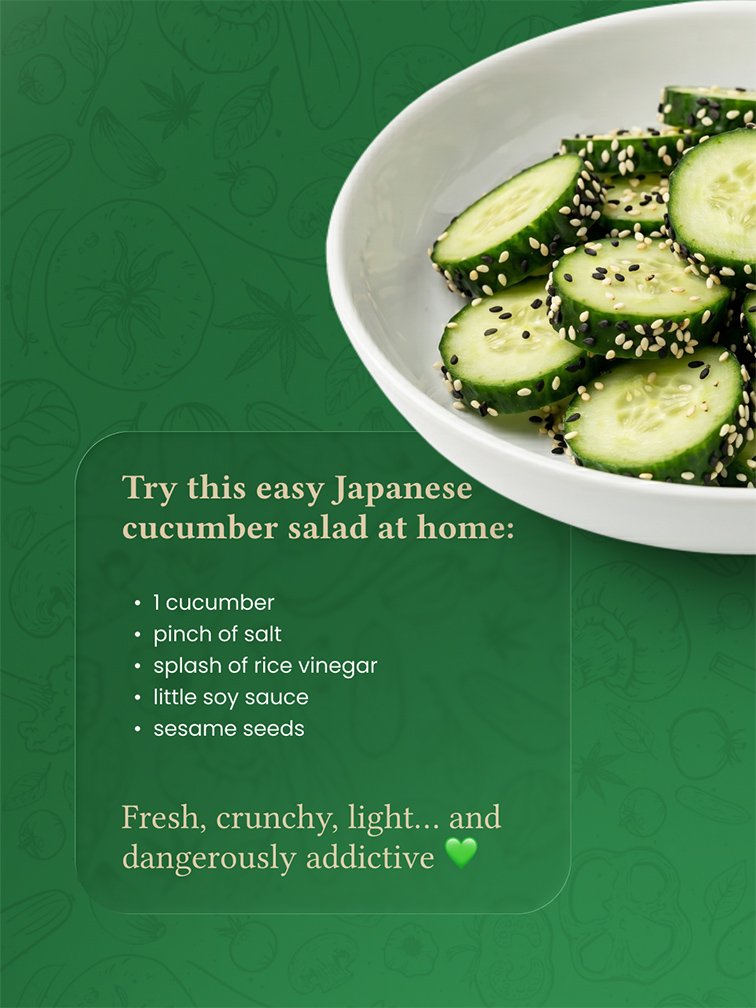
Easy Japanese Cucumber Salad (Sunomono-style)
Here is a quick side dish found in many Japanese homes.
Ingredients:
1 cucumber
Pinch of salt
1 tsp rice vinegar
½ tsp soy sauce
Sesame seeds
Method:
First, slice the cucumber very thinly.
Next, sprinkle the salt and leave it for 10 minutes.
Then, squeeze the excess water out gently.
Add the vinegar and soy sauce.
Finally, finish with sesame seeds.
That’s it. It is fresh, light, and somehow impossible to stop eating.
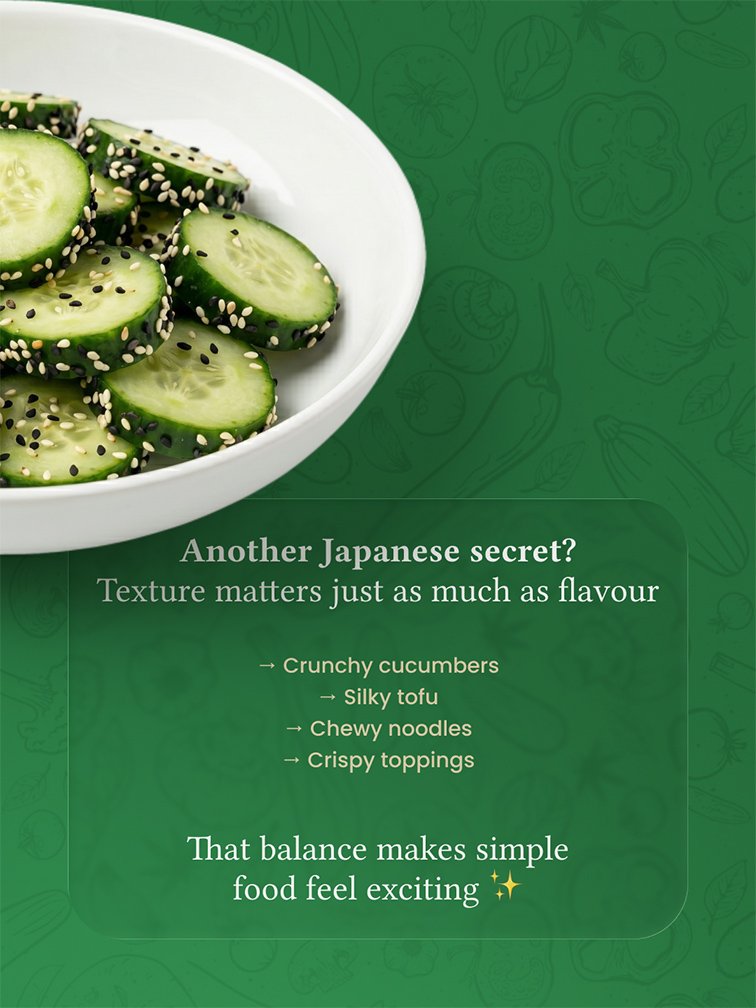
3. Texture matters more than people realise
Additionally, Japanese food isn’t only about flavour. Texture forms a huge part of the experience.
That’s why meals often combine:
Crunchy pickles
Soft rice
Silky tofu
Chewy noodles
Crispy toppings
Even a simple meal feels more satisfying when you involve different textures. Ultimately, it represents one of the easiest ways to make home cooking feel more interesting without extra effort.
4. “Ma” — the Japanese idea of balance and space
Interestingly, there’s a Japanese concept called ma (間), which roughly means “space” or “pause”.
You can see it in architecture, design… and consequently, in food.
Typically, Japanese meals avoid overcrowding flavours. Not every dish is rich or heavily seasoned.
Instead, you find balance:
Something warm
Something fresh
Something pickled
Something comforting
Because of this, each ingredient stands out naturally. Ironically, using less often creates much more flavour.
5. Rice sits at the centre of the meal — not as a side
Finally, in many Japanese homes, rice isn’t just filler.
Families serve freshly cooked rice to complement everything else: the salty dishes, the pickles, the soup, and the vegetables.
That’s exactly why Japanese rice is usually:
Slightly sticky
Freshly cooked
Served plain
Undoubtedly, good rice quietly elevates the entire meal. And yes, washing your rice properly before cooking genuinely makes a difference.
The Midori Philosophy
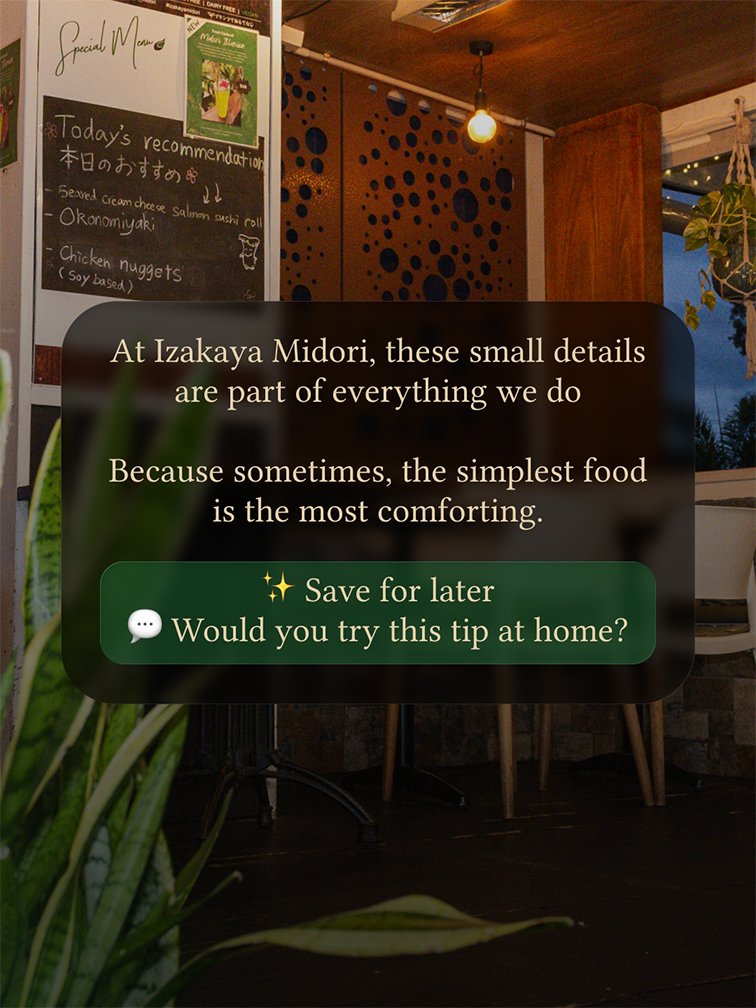
At Izakaya Midori, we care about these exact details every single day.
No complicated techniques. No fancy tricks.
Just small habits, balance, and a profound respect for ingredients. Ultimately, these are the quiet foundations of Japanese cooking that make simple food feel deeply comforting. 💚
📱 Mobile (Text or Call): +61 480 416 307