

Hidden Plant-Based Japan: Neighbourhoods and Spots Most Tourists Miss πΏ
If you’ve done Fushimi Inari, snapped your Shibuya crossing photo, and queued for ramen in the rain, you might think you’ve seen it all.
However, somewhere between the tourist trail and the side streets, you will find a whole other Japan β quieter, greener, and frankly, more delicious. Especially if you eat plant-based.
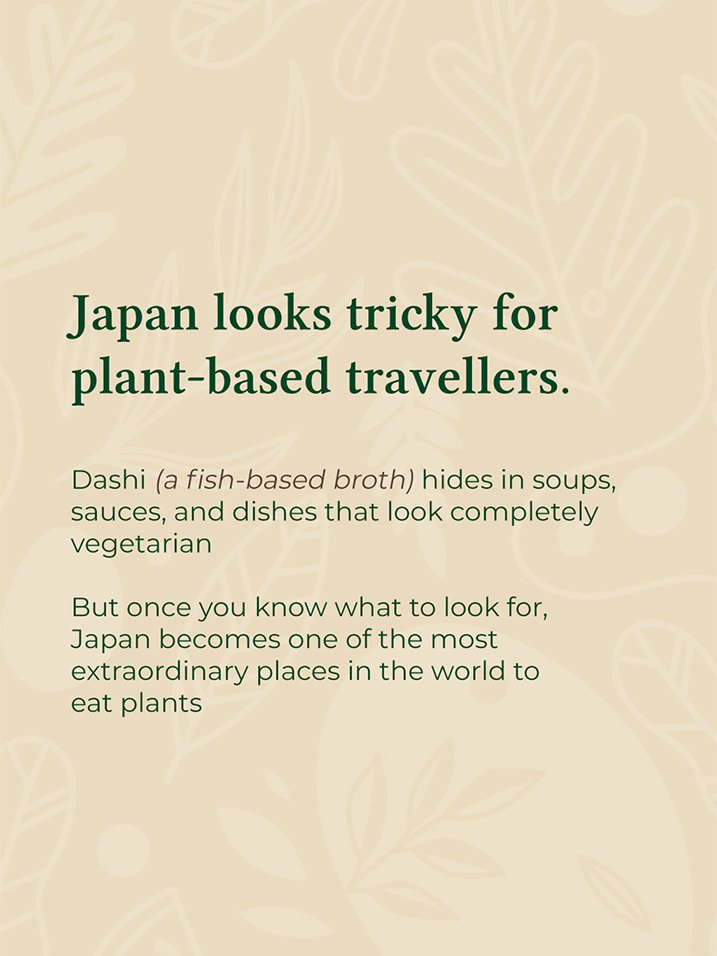
At first glance, Japan might seem like a difficult country to navigate as a vegan. And honestly, it can be, especially if you don’t know where to look. For instance, hidden dashi in “vegetarian” dishes, fish flakes on top of tofu, and bonito in the soup base create a minefield for the uninitiated.
Fortunately, the plant-based scene in Japan has genuinely exploded in recent years. You just have to know which streets to wander down.
Therefore, here is exactly where you should start. π
πΌ Tokyo: Go Beyond Shibuya and Shinjuku
First of all, most visitors know that Shibuya and Shinjuku offer reliable vegan options. But if you want the really good stuff, you need to go a little further.
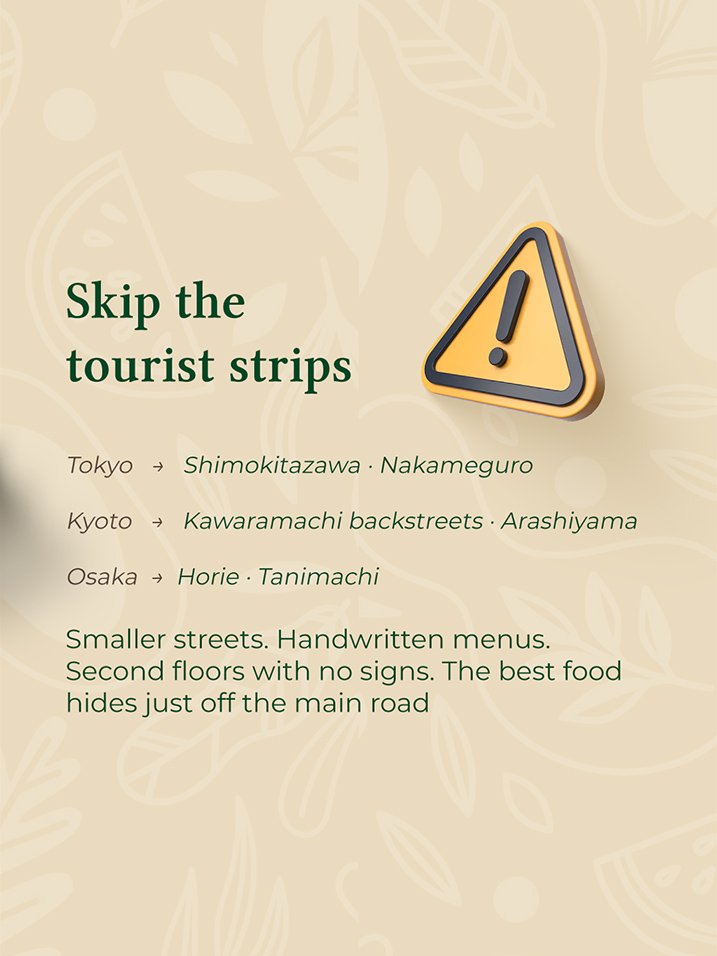
Nakameguro stands out as one of Tokyo’s most liveable neighbourhoods, full of independent cafes and small restaurants tucked along the canal. Specifically, it’s the kind of place where you stumble upon a whole-food lunch spot right between a florist and a vinyl record shop. Overall, the vibe feels calm, local, and unpretentiously healthy.
Shimokitazawa serves as Tokyo’s bohemian heart β a maze of narrow lanes, second-hand clothes shops, live music venues, and tiny cafes. Because it attracts a creative crowd, the food scene perfectly reflects that energy. Look for small plant-based restaurants without clear signs that only make sense once you step inside. In fact, some of the best meals in Japan happen exactly this way.
Asakusa, famous for SensΕ-ji Temple, hides a few gems that tourists walk past every single day. Interestingly, vegan restaurants in Japan often lack a street-level presence. Instead, they sit up staircases, on the second or third floor of ordinary-looking buildings. So, if you see a hand-written sign and a flight of stairs, follow it.
As a practical tip for all of Tokyo: Download the Happy Cow app before you land. Undoubtedly, it is the most reliable way to find fully vegan spots versus restaurants that just offer a couple of options. Plus, it lets you filter by neighbourhood in real time.
β© Kyoto: The City That Was Vegan Before It Was Trendy
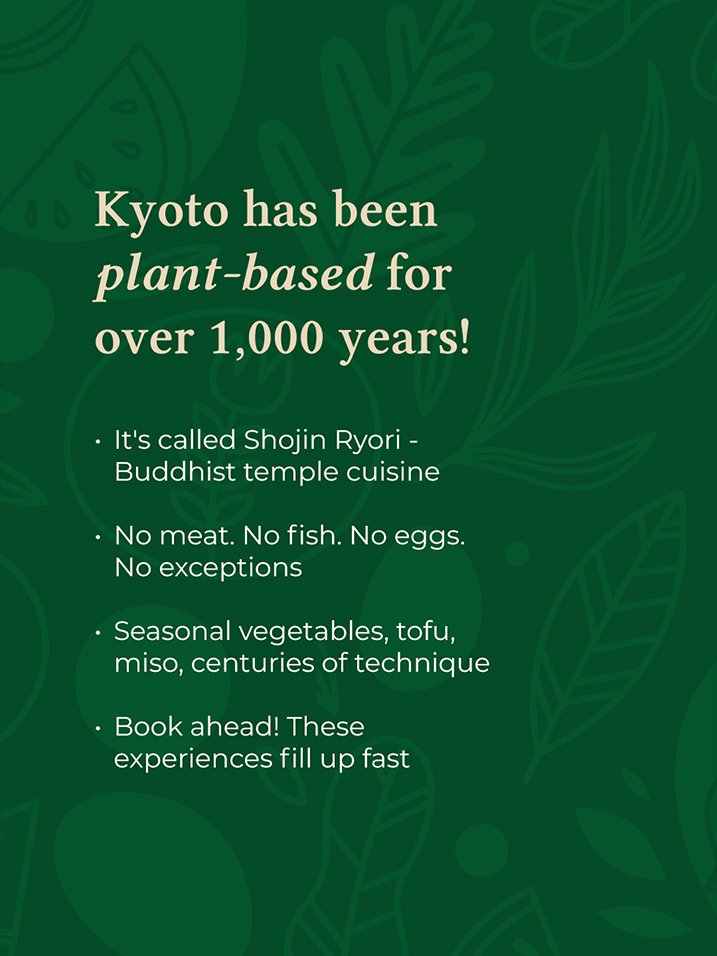
Meanwhile, Kyoto holds a beautiful secret: it has been plant-based for over a thousand years.
Shojin ryori β the elaborate Buddhist temple cuisine that monks eat β is completely vegan by design. It uses no meat, no fish, and no eggs. Instead, chefs rely on seasonal vegetables, tofu, miso, and centuries of technique. If you eat just one special meal in Kyoto, make it this.
Arashiyama, in the western hills, provides the most atmospheric place to experience it. After walking the bamboo grove and visiting the temples, look for a shojin ryori lunch served on a red lacquer tray in a tatami room overlooking a garden. It feels slow, quiet, and unlike anything else. Make sure to book ahead, because these places fill up fast (especially on weekends).
Kawaramachi is Kyoto’s busiest neighbourhood, but just a few streets back from the main drag, you will find small vegan cafes with handwritten menus and daily-changing sets based on fresh morning vegetables. For example, Mumokuteki, a fully vegan cafe near the famous Nishiki Market, remains a local favourite that consistently delivers great food.
Gion carries a reputation for being expensive and formal β and it can be. However, in the backstreets near the geisha district, smaller restaurants serve traditional obanzai (Kyoto-style small dishes) with excellent vegan options for lunch. Ultimately, the key is to wander, not to over-plan.
Surprisingly, the neighbourhood around Nishiki Market itself offers great options. Although the market is touristy, the small parallel streets hide fantastic local lunch spots. If you ask about plant-based options there, you will often find more flexibility than you expect.
π Osaka: Japan’s Kitchen Has a Plant-Based Side
Moving on to Osaka, the city built its food identity around takoyaki (octopus balls) and okonomiyaki (savoury pancakes with bonito flakes). Not exactly vegan territory. Yet, if you look past the main tourist food streets, Osaka rewards you generously.
Horie, a neighbourhood in the Minami area, acts as Osaka’s answer to Shimokitazawa β stylish, independent, and full of interesting food. Young Osakans go there to eat, and consequently, the plant-based cafe scene here is genuinely excellent. Look for small places featuring natural wood interiors and handwritten daily menus. Currently, the vegan katsu sandwich is having a massive moment here β thick, crispy, and completely satisfying.
Tanimachi (specifically around Tanimachi 9-chome station) has quietly become a hub for the local vegan community. Less Instagram, more neighbourhood. In fact, Mercy Vegan Factory stands out as one of the most-loved spots in this area. Their vegan egg sandwich alone makes the trip worthwhile, and additionally, their daily cabinet of plant-based pastries changes regularly.
Namba and Shinsaibashi are noisy and crowded, but they also host reliable plant-based chains when you need a quick, easy, guaranteed-vegan meal. Therefore, chains like T’s Restaurant (originally from Tokyo) and dedicated vegan ramen spots have expanded here with great consistency.
A slightly further detour: Between Osaka and Kyoto, in the suburb of Ibaraki, you will find an all-vegan dessert cafe called Ocha Ohana Montblanc. It has developed a devoted following for its seasonal parfaits β elaborate, beautiful creations that rotate regularly depending on the season. Since it is about 30 minutes from central Osaka (and cash only), check their social media for the current menu before you visit.
A Few Tips to Take With You
Before you go, learn two essential phrases:
γγΌγ¬γ³γ§γ (Biigan desu) β I’m vegan
γ γγ―ε ₯γ£γ¦γγΎγγοΌ (Dashi wa haitte imasuka?) β Does this contain fish broth?
As mentioned earlier, dashi presents the invisible challenge of eating vegan in Japan. Cooks make this stock from dried fish and kombu, and they put it in many dishes that look and sound vegetarian. Consequently, asking this question will save your meal more than once.
Always check the hours before you go. Restaurant hours in Japan can be highly irregular, especially at smaller spots. Many close on random weekdays or adjust their hours seasonally. Therefore, Google Maps is far more reliable than any printed list.
Β
Furthermore, the Happy Cow app remains the gold standard for finding verified vegan restaurants on the go. Use it alongside this guide, but don’t ignore your own instincts.
Ultimately, plant-based Japan isn’t hiding β it’s just not sitting on the main road. So, take the side street. Climb the stairs. Ask the question.
Trust us, the food is absolutely worth it!
At Izakaya Midori, Japanese plant-based cooking inspires us every single day β from the Buddhist roots of shojin ryori to the modern creativity of Japan’s vibrant vegan cafes. Come visit us in Reedy Creek and taste a little of what we love about Japanese food culture.
π± Mobile (Text or Call): +61 480 416 307
