
This Is Not Salmon (And That's the Most Interesting Part)
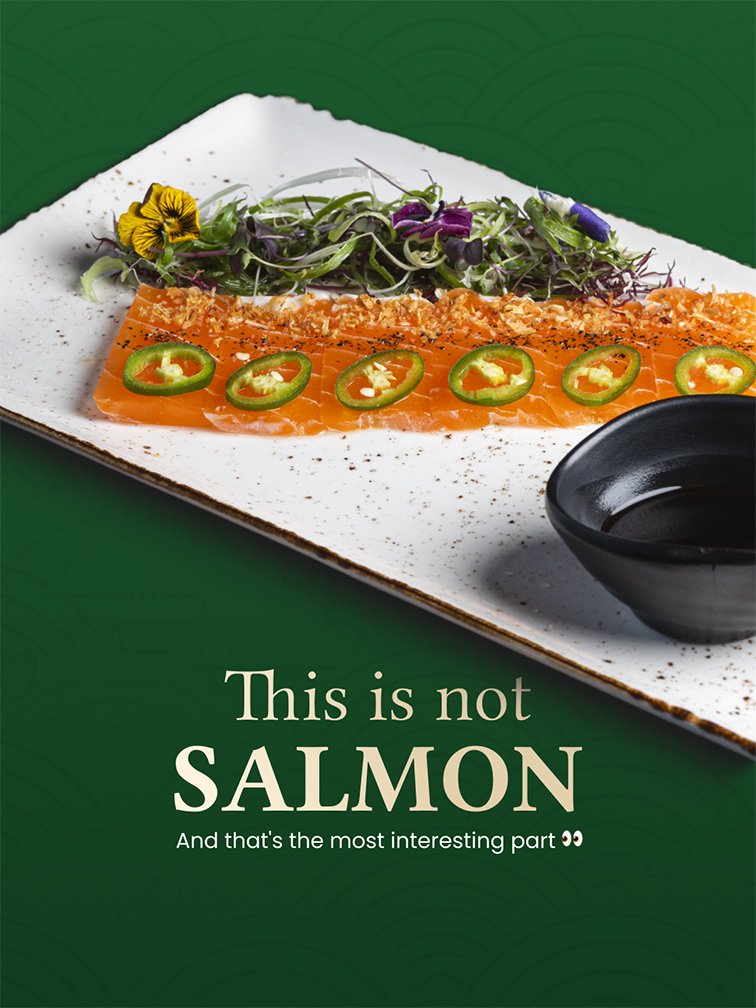
When our Sashimi Salmon arrives at the table, most people pause.
The colour is right. The texture is right. The taste is — well, that’s where it gets interesting.
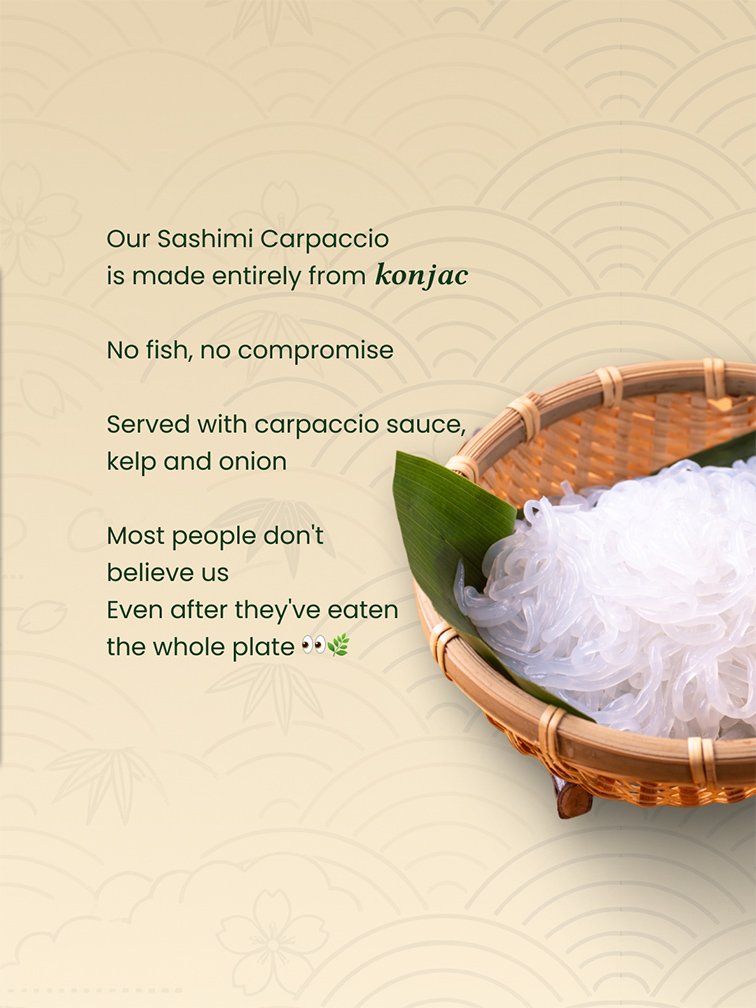
In fact, our chefs make it entirely from konjac. No fish. No compromise. And surprisingly, most people don’t believe us even after they’ve eaten the whole plate.
So, What Is Konjac?
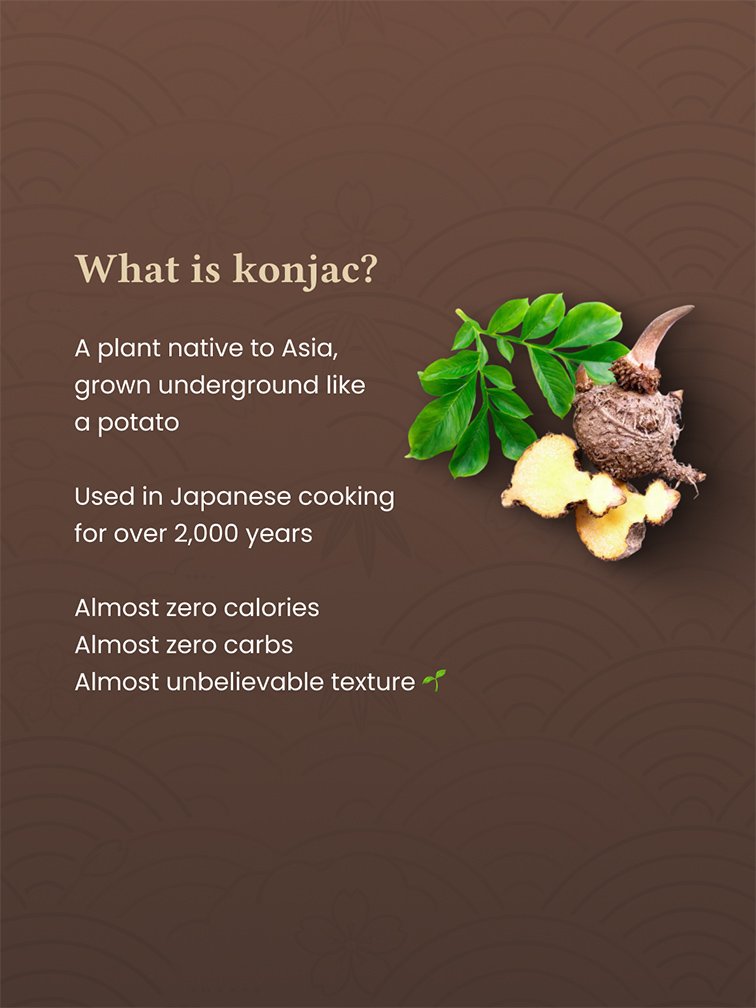
Basically, konjac is a plant native to Asia, and farmers grow it underground like a large, rugged potato. Historically, Japanese cooks have used it for over 1,500 years — long before plant-based eating became a conversation, let alone a trend.
Interestingly, when it first arrived in Japan, people considered konjac a delicacy reserved exclusively for the royal family. Therefore, ordinary people couldn’t access it for centuries. Today, however, entire supermarket aisles feature it.
Furthermore, in Japan, people refer to konjac as “the broom of the stomach” — because it possesses a remarkable ability to support digestion and move things through the body efficiently. Additionally, it contains almost zero calories, almost zero carbs, and is completely gluten-free.
But honestly, none of that is why we use it.
Why It Works
Fundamentally, konjac absorbs flavour like almost nothing else.
Depending on how you prepare it — sliced thin, marinated, pressed, or shaped — it takes on an entirely different character. Colour, texture, taste. Ultimately, it becomes whatever you ask it to become.
Buddhist monks understood this early on. As Buddhism spread through Japan and promoted a vegetarian lifestyle, konjac became one of the most valued ingredients in shojin ryori (traditional temple cuisine) — precisely because it perfectly imitates the texture of meat.
That was over a thousand years ago. Clearly, the plant-based transformation wasn’t invented recently. Japan just quietly perfected it over centuries.
That’s exactly why it becomes salmon. That’s why it works.
A Cookbook Dedicated Entirely to Konjac (In 1846)
Here’s a fact that stops people: in 1846, Japan published a recipe book containing one hundred recipes for konjac — and amazingly, chefs still use many of those recipes today.
A hundred recipes. For one single ingredient. Nearly two centuries ago.
Undoubtedly, that shows the depth of the relationship between Japanese cuisine and this plant. It’s not a trend. It never was.
How to Use Konjac at Home
You can find konjac at most Asian grocery stores, usually in the noodle or tofu section. Here’s where to start:
In soups and hotpots: Cut konjac into cubes and drop them into miso soup or any Asian broth. It soaks up every bit of flavour around it — giving body to the bowl without any heaviness. Simple, quiet, and deeply satisfying.
As noodles: Konjac noodles, commonly known as shirataki, need almost no cooking. First, rinse them well. Then, dry them on a hot pan for a couple of minutes, and add your sauce of choice. They are gluten-free, vegan, and ready in under ten minutes.
One Thing to Know
Crucially, you will find it almost impossible to overcook konjac noodles. Even after an hour of boiling, they hold their texture perfectly. Consequently, this makes them perfect for anyone who gets distracted in the kitchen.
Come Taste It First
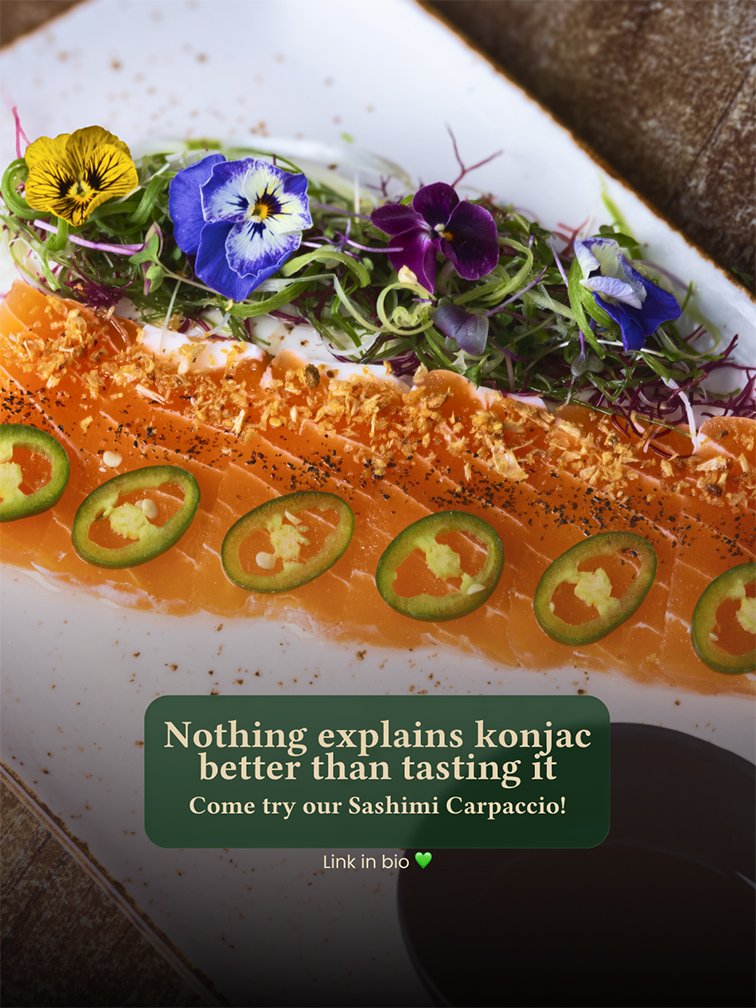
Ultimately, the best way to understand konjac is to taste what it becomes.
We serve our plant-based
Sashimi Salmon with carpaccio sauce, kelp, and onion — and it’s waiting for you right here in Reedy Creek, Gold Coast. 🌿
📱 Mobile (Text or Call): +61 480 416 307