
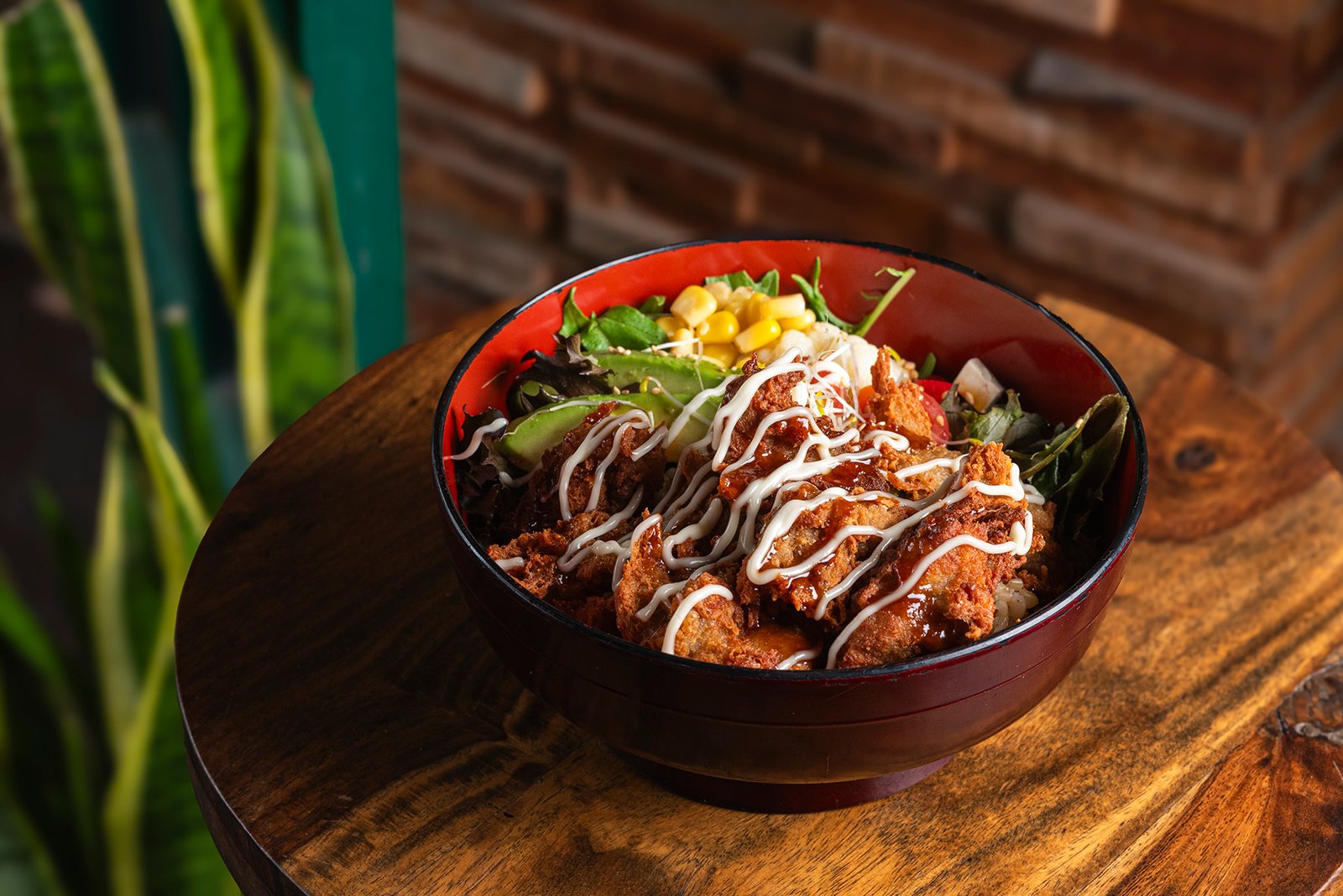
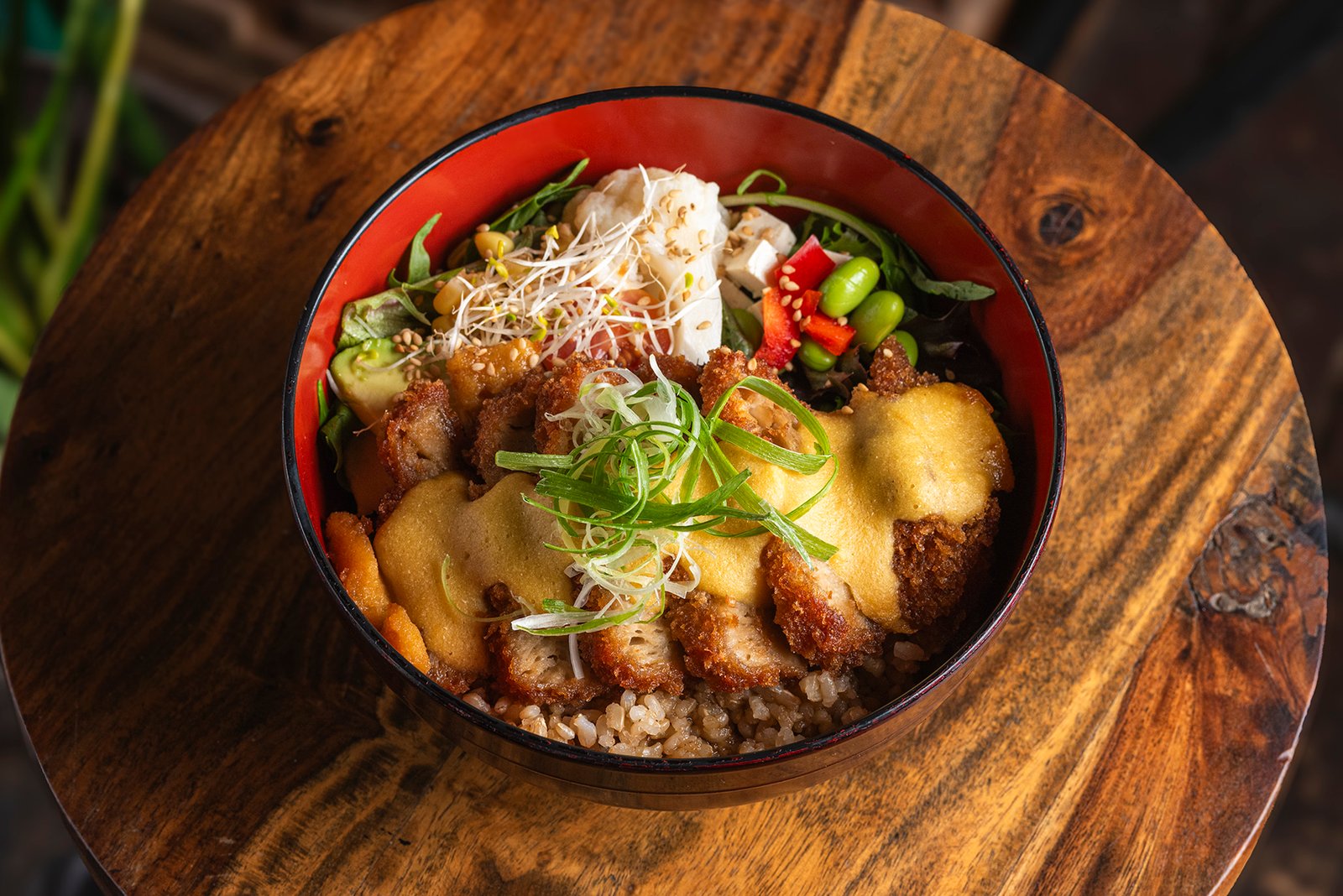
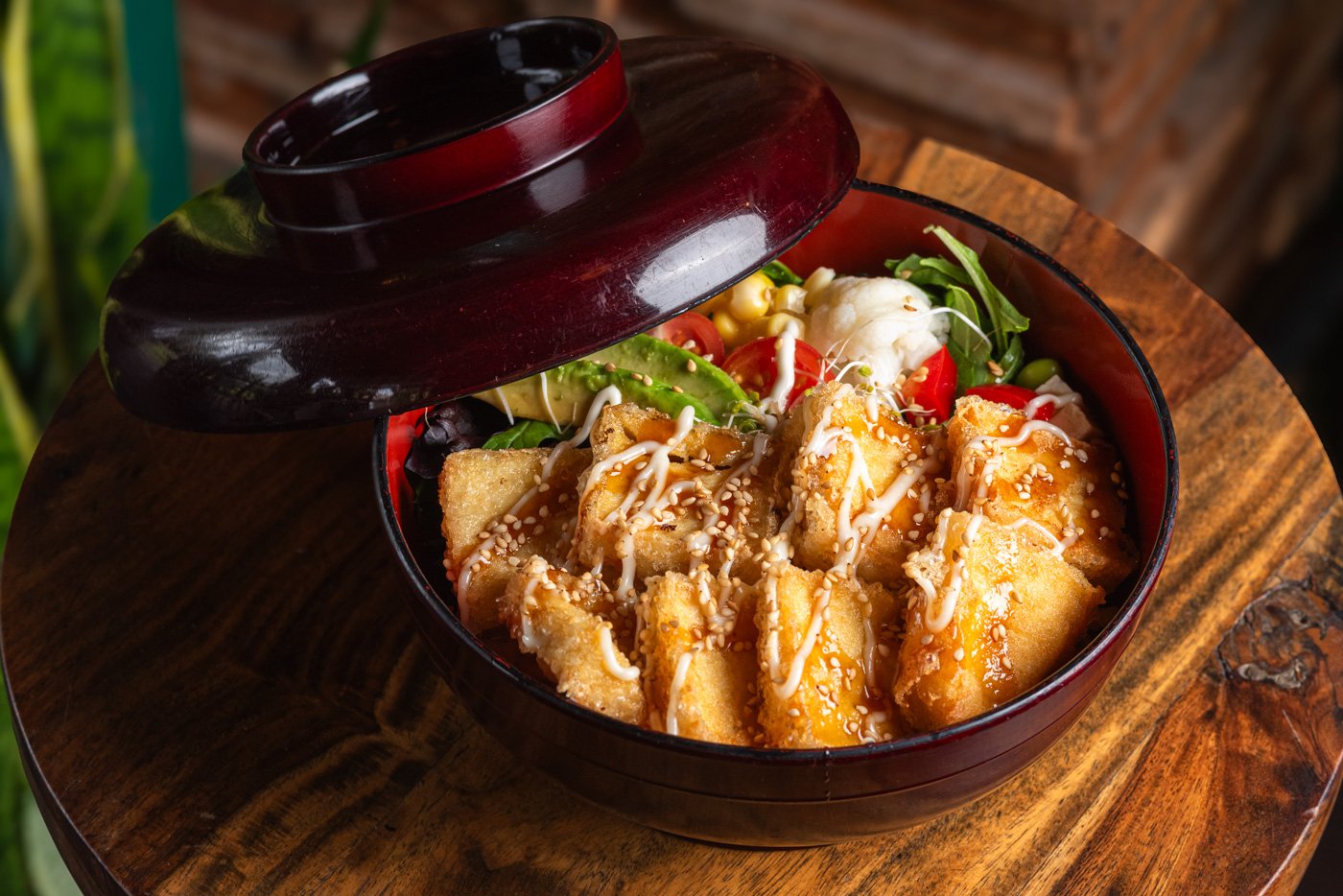
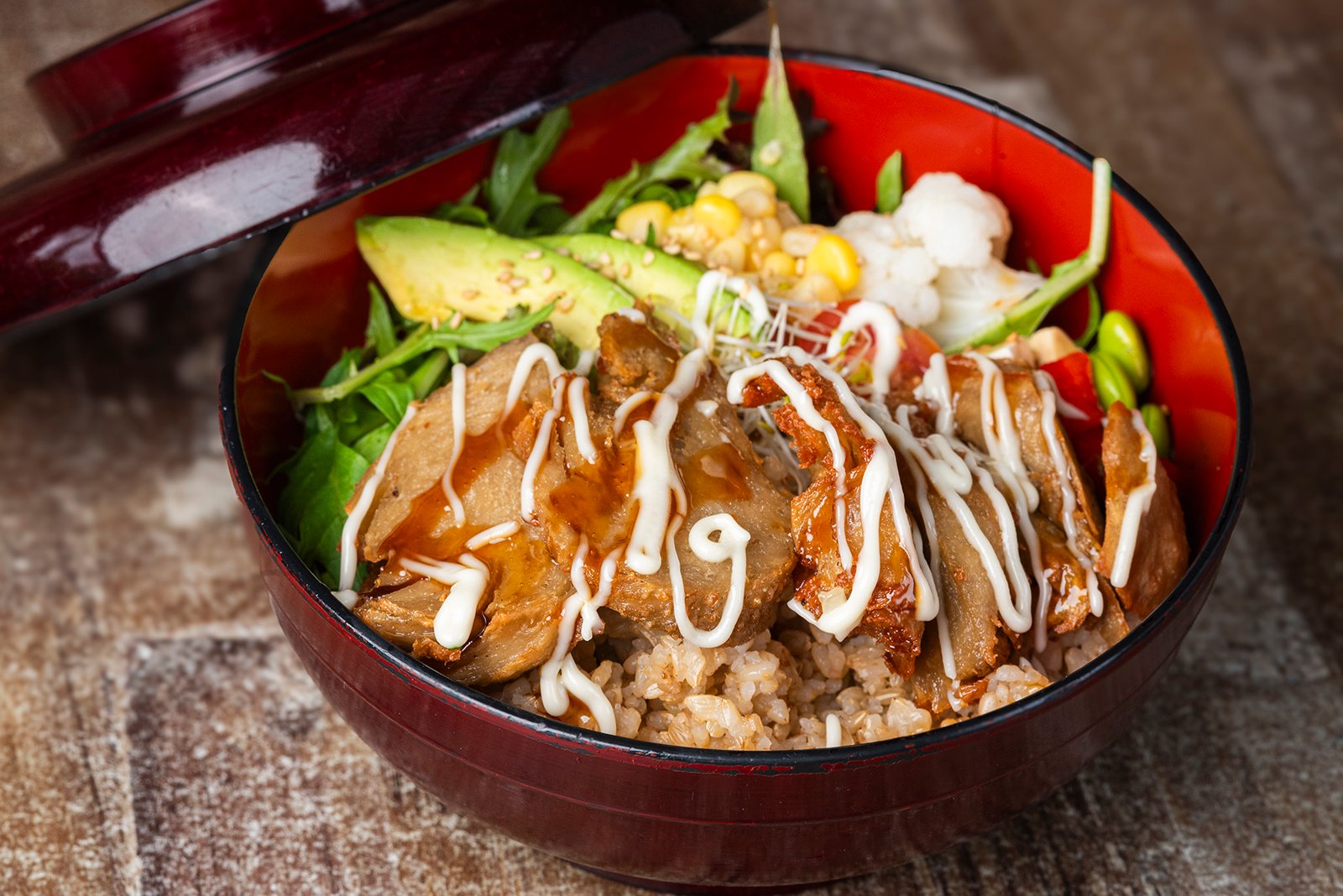
Interesting Facts & Curiosities About Donburi 🇯🇵 ✨

In fact, long before modern fast food chains, donburi was already the go-to quick, filling meal in Japan. Historically, it was considered the original “fast food,” popular with:

Workers
Students
Travellers
Market vendors

Basically, it was just one bowl, eaten quickly, with no plates to manage — therefore, practical and satisfying.

The Bowl Size Actually Matters

Did you know that donburi bowls are deeper than regular rice bowls on purpose? Specifically, the shape helps to:

Keep rice warm longer;

Hold sauce without spilling;

Let flavours sink into the rice evenly.

For this reason, in Japan, choosing the right bowl is considered part of the dish.

Donburi Is Meant to Be Mixed

Interestingly, unlike some Japanese meals where ingredients stay separate, donburi invites mixing.

In other words, letting sauce soak into the rice is not “wrong” — it’s expected. After all, that’s part of the comfort factor.

Rice Is the Main Character

Fundamentally, in donburi, toppings support the rice — not the other way around. That’s why:

Rice quality matters;
Seasoning balance is crucial;
Overloading the bowl is discouraged.

Consequently, a good donburi should still taste balanced even when the topping runs out.

Donburi Names Tell You Everything

Generally, most donburi names are very literal:

Katsu-don → katsu on rice

Karaage-don → karaage-style topping on rice

Tempura-don → tempura on rice

Thus, the simplicity reflects Japanese food culture — clear, honest, and with no mystery.

Why Donburi Works So Well for Plant-Based Cooking 🌱

Crucially, donburi doesn’t rely on meat by default. Instead, it relies on:

Sauce
Texture
Balance
Umami

Moreover, traditional seasonings like soy sauce, ginger, garlic, miso, and sesame are already plant-based, making donburi naturally adaptable.

As a result, tofu, vegetables, and soy-based proteins absorb flavour beautifully and keep the bowl satisfying without needing animal products.

Why Donburi Feels So Comforting

Ultimately, there’s something grounding about one bowl, warm rice, and flavours that make sense together.

In Japan, this kind of food is often described as “hotto suru” (ほっとする) — which means comforting, relieving, calming.

In conclusion, that feeling has nothing to do with meat or fish. It comes from balance and care.

📱 Mobile (Text or Call): +61 480 416 307